Korean BBQ looks simple from the outside: a grill built into the table, a plate of raw meat, a pair of scissors nobody expects you to know how to use. What actually happens over the following hour has a rhythm to it that most first-time visitors only work out halfway through the meal, usually after doing at least one thing slightly wrong. None of it is complicated once somebody explains it once.
This is what happens at the table, from the moment the grill arrives to the point somebody asks for the bill.
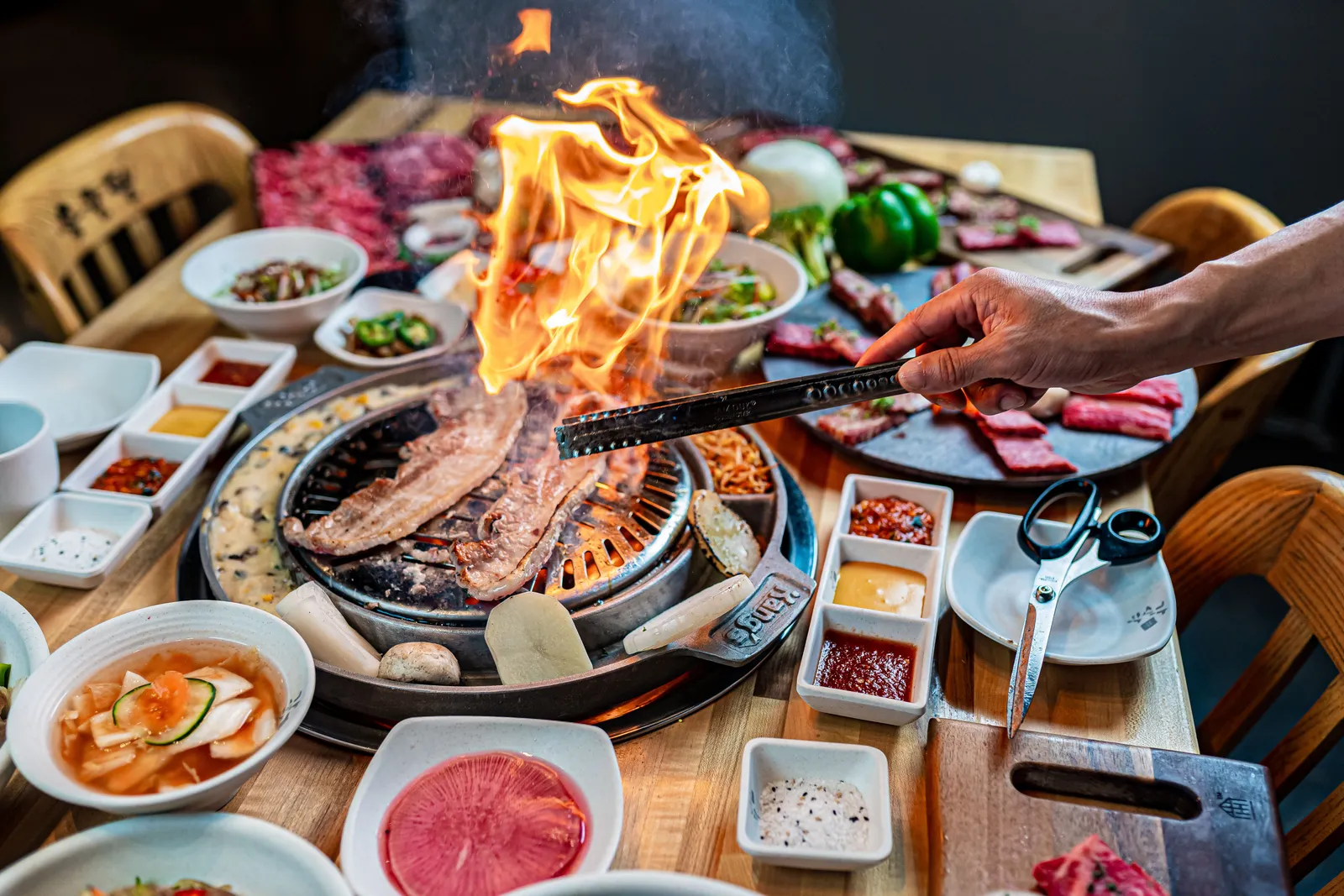
In short: Korean BBQ works like this: you order raw meat by the portion, usually with a minimum of two portions of one cut per table, and it is grilled at your table. Staff typically start the first batch and then hand you the tongs and scissors, which are for cutting the cooked meat into bites on the grill. The small side dishes, banchan, come at no extra charge and are eaten throughout, and the standard bite is a piece of meat wrapped in lettuce or a perilla leaf with ssamjang. Pork belly and marinated short rib are the safest first orders, and the meal usually closes with fried rice cooked on the same grill.
Who does the cooking, and when the tongs change hands
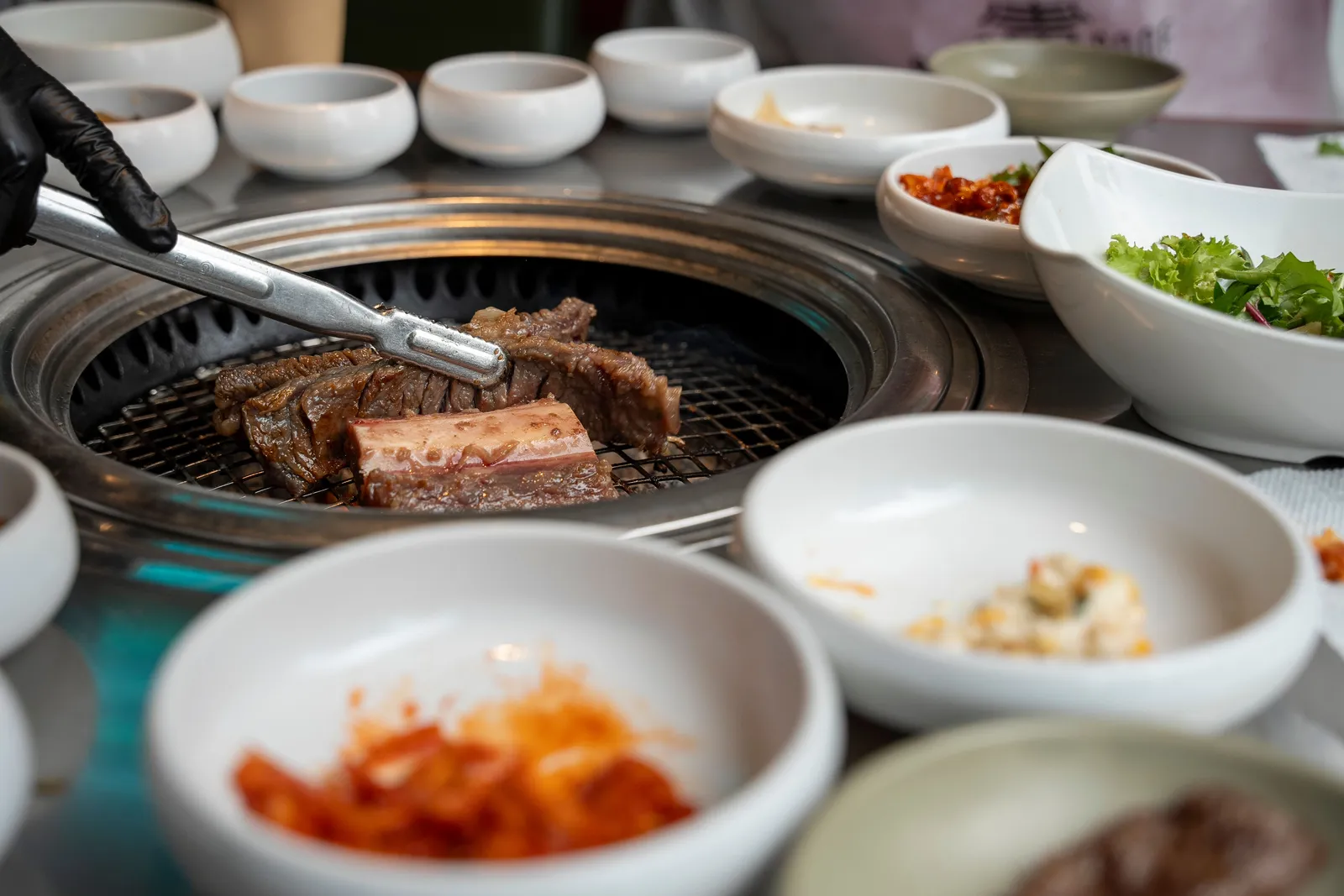
At most sit-down grill restaurants, a member of staff starts the first batch of meat for you, particularly with thicker cuts like pork belly that are easy to either undercook in the middle or burn on the outside before a first-timer gets a feel for the heat. Once the first pieces are turning well and the table has the idea, the tongs and a pair of kitchen scissors are usually left with you to manage the rest. Smaller, more casual restaurants sometimes skip this step entirely and leave the grill to the table from the start, which is normal rather than a sign of being ignored.
The scissors are for cutting cooked meat into bite-sized pieces directly on the grill, not for raw meat, and using them is expected rather than something to feel awkward about. If in doubt about whether a piece is ready, cut into the thickest part on the grill itself rather than guessing.
The side dishes are not a starter
The small dishes that arrive before the meat, collectively called banchan, include some combination of kimchi, seasoned bean sprouts, pickled radish and a few other vegetables depending on the restaurant. They come with the meal at no extra charge and are meant to be eaten throughout, a bite between rounds of meat rather than something to finish before the grilling starts. Running low on a particular dish is normal and most restaurants will refill it without much fuss if you ask, though it is worth checking whether a refill carries a small charge at less touristy places.
Lettuce and perilla leaves usually arrive alongside the banchan and are for wrapping: a piece of grilled meat, a smear of the thick soybean paste called ssamjang, maybe a slice of raw garlic, folded and eaten in one bite. It is the standard way to eat the meat rather than an optional extra.
The cuts worth knowing before you order
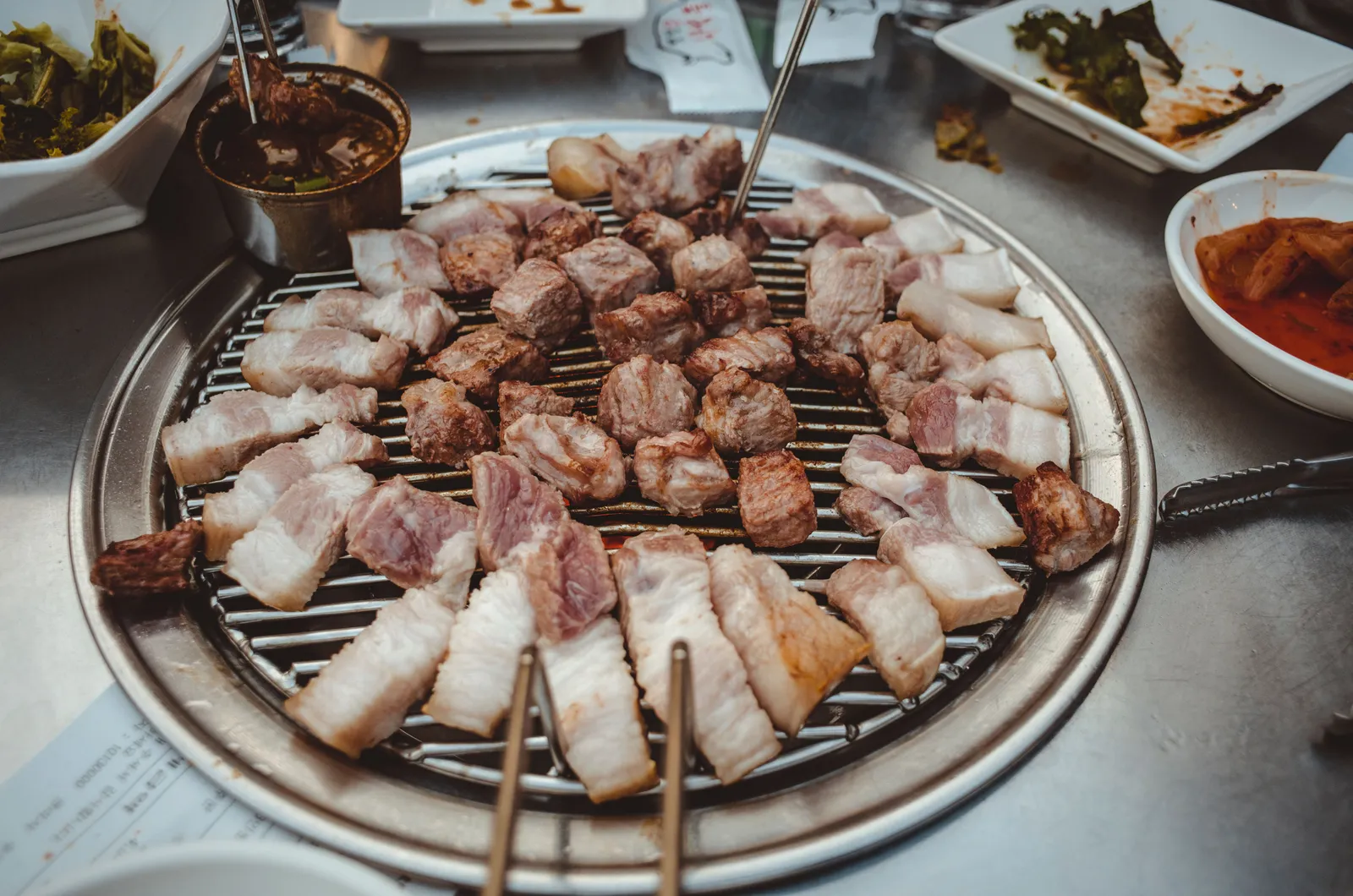
Pork belly, thick cut and unmarinated, is the most commonly ordered dish across the country and a safe first order for anyone unsure where to start. Marinated short rib, sliced thin and slightly sweet from the sauce, cooks faster and suits people who prefer their meat already seasoned rather than dipped afterwards. Thinly sliced beef brisket cooks in seconds and is often ordered as a starter while thicker cuts are still going. Beyond these three, menus vary a lot by restaurant and region, and staff are generally used to explaining an unfamiliar cut if you point and ask.
| Cut | Style | Cooks in |
|---|---|---|
| Pork belly | Unmarinated, thick | Several minutes |
| Marinated short rib | Sweet marinade, thin slice | A minute or two |
| Beef brisket | Very thin, unmarinated | Seconds |
What a table for two actually needs
Most grill restaurants set a minimum order, commonly two portions of the same cut per table, because a single portion does not give the grill enough surface to cook properly and tends to burn before it is ready. This is worth knowing before you sit down as a solo diner, since not every restaurant is built for one person and it is better to check than to be told no after ordering. A table of two or more rarely runs into the minimum as a problem, since two portions of one cut plus a side order or two is a fairly standard meal.
Skip the guesswork on a first visitA guided evening food tour includes the ordering and the explainingCharcoal, gas or built-in electric
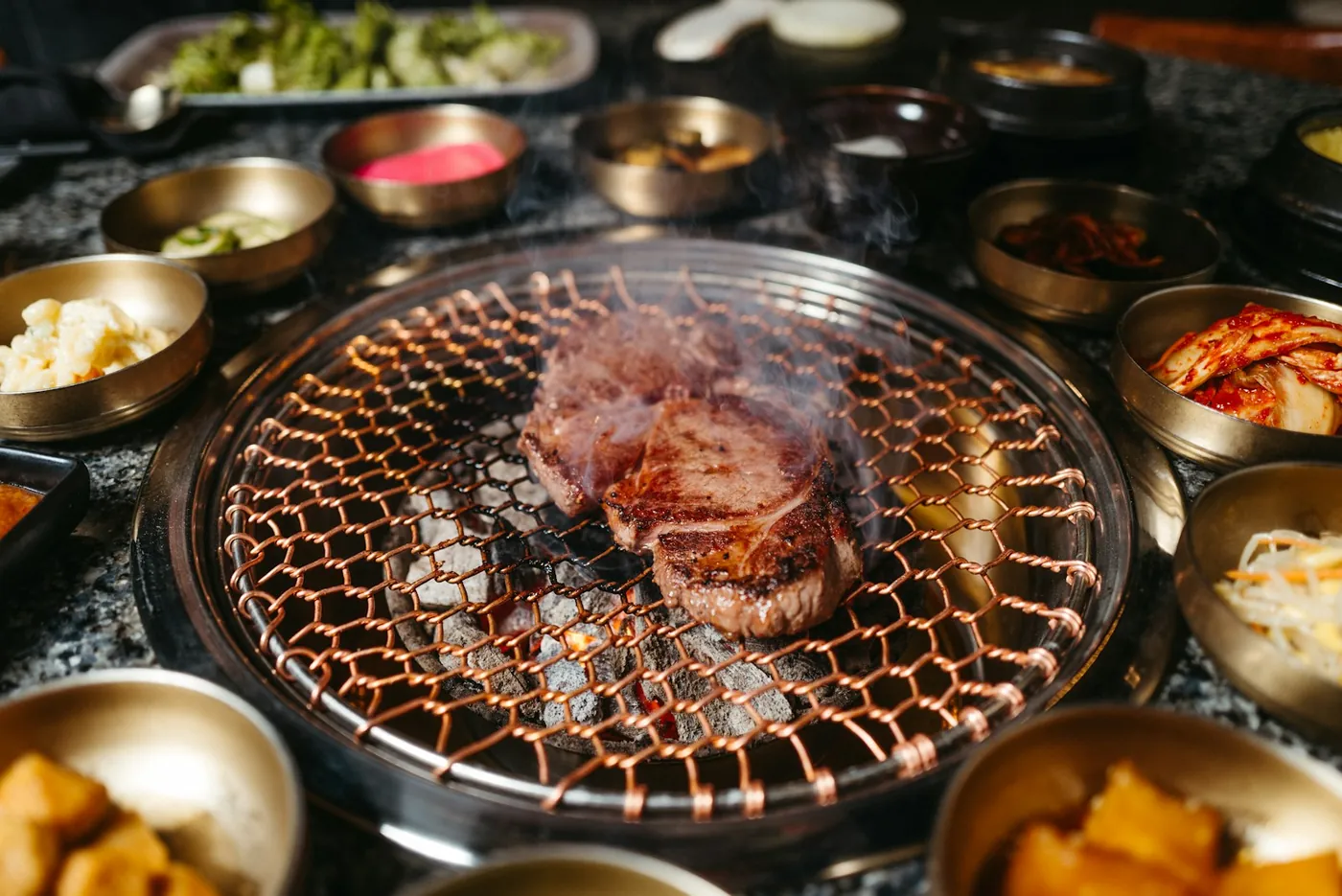
Restaurants grill over one of three heat sources, and each changes the meal slightly. Charcoal gives a heavier, smokier flavour that regular grillers tend to prefer, but it runs hot and somewhat unevenly, which makes timing less forgiving on a first attempt. Gas and electric grills hold a steadier, more even heat and are generally easier to manage yourself without staff help. None of the three is a sign of a better or worse restaurant on its own, and plenty of well regarded places use gas by choice rather than necessity.
Who might sit this one out
The format is built entirely around grilled meat, so a strict vegetarian meal is genuinely difficult to put together here, and the banchan themselves often contain a small amount of fish sauce or fermented seafood even when they look plant based. Beef is on most menus alongside pork, so someone avoiding pork specifically has plenty to order, but it is still worth checking the marinade and the ssamjang, since both can include ingredients that are not obvious from looking at them. For a fuller picture of what else is worth ordering around the country, our guide to Korean food covers ground beyond the grill.
What comes after the last piece of meat
The grill usually stays hot for one more round once the meat itself is finished, and this is when fried rice cooked directly on the same surface, mixed with whatever banchan and grill drippings are left, or a light stew served on the side, gets ordered. It is treated as the natural close to the meal rather than an optional extra, and most tables order one or the other before asking for the bill. For a wider sense of how meals and manners fit together beyond the grill itself, our guide to Korean etiquette is worth reading before a first trip, and our guide to Seoul has a working list of neighbourhoods to look for a table in.
The short version
Staff usually start the grill for you and hand over the tongs once it is under control, the side dishes are free refills meant to be eaten throughout rather than a starter, and most restaurants set a minimum order of two portions of one cut. Pork belly and marinated short rib are the safest first orders, charcoal and gas both work well and mostly come down to taste, and the meal is not really finished until the fried rice round on the same grill. None of it requires Korean to manage, just knowing the order things happen in.