Not every market in Korea is built for eating on foot, and mixing up the ones that are with the ones that mainly sell clothes, homeware or fresh produce is the most common way a first visit falls flat. The markets covered here are the ones where food is the actual point, and where knowing roughly what to order before you arrive turns an hour of wandering into an actual meal.
Gwangjang Market, and why it is the one most visitors mean
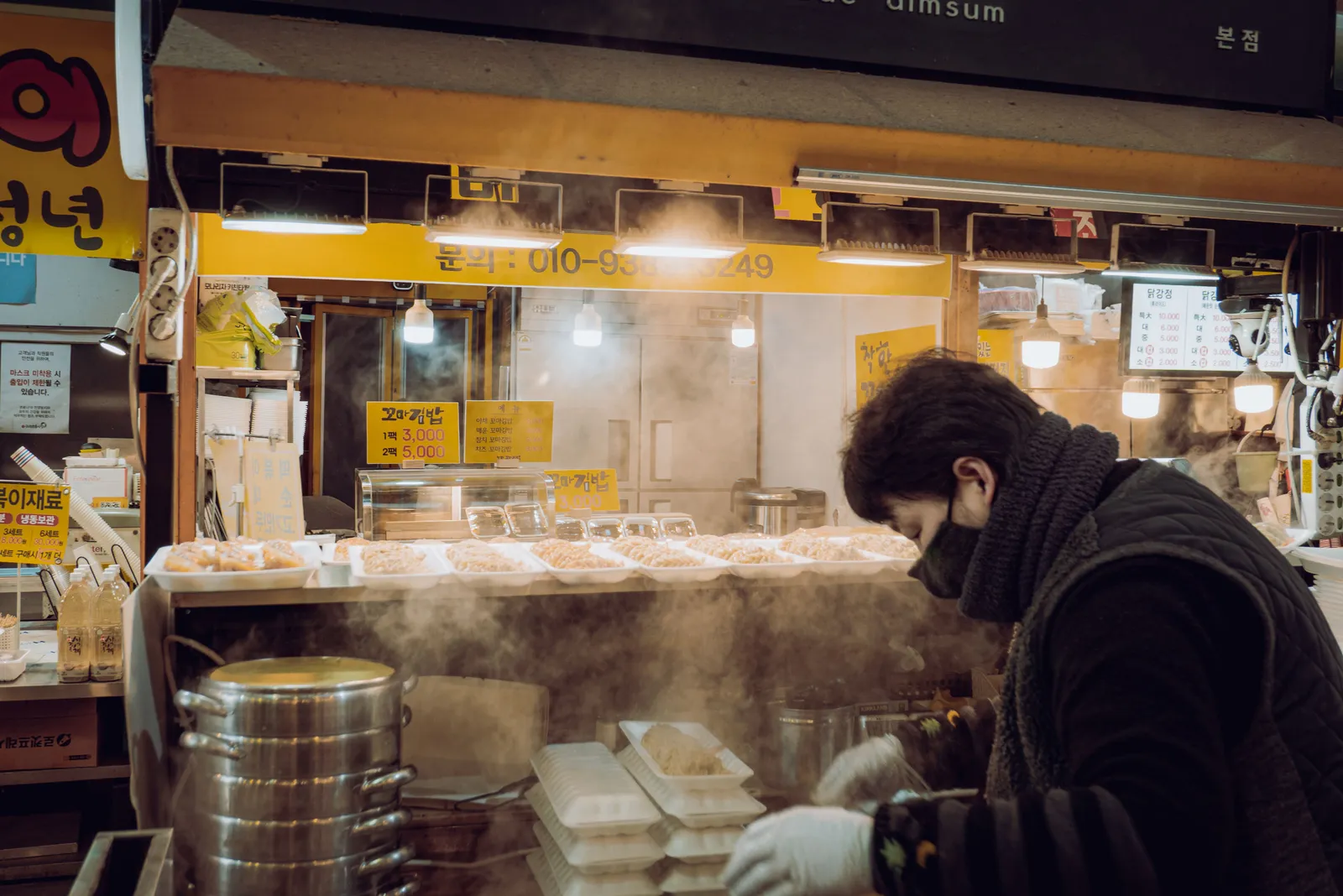
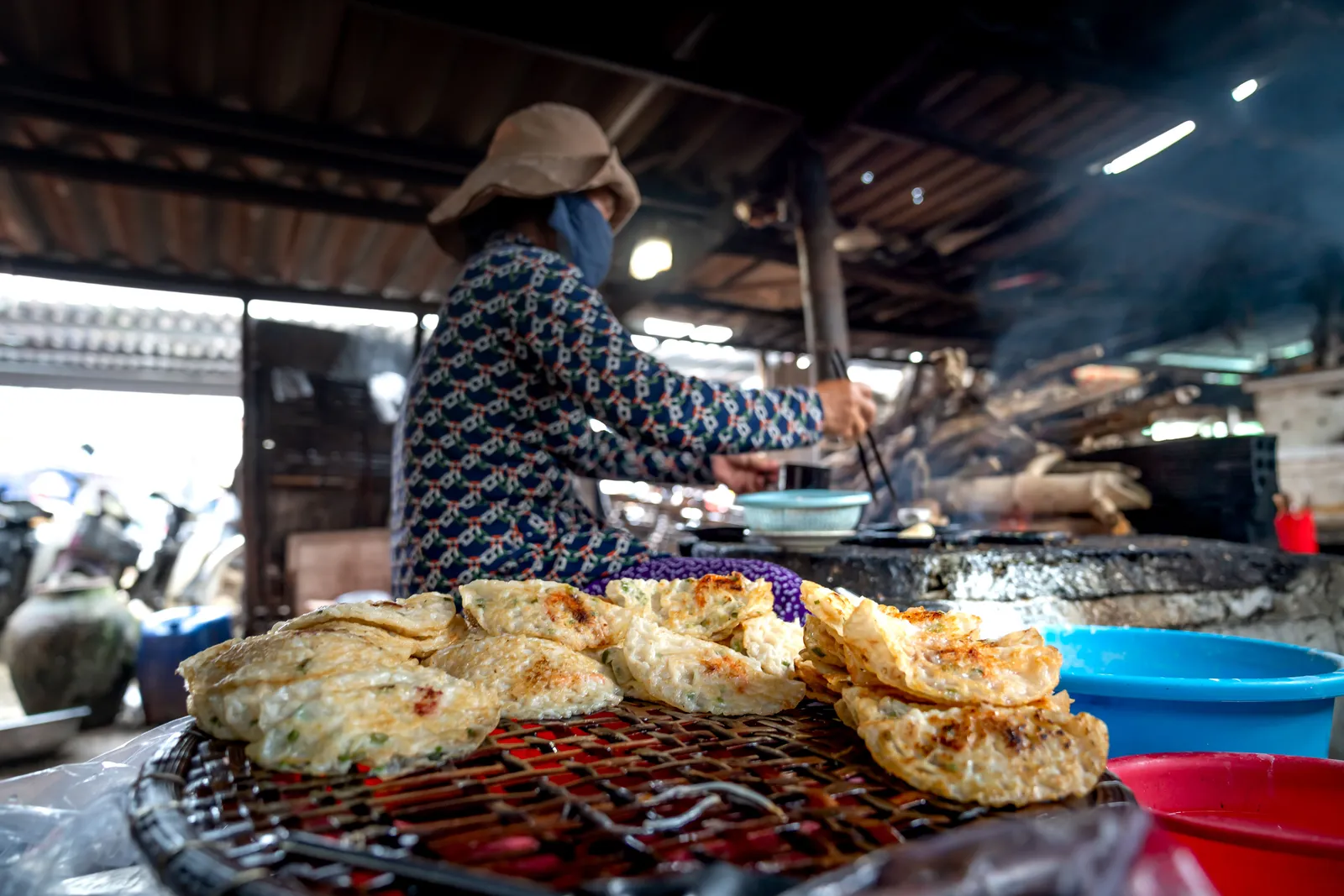
Gwangjang Market in central Seoul is the market most people picture when they say Korean street food, and it earns the reputation: entire aisles are lined with stalls seating people at shared counters rather than food that happens to be sold alongside other goods. It has run for over a century and the food side has grown to dominate large sections of it. Bindaetteok, a thick savoury pancake made from ground mung beans, is the dish most associated with the market, fried fresh on wide flat pans you can watch from a few feet away. Mayak gimbap, small bite-sized seaweed rice rolls dipped in a mustard sauce, is the other order most people leave with, usually alongside a bowl of noodles from a neighbouring stall.
The layout rewards sitting down at one counter rather than trying to sample everything standing. Order two or three dishes to share, take the stool that is free, and expect the vendor to keep half an eye on you while working the pan.
Myeongdong, eaten walking rather than seated
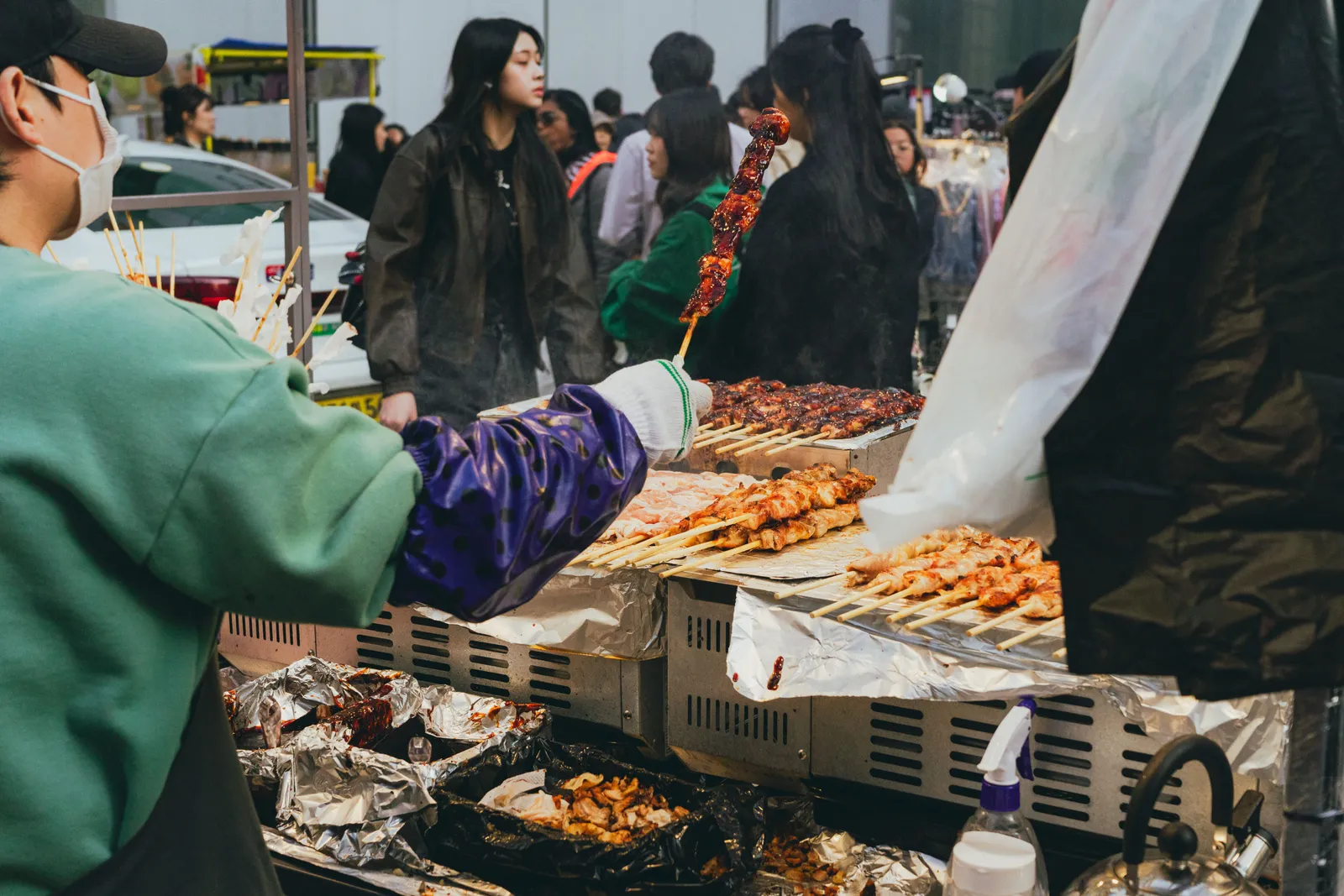
Myeongdong is a shopping district first, but its street running through the centre turns into a dense corridor of food stalls by late afternoon, and it is built for eating while you walk rather than sitting down. Skewered and grilled items dominate, alongside stuffed rolled omelette, cheese-topped corn dogs and a rotating set of seasonal snacks that change through the year. It suits a shorter, grazing visit better than a proper sit-down meal, and pairs naturally with an afternoon of shopping in the same streets.
| Market | Style | Best for |
|---|---|---|
| Gwangjang | Seated stalls, shared counters | A proper sit-down food stop |
| Myeongdong | Walking street food | Grazing between shopping |
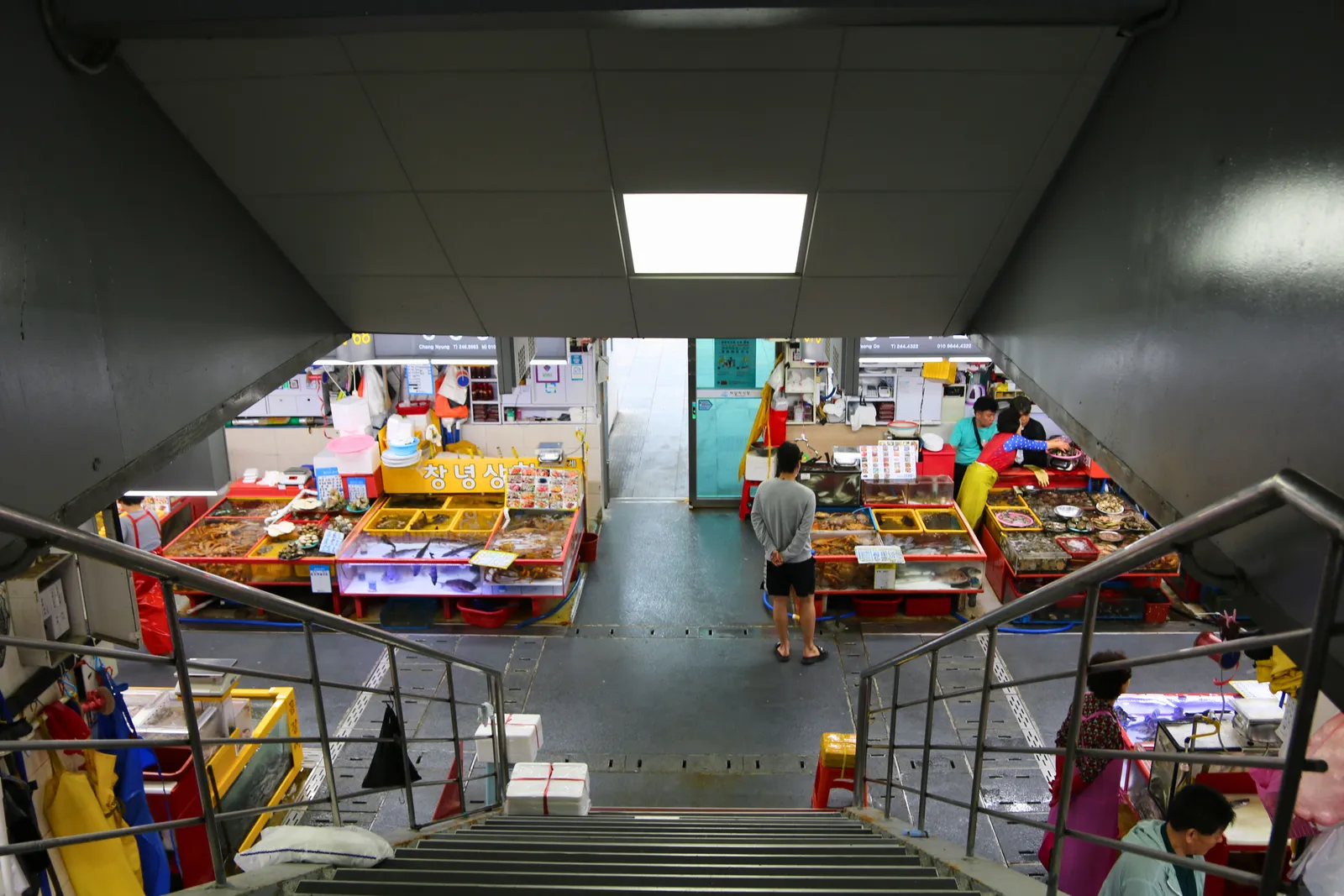
| Busan seafood markets | Fresh catch, cooked to order | Seafood specifically |
Ordering without much Korean
Almost everything at these markets is displayed rather than hidden behind a counter, so pointing at the dish itself, or at what the person next to you is eating, works at nearly every stall. Holding up fingers covers quantity, and vendors who deal with a steady stream of visitors are generally unfazed by this and will not treat it as odd. Save the translation app for something genuinely unfamiliar rather than routine ordering, since it slows things down more than it helps for a dish you can already see and point at.
Skip the guessing at the counterA guided market tour groups the best stalls into one afternoonCash, card and what to actually carry
More stalls carry a card reader than a few years ago, but it is far from universal, and a fair number of smaller or more traditional stalls still prefer cash or do not accept cards at all. This is more common at the older markets like Gwangjang than at newer food streets aimed squarely at visitors. Carrying some smaller notes covers you either way, since whether a given stall takes a card is not always obvious until you are already ordering.
When a market is actually worth visiting
Most food-focused markets build through the afternoon and peak in the early evening once the working day ends, with stalls quietening down again later depending on the spot and the day of the week. Arriving early in the morning is the most common way to be disappointed, since only a fraction of stalls tend to be open and the atmosphere that defines the place has not built up yet. If a visit has to happen at a specific time, early evening is the safer default across most of these markets.
Reading a stall before you order
The busiest stall with a visible queue and food cooked fresh in front of you is generally the safer bet over one that looks quiet, simply because nothing sits around long enough to be a concern. This holds at nearly any street food market anywhere, and Korean markets are no exception. It is worth being a little more cautious with anything raw or only lightly cooked, and standard sense about food that has clearly been sitting out applies here as much as anywhere. For a broader look at Korean food beyond the markets, our guide to Korean food covers restaurant dishes and where they fit against street food. For a fuller sense of what else Seoul has to offer around a market visit, our guide to Seoul is worth reading alongside this one, and for the market side of Busan specifically, our guide to Jagalchi Market covers the country’s best known seafood market in detail.
The short version
Gwangjang Market is the place to sit down properly, Myeongdong is built for eating on the move, and Busan’s markets lean towards fresh seafood over snack stalls. Carry some cash even where cards are increasingly accepted, point at what looks good rather than worrying about the language, and aim for late afternoon into early evening when a market is actually at its busiest. A queue and food cooked fresh in front of you are the best signs a stall is worth stopping at.