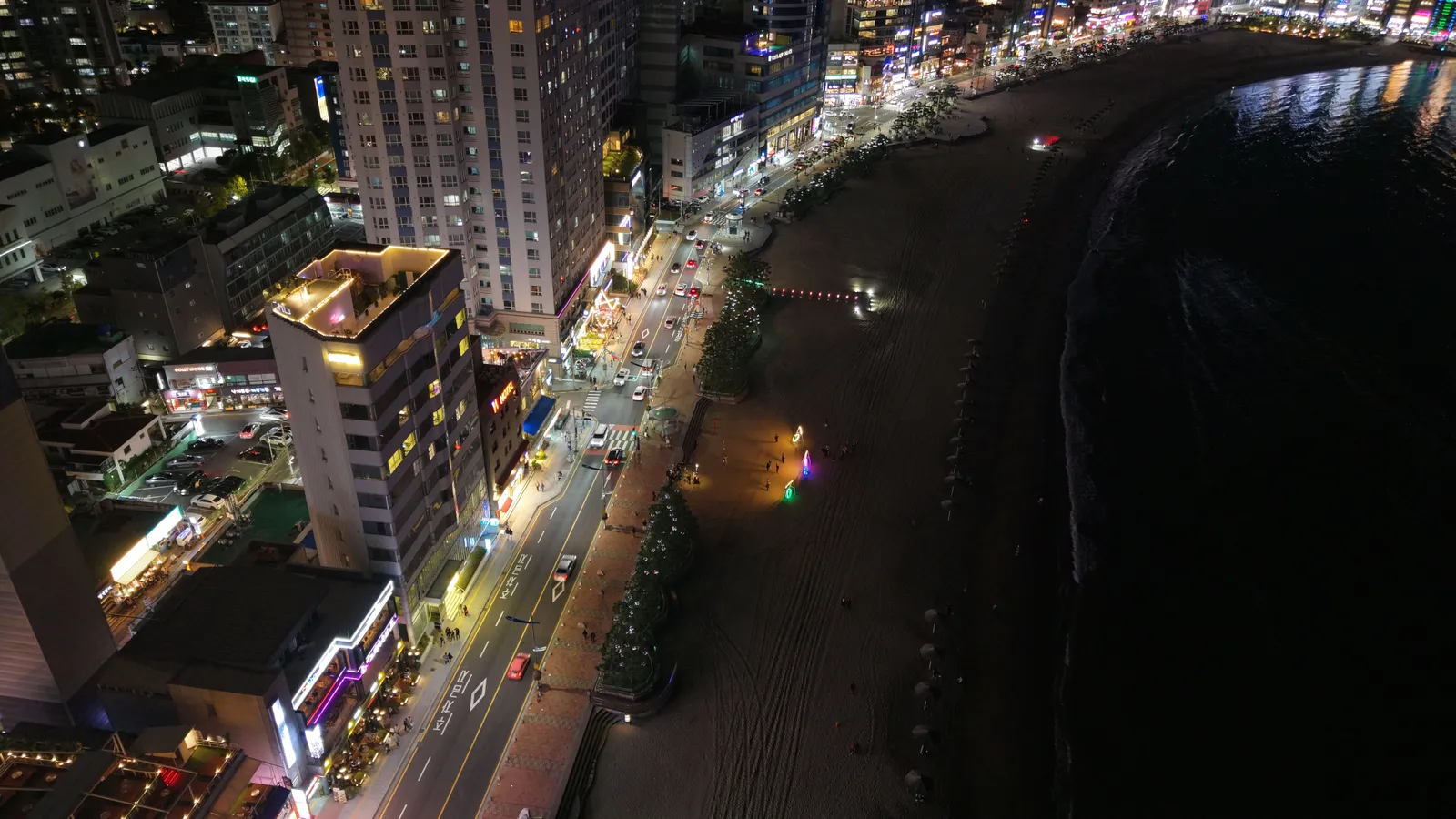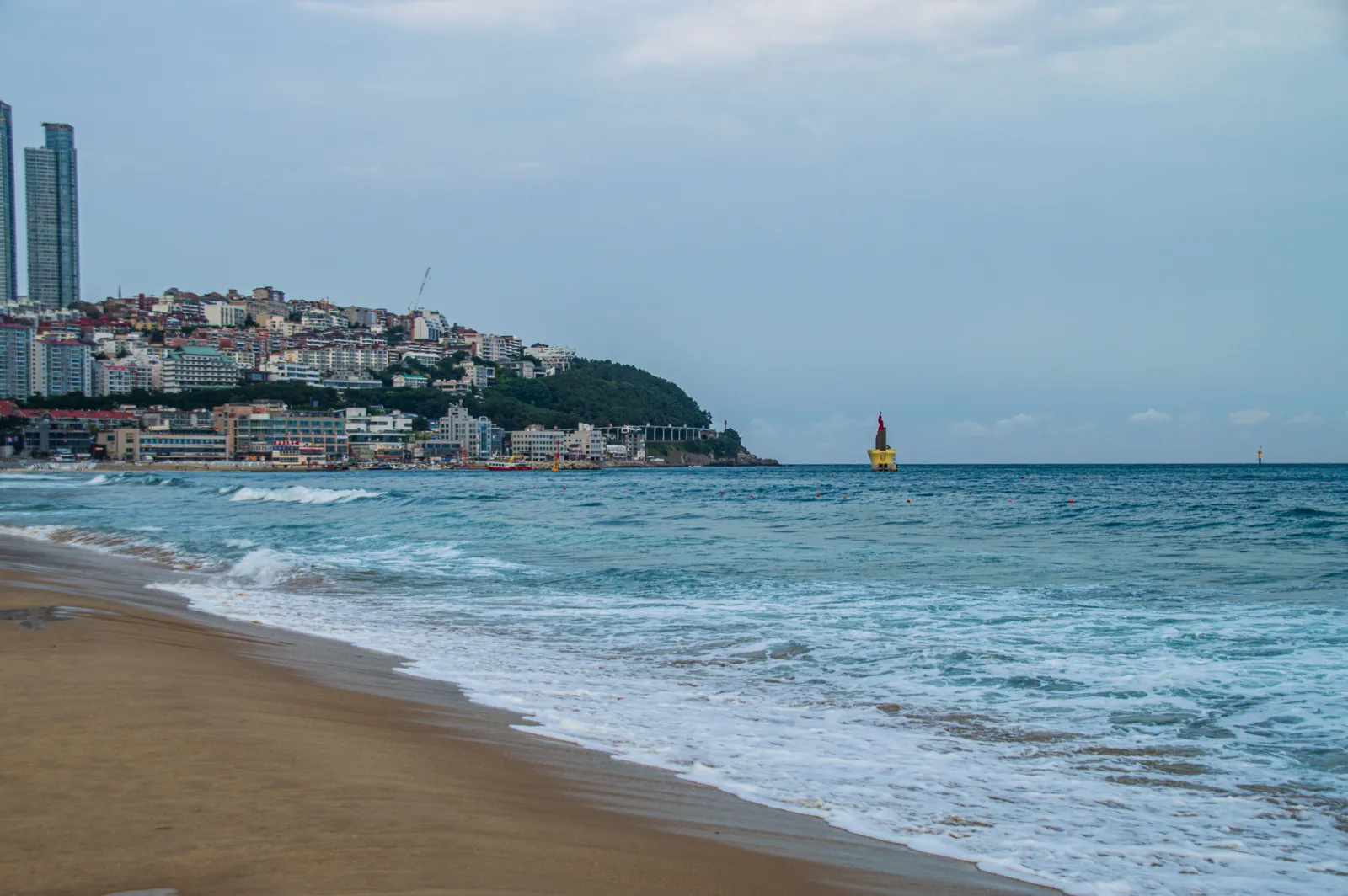
Busan is the second city of Korea and it has beaches in the middle of it, which is the thing that surprises people arriving from Seoul. Two of them matter. Haeundae is the famous one, a long crescent of sand with a wall of towers behind it and the highest concentration of hotels in the city. Gwangalli is twenty minutes away, faces a suspension bridge that lights up after dark, and is where people who live in Busan actually go in the evening.
Haeundae
A long crescent of sand, the best known beach in the country.
High rise hotels immediately behind, several with sea view rooms and pools.
An aquarium on the beachfront, which solves an afternoon with children.
A converted railway line along the coast eastwards, with a scenic path and a rail car.
Facilities: staffed swimming areas in the summer season, showers, rental, food.
The largest crowds in the city in July and August.
Gwangalli
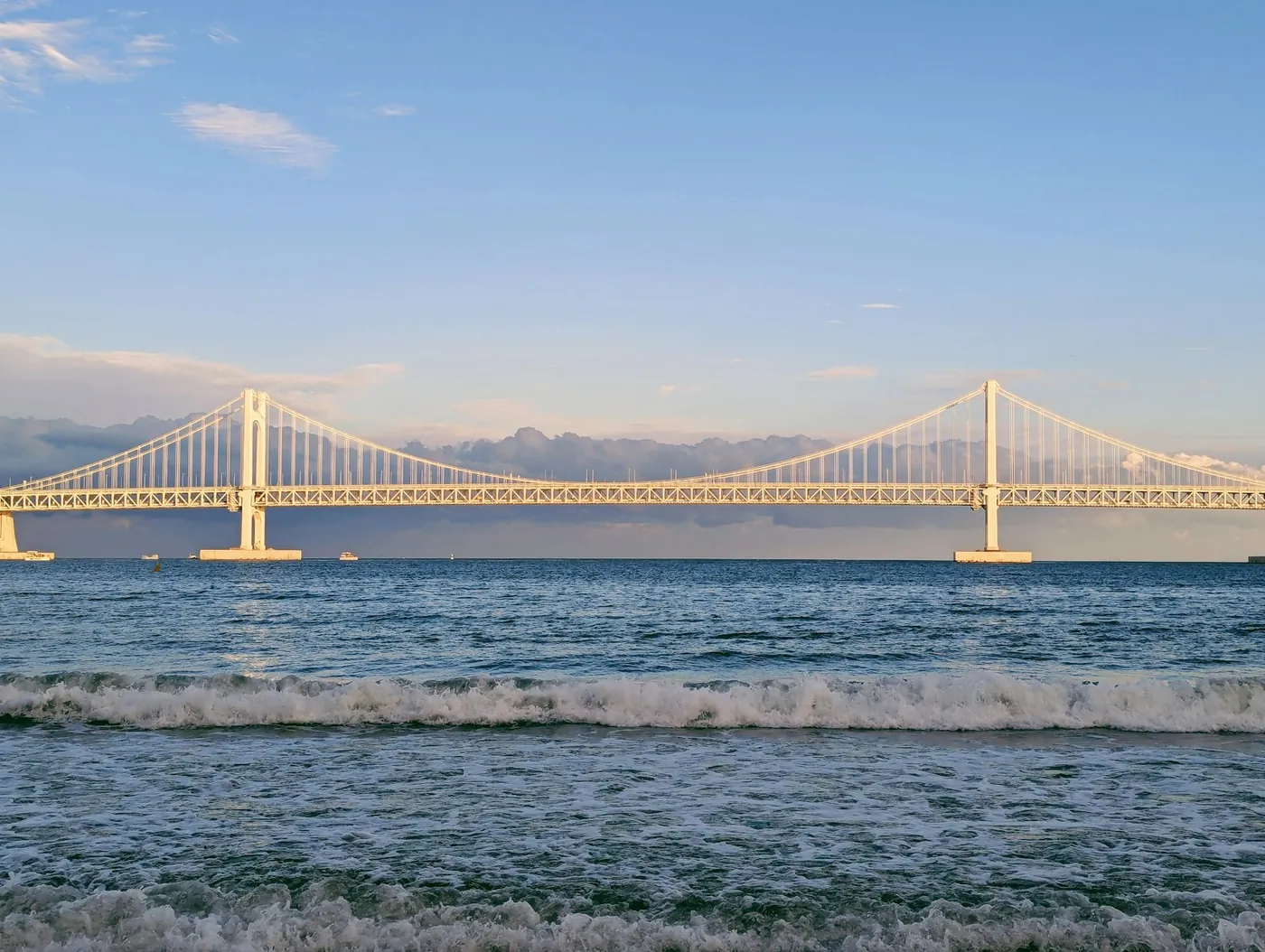
A shorter beach facing directly at the Gwangan suspension bridge.
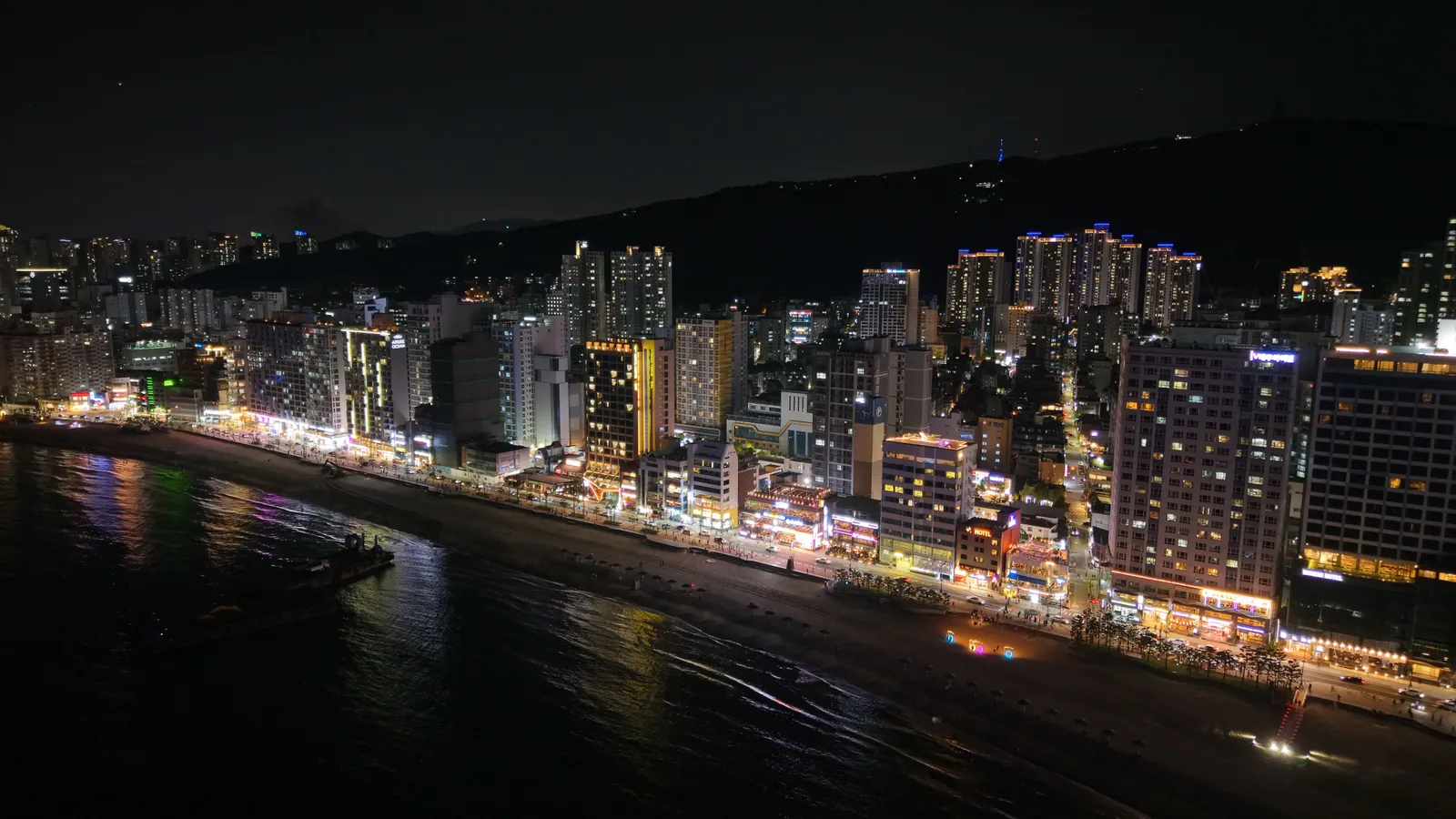
Bridge illumination every night, with scheduled light and drone displays at certain times.
A cafe and bar strip immediately behind the sand, which is the real attraction.
A younger crowd and a better evening than Haeundae.
Fewer hotels and more guesthouses and small places.
Twenty minutes from Haeundae on the metro.
The rest of the coast
Songdo, west, with a cable car running out over the water.
Taejongdae, on the island, for cliffs and pine woods.
Cheongsapo and the coastal railway path, east of Haeundae, for the best walking.
Dadaepo, further west, for sunsets and a fountain.
Ilgwang and the northern beaches, quieter and used by locals.
The Igidae coastal path, between the two main beaches, which almost no visitor walks.
Practical notes
Swimming season runs roughly July and August, when the beaches are supervised.
The water is cool even in high summer.
Typhoon season in late summer can close the beaches for days.
Convenience stores on both beachfronts, which is how most people drink there.
A transport card covers everything, including the buses.
Sunsets are better on the western beaches; sunrise is the Haeundae tradition.
Where this fits in a Busan trip
Half a day at each, on different days, with the evening at Gwangalli.
For the city and how three days fit together, our guide to Busan covers the ground.
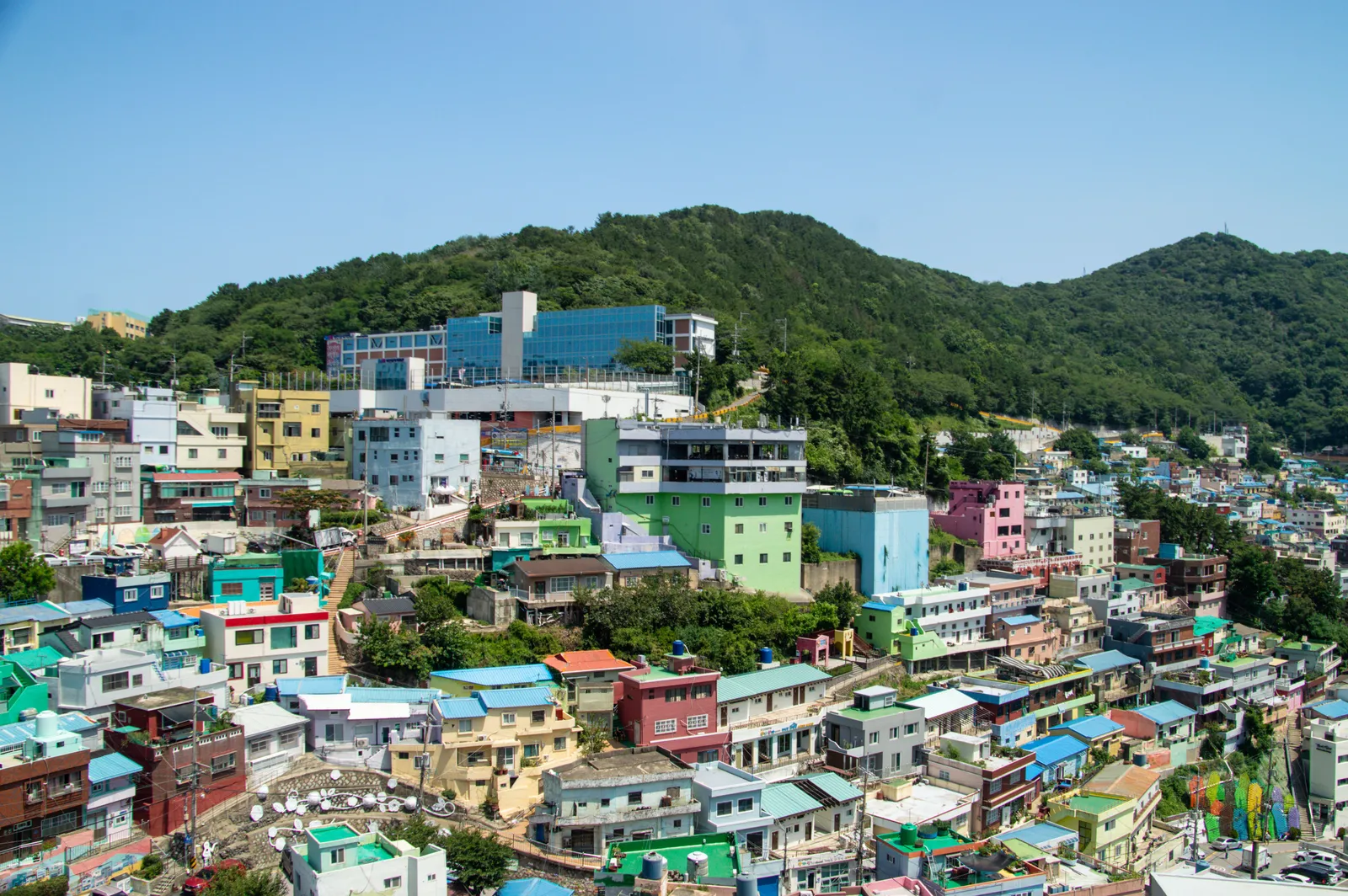
For the hillside neighbourhood on the other side of town, our guide to Gamcheon Culture Village covers the visit.
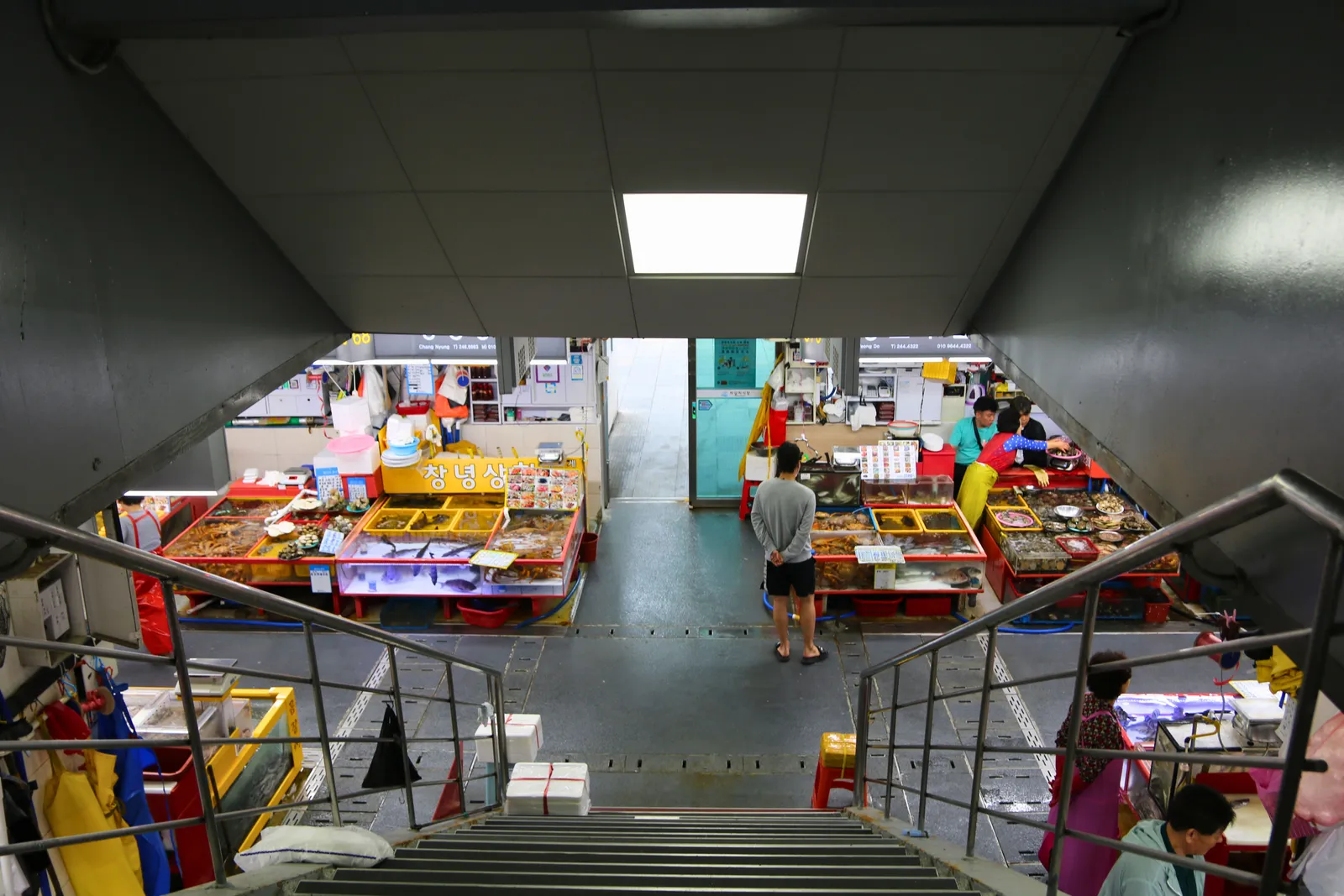
And for the fish market and the street food, our guide to Jagalchi and the Busan markets covers the eating.
The short version
Do not choose: they are twenty minutes apart on the metro. Take Haeundae in the day for the sand, the coastal path east of it and the aquarium, and Gwangalli after dark for the bridge lights and the bar strip behind the beach. Swim only in the supervised summer season, and expect cooler water than you are picturing. Check the light show schedule before deciding which evening. And treat the beaches as one part of Busan rather than the reason to come.