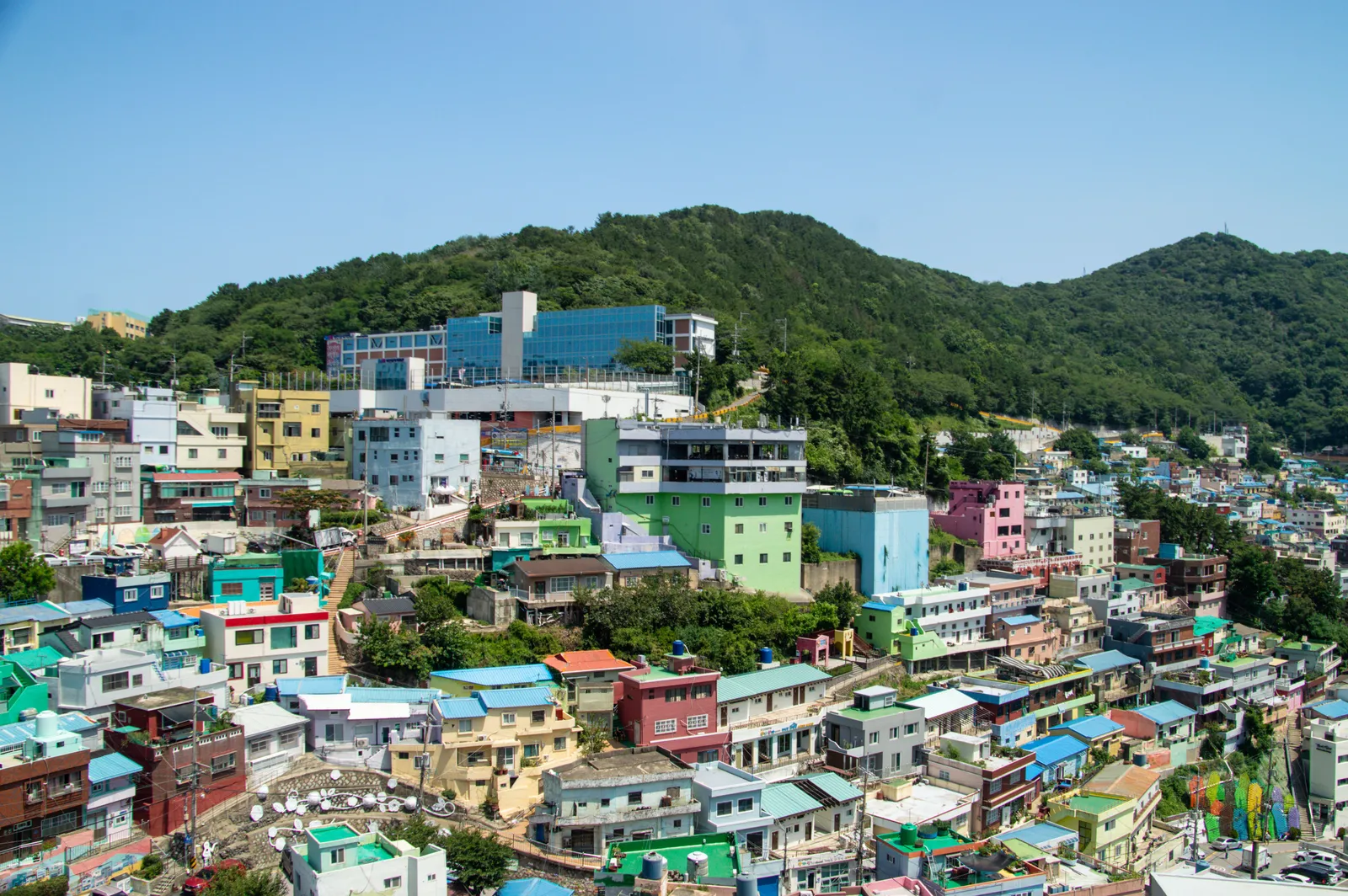
Gamcheon exists because of a war. People displaced in the early nineteen fifties built on a steep hillside in western Busan, in tight rows following the contours, and what resulted was a dense low rise settlement with lanes too narrow for cars and houses stacked almost on top of one another. Half a century later an art project painted it, installed sculptures in the alleys and opened studios, and the neighbourhood became one of the most photographed places in Korea. The people who live there did not go anywhere.
What is actually there
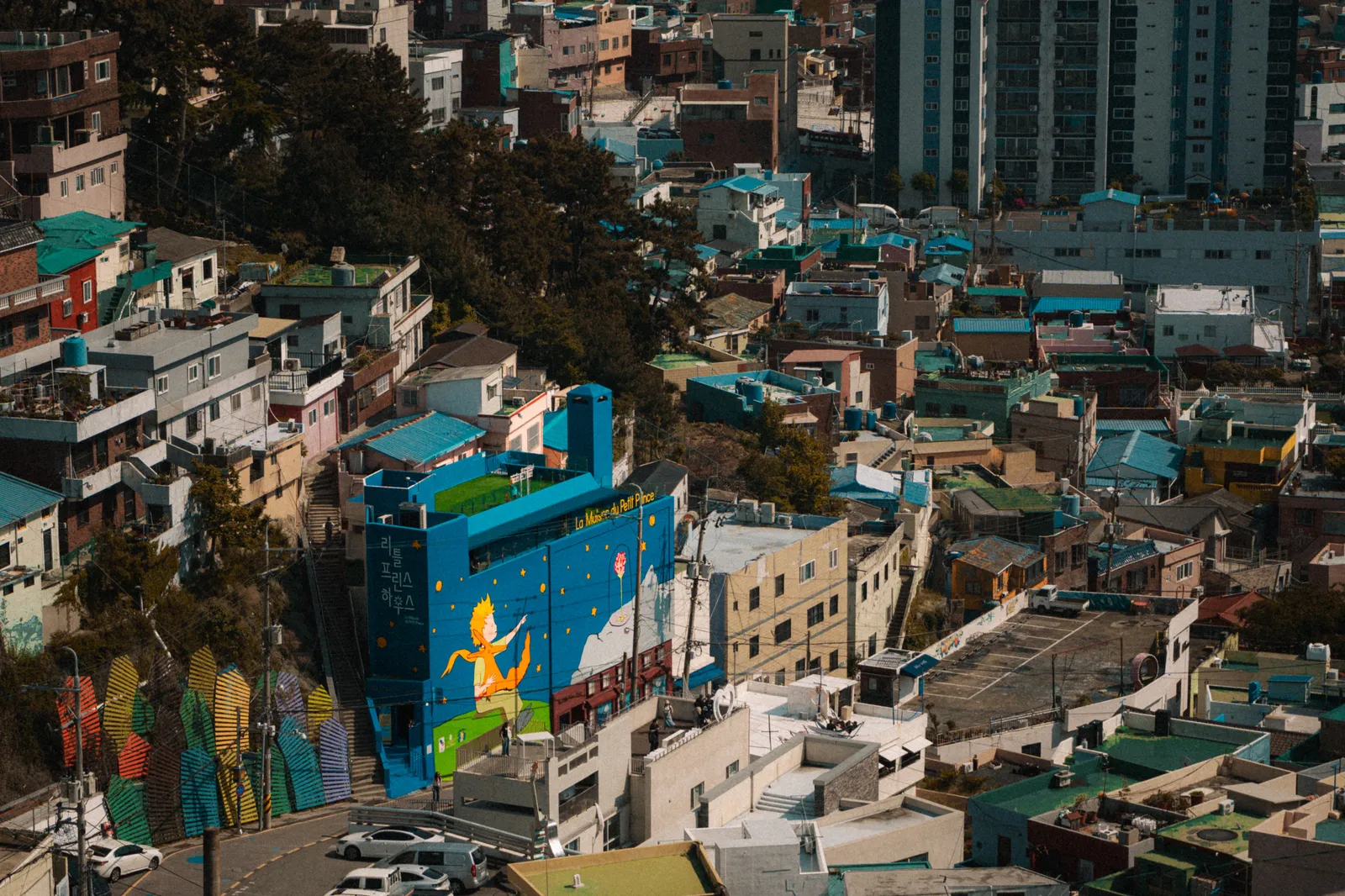
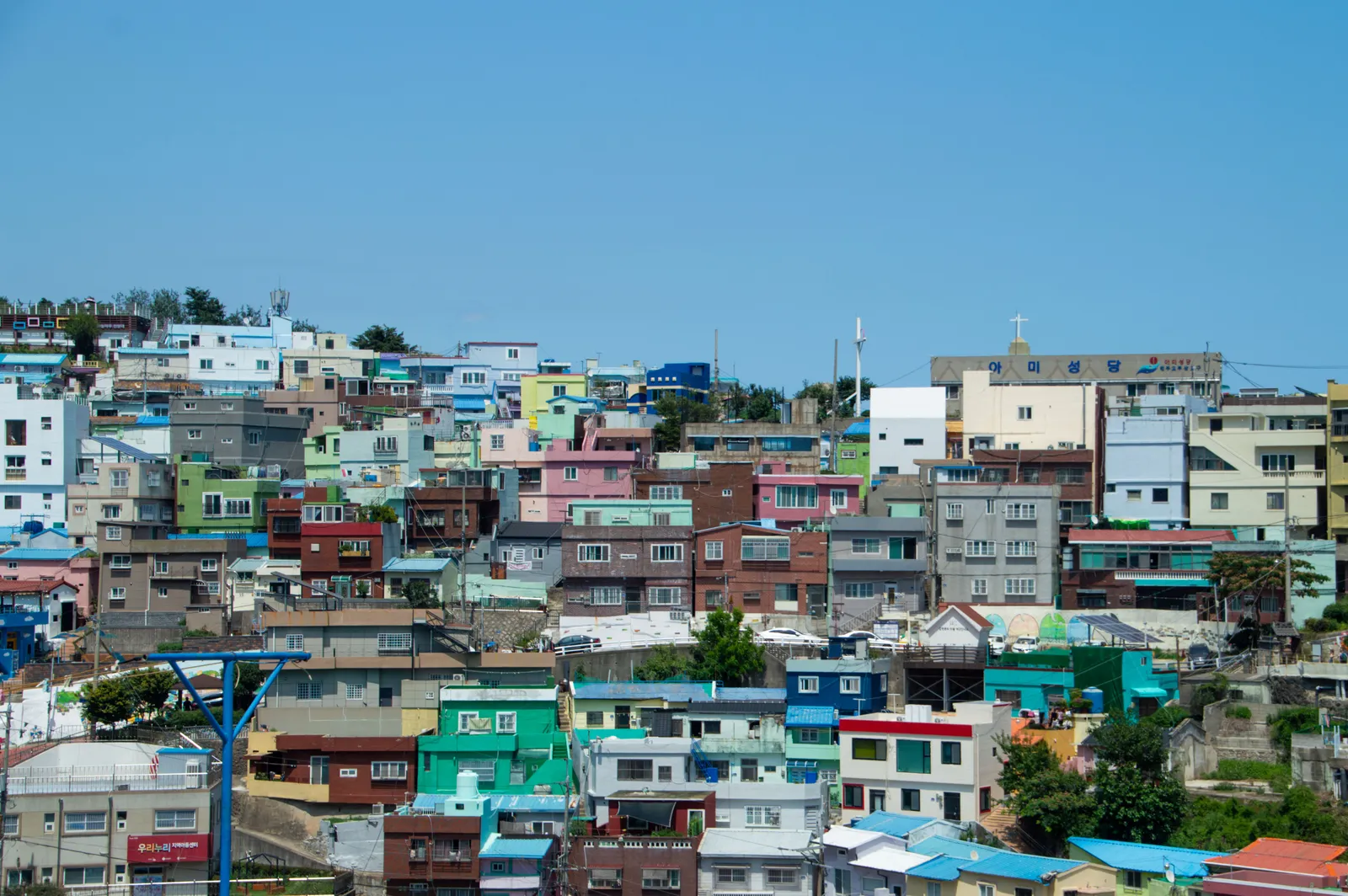
Painted houses in blocks of colour across the whole hillside, which is the image.
Sculptures and murals worked into the lanes, some obvious and some easy to walk past.
Viewpoints looking east over the roofs towards the port and the sea.
Small galleries and workshops, several run by artists who live there.
Cafes, a good number, most of them with a terrace facing the view.
Residents, in most of the buildings, on the same lanes.
How to do it
Uphill by bus or taxi from Toseong metro station, downhill on foot.
Two hours, comfortably, including a coffee and a gallery.
A stamp map from the information centre, which is a route rather than a gimmick.
The upper lanes for the views, the middle ones for the art.
Weekday morning for quiet, late afternoon for the light.
Proper shoes, because these are steps rather than pavements.
Combining it with the rest of Busan
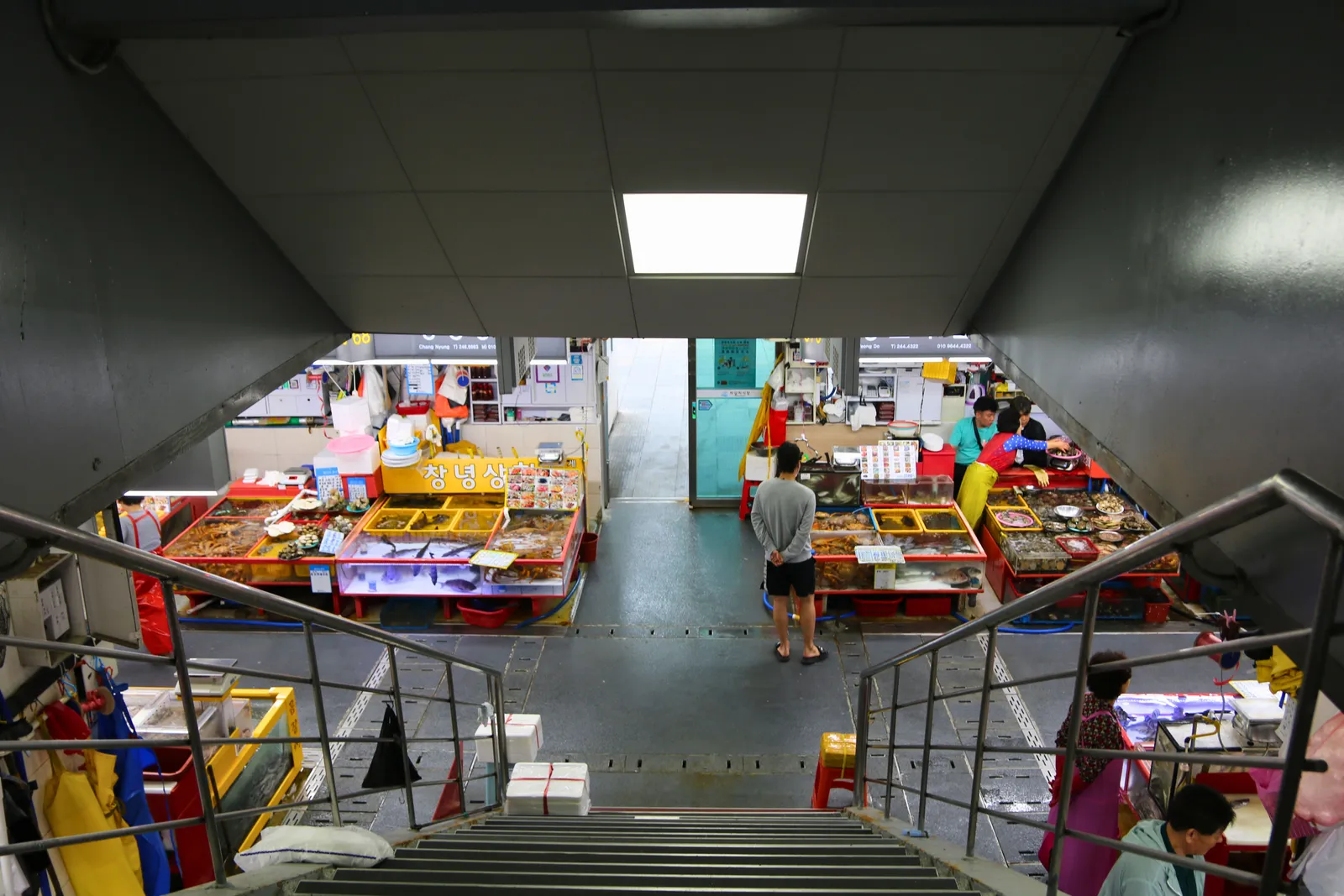
Jagalchi fish market and the old Nampo district, both a short metro ride away.
Songdo, with a cable car along the coast, immediately south.
Taejongdae, on the island, for cliffs and a coastal walk.
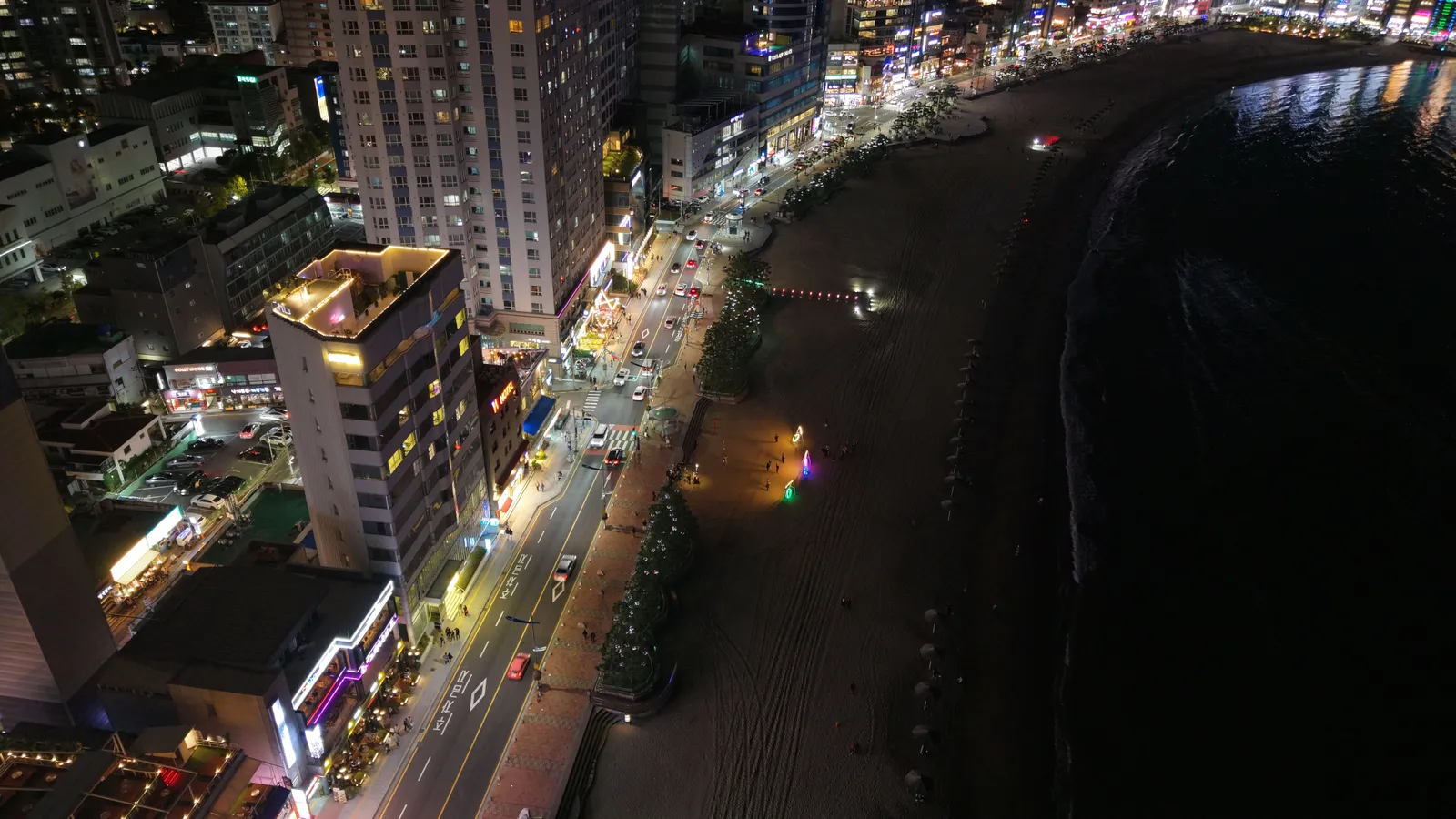
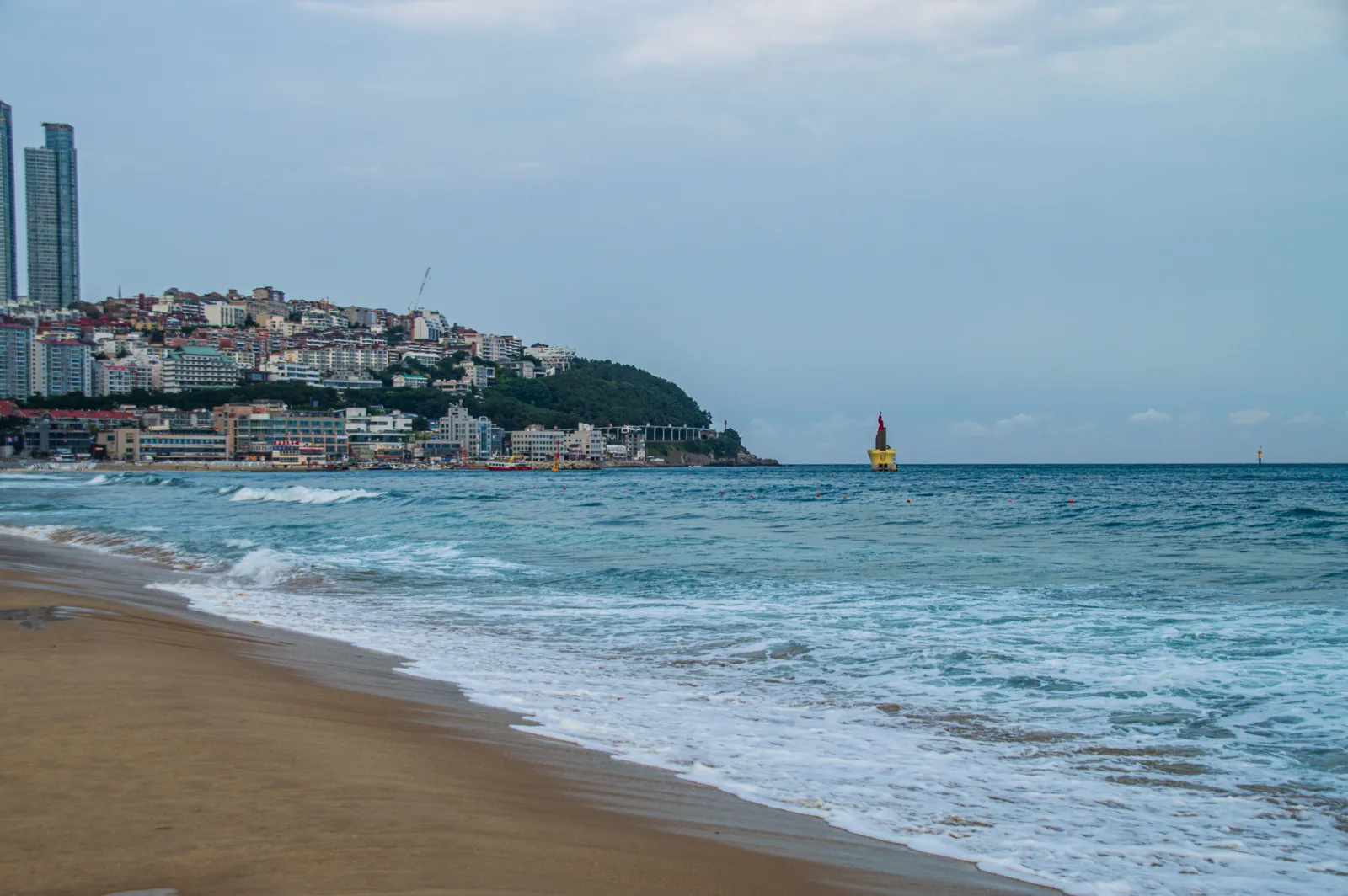
Haeundae and Gwangalli, the beaches, on the other side of the city.
Beomeosa temple, in the hills, for the quiet version of Busan.
All on the metro, which is the great convenience of this city.
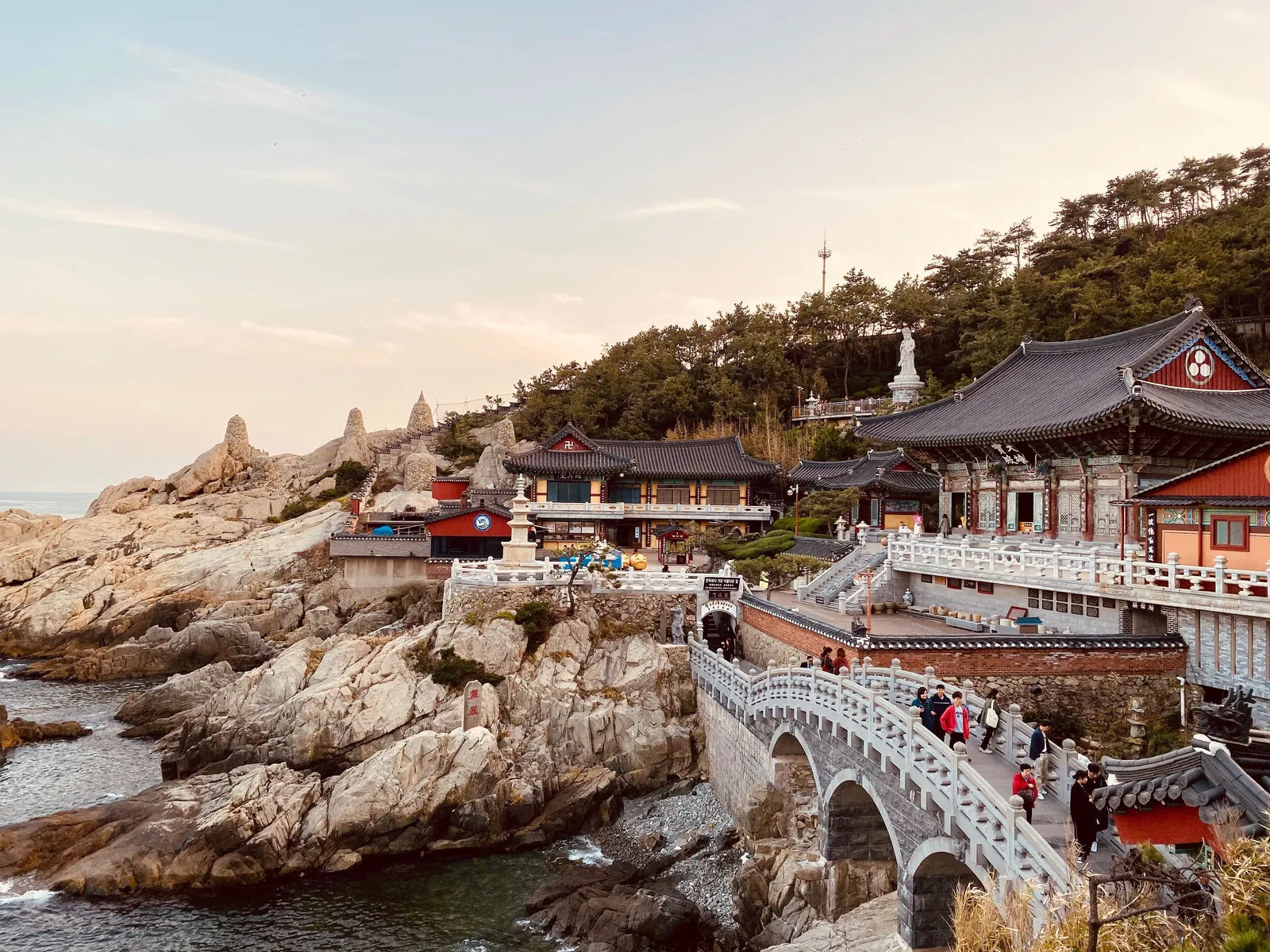
The one worthwhile exception to the metro rule is out east on the coast, where our guide to Haedong Yonggungsa covers the seaside temple that is best reached early and rewards the alarm.
Practical notes
Free to walk, with modest charges at individual galleries.
Cards work everywhere, including the small cafes.
Steps and slopes throughout; not accessible for wheels.
Toilets at the information centre and in the cafes.
Rain makes the lanes slippery and removes the views.
Two hours is the right allocation; four is too many.
Where this fits in a Busan trip
A morning, on the first day, before the beaches and the markets.
For the city as a whole and how three days fit together, our guide to Busan covers the ground.
For the beaches and the bridge on the other side of town, our guide to Haeundae and Gwangalli covers the coast.
And for the fish market and the street food nearby, our guide to Jagalchi and the Busan markets covers the eating.
The short version
Take the metro to Toseong and then a taxi or the local bus up the hill, so the whole visit is downhill. Allow two hours, follow the stamp map, take the upper lanes for the views and the middle ones for the art. Go on a weekday morning or in the late afternoon. Read the signs, keep your voice down and do not photograph into anybody’s window. Buy a coffee from a local cafe, and then take the metro on to the fish market.