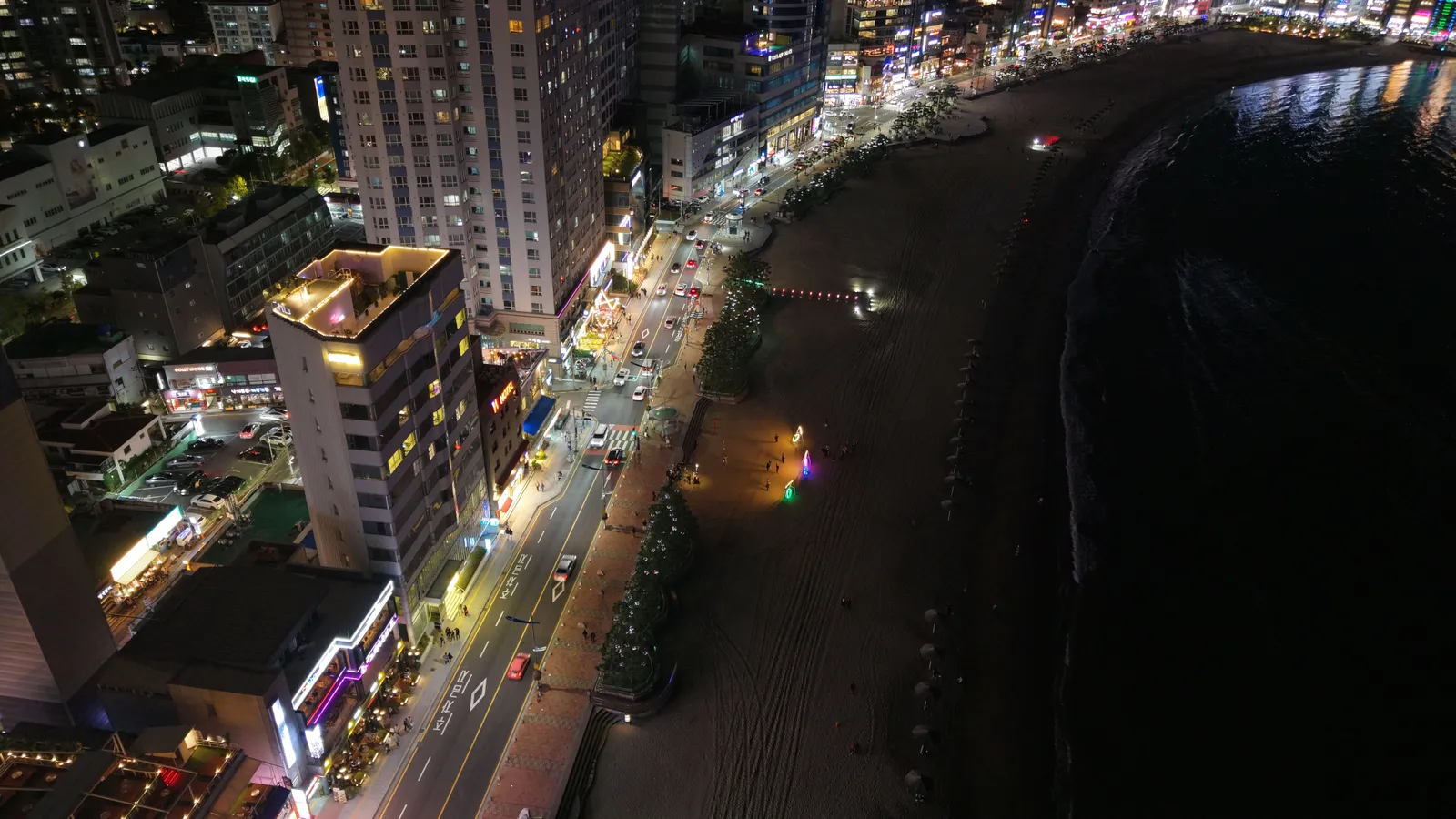
If Seoul is Korea at full volume, Busan is Korea with its shoes off. The country’s second city curls around a working harbour and a string of beaches, backed by green mountains, and it moves at the unhurried pace of a place that has always lived by the sea. You come for the sand and the seafood, but you stay for the mood: a big city that somehow feels like a holiday. Reachable from Seoul in a couple of hours by bullet train, it is the easiest and most rewarding second stop on a Korean trip.
Getting here, and where the train drops you
The KTX from Seoul is the obvious way in: roughly two and a half hours down the spine of the country, departures every half hour or so at peak times, and a seat with a table and a plug. Book ahead for weekends and holidays, when trains genuinely sell out, and note that reserved seats mean you cannot simply hop on a later service.
The train arrives at Busan Station, which sits in the old downtown rather than out by the beaches, a few minutes from Jagalchi and the markets and a good half hour on the metro from Haeundae. That single fact should shape where you book your first night: arriving late and then crossing the city with luggage is an avoidable hour.
Busan also has its own international airport with a light rail link into the metro system, which makes it a practical place to start or finish a Korea trip rather than always looping back through Seoul.
How Busan is put together
Busan is long and thin, wrapped around bays and hills, so you will not walk it end to end. The good news is the metro is clean, cheap and English-signed, and a T-money card covers it along with the buses. Cluster your days by area rather than criss-crossing town.
The Haeundae area in the east is beach and resort central. The old downtown around Nampo-dong and Jagalchi holds the markets, the fish market and the hillside villages. Out on the coast sit the sea temples and cliff walks. Get a Korean map app and let the metro plus the odd short taxi do the work.
The beaches and the coast
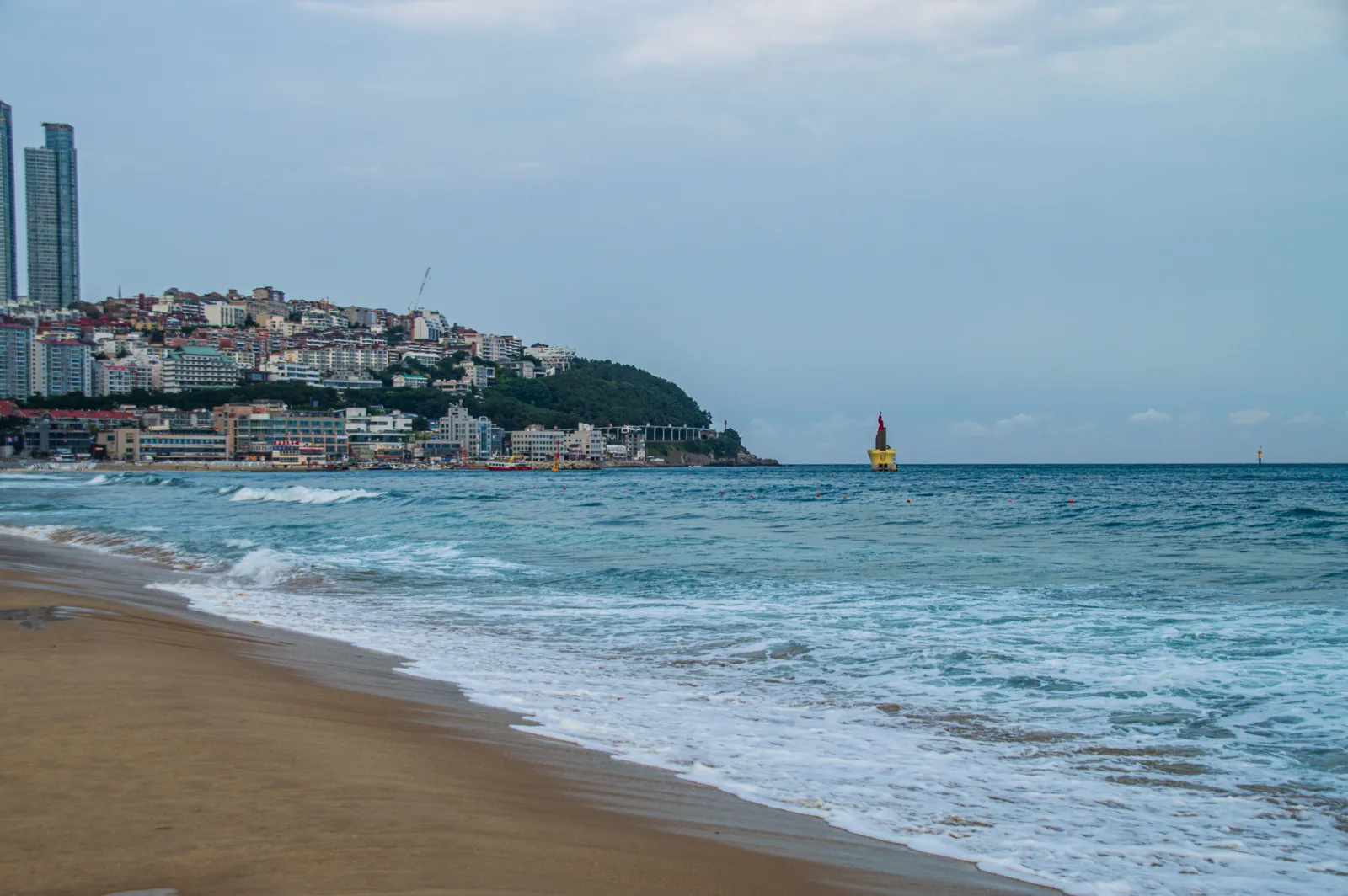
Haeundae is the famous one: a wide arc of pale sand backed by high-rise hotels, buzzing all summer and lined with cafes and seafood restaurants year round. Quieter Gwangalli next door has the better view, its sand facing the graceful, illuminated Gwangan Bridge that lights up after dark. For something wilder, walk the cliffside Igidae coastal path or the seaside boardwalks near Songjeong.
The two headline beaches are close together and genuinely different in character, and choosing between them decides the shape of your evenings: the broad, resort-lined one suits families and daytime, the smaller one suits a late drink with the bridge lit up.
One seasonal note that catches visitors out. The beaches run an official swimming season in high summer, with lifeguards, changing rooms and the full apparatus of a Korean beach day. Outside it the sand is open and beautiful to walk, the cafes stay busy, and the water is cold and unsupervised. Spring and autumn here are for the coastal path rather than the swim.
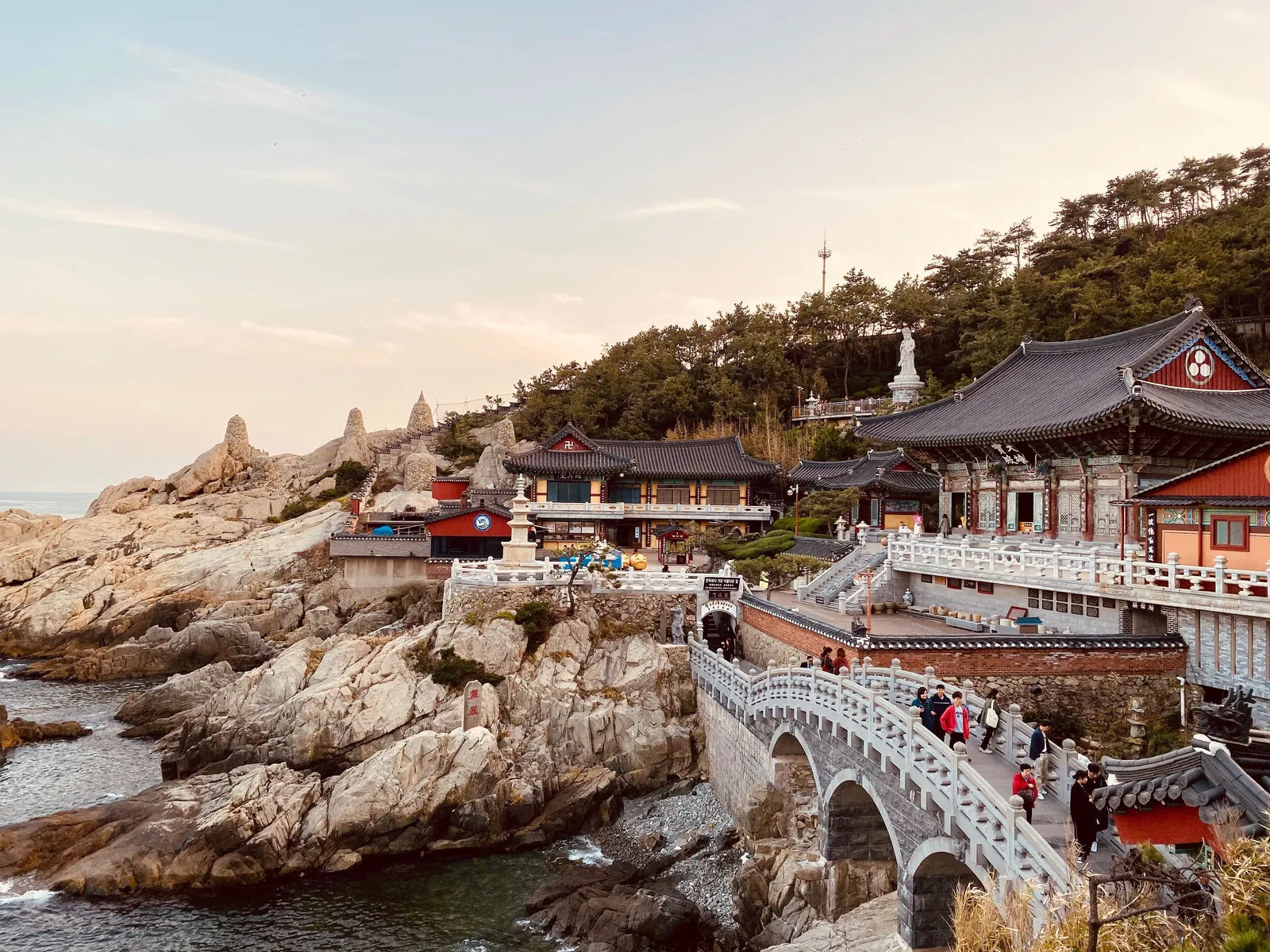
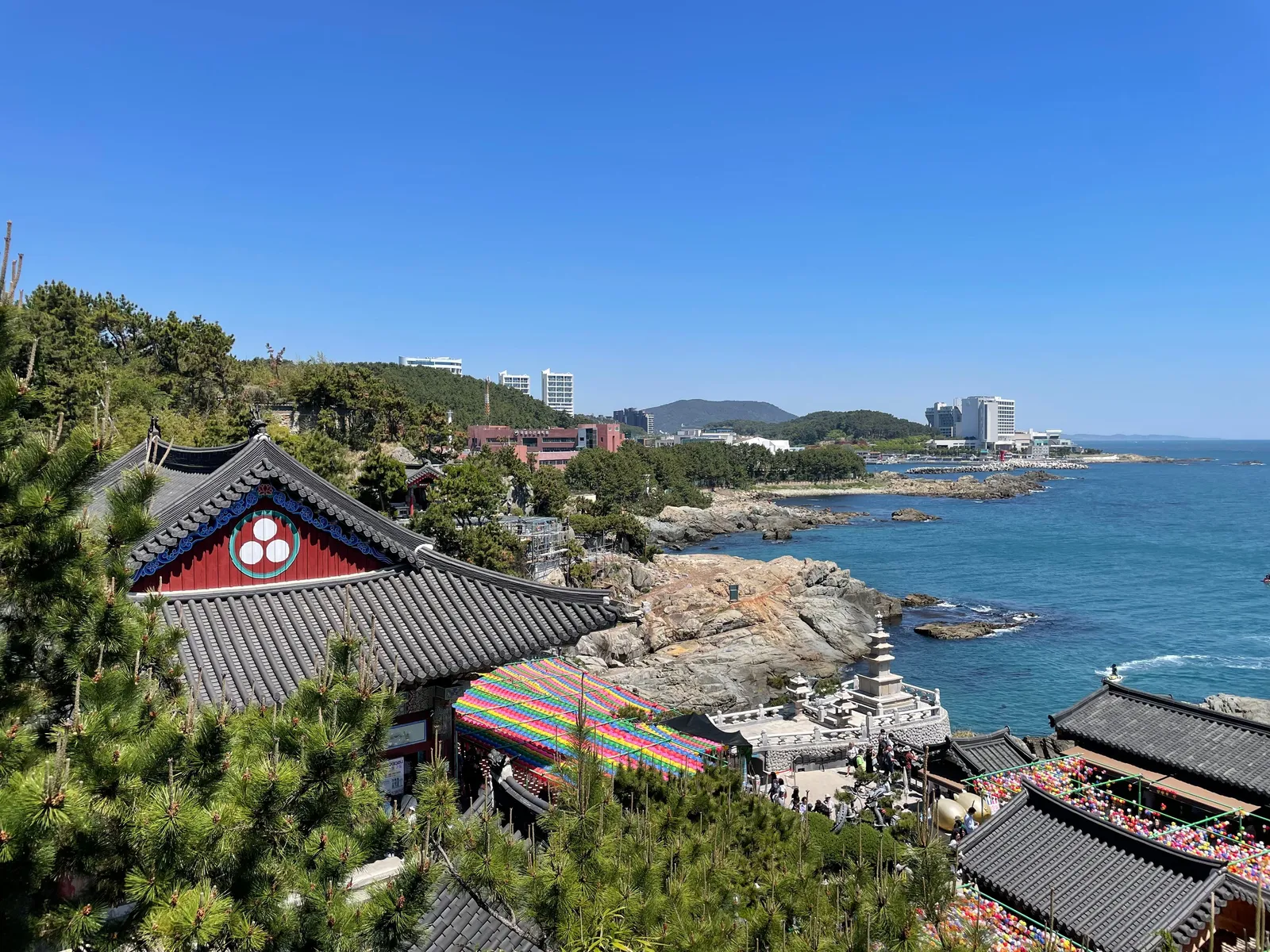
Do not miss the coastal temples. Haedong Yonggungsa is a rare Buddhist temple built right on the rocks above the crashing sea, spectacular at sunrise. The Oryukdo Skywalk, a glass-floored ledge over the water, and the pretty pastel houses and railway line of Cheongsapo round out a perfect coastal day.
Gamcheon, the markets and the old town
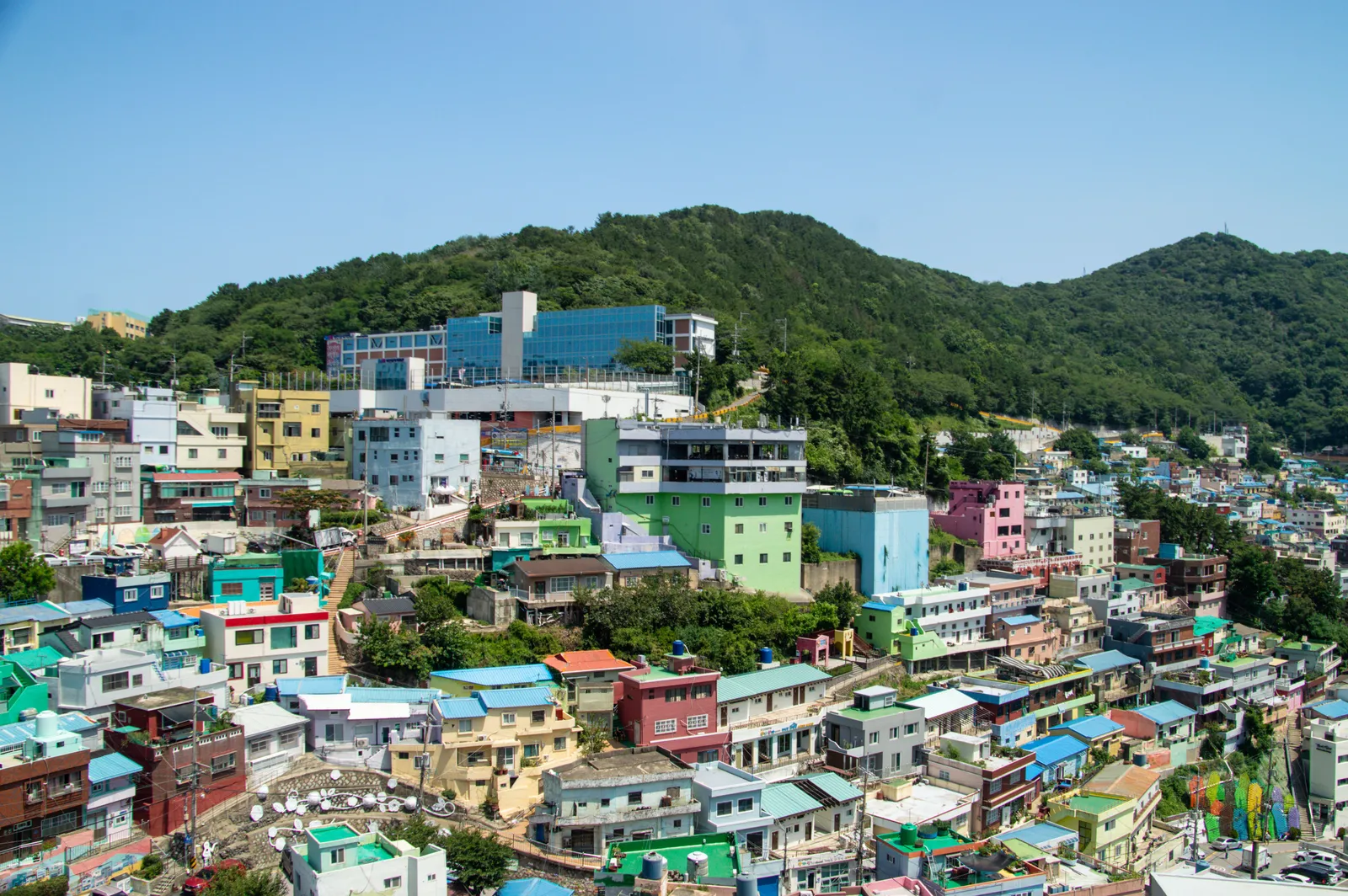
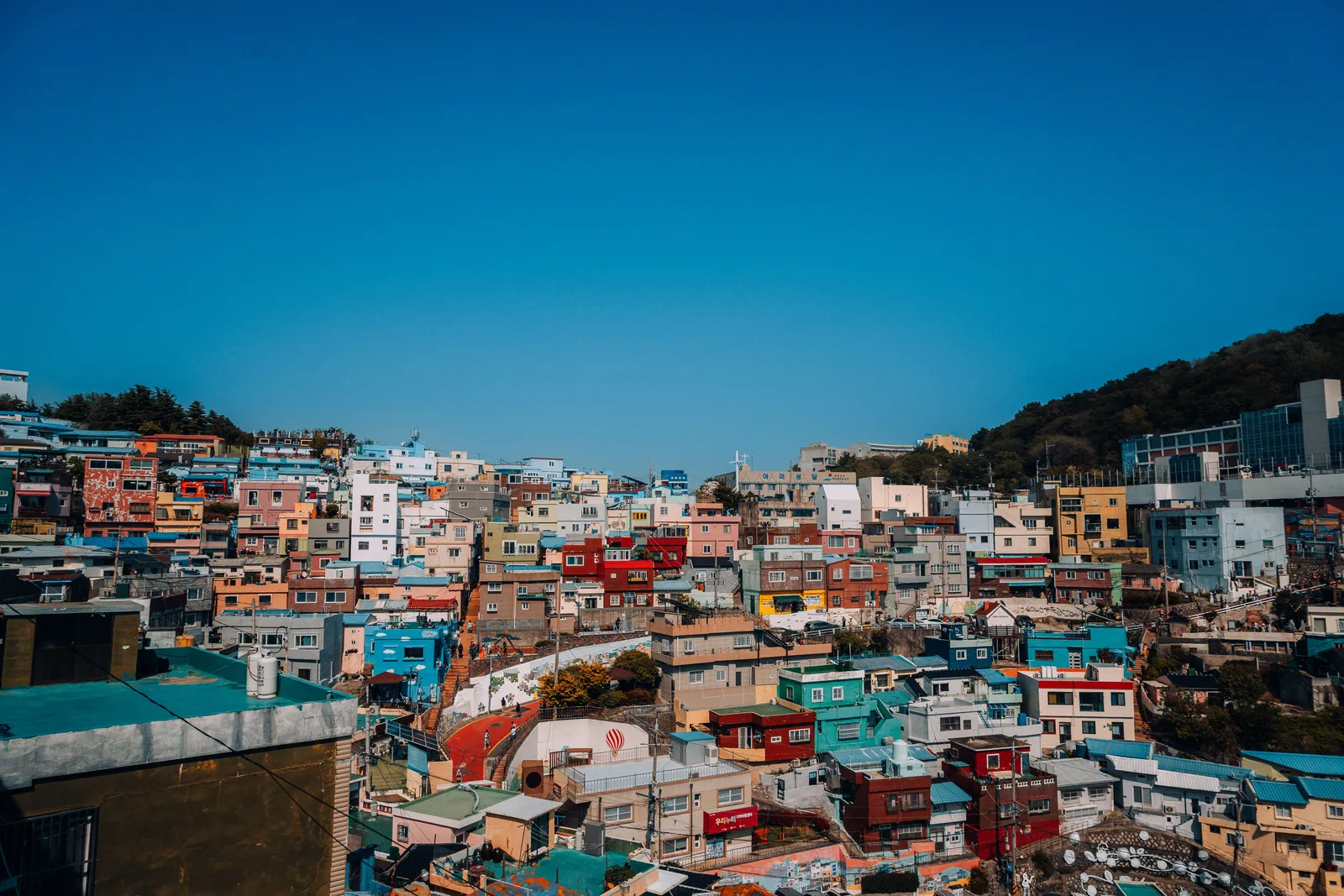
Busan’s most photographed spot is Gamcheon Culture Village, a hillside of brightly painted houses stacked like building blocks, threaded with murals, tiny galleries and cafes. Go early, wear good shoes for the steep lanes, and be respectful: people actually live here. Beneath the paint it is a settlement founded by refugees and later transformed by an art project, which is worth knowing before you photograph somebody’s front door.
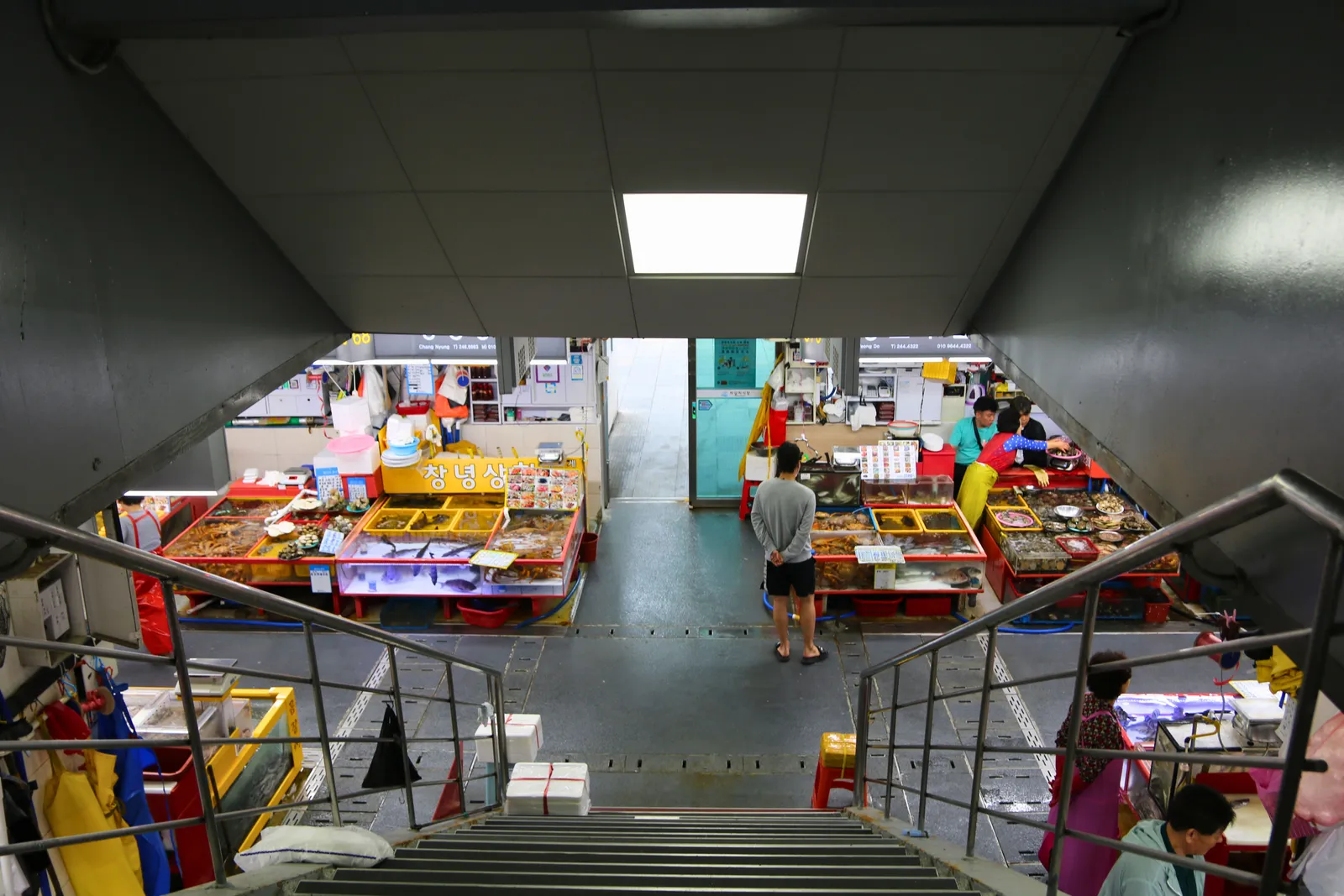
Down in the old town, the Jagalchi Fish Market is a roaring, briny cathedral of seafood, Korea’s largest, where you pick your catch downstairs and have it cooked and served upstairs. Around it spread the food alleys and stalls of BIFF Square and Gukje Market, and the towering escalators and bookstalls of Bosu-dong Book Street. This is Busan at its most authentic and delicious.
Let the seafood market come aliveA guided food tour of Jagalchi and the old-town alleys means you eat the right things and skip the tourist trapsWhere to eat
Busan eats from the sea, and you should too. Sit at Jagalchi for the freshest hoe, Korean-style raw fish, or a bubbling seafood stew. Try the local specialities: dwaeji gukbap, a hearty pork-and-rice soup born in this city, milmyeon cold wheat noodles, and ssiat hotteok, a Busan street snack of a sweet pancake stuffed with seeds and nuts.
For the full experience, spend an evening among the food tents and stalls of Gukje Market or the seafood restaurants along Gwangalli beach, plate after plate arriving as the bridge glows across the water.
Two of those local dishes carry the city’s history in them. Busan was the country’s refuge during the war, its population swollen with people from the north, and both dwaeji gukbap and the cold milmyeon noodles were invented in that period from what was to hand. Ordering them is not just eating well, it is eating the reason this city feels different from Seoul.
Nightlife and day trips
By night, Gwangalli is the place to be, its beachfront bars and rooftops looking out at the illuminated bridge, while Seomyeon downtown has the densest cluster of bars, clubs and late-night eateries. It is a more relaxed scene than Seoul, more about a cold beer by the sea than a club until dawn.
For day trips, the jewel is Gyeongju, the ancient capital of the Silla kingdom, an hour away, where grassy royal tombs, a stone grotto Buddha and the serene Bulguksa temple make an open-air museum of early Korea. Closer to home, ride the pretty Haeundae Blueline Park beach train along the coast, or take the ferry out to the cliffs and lighthouse of Taejongdae.
Where to stay
Three areas, three different trips. Haeundae puts you on the famous beach with the resort hotels, the aquarium and the best swimming, at the cost of being furthest from the markets and the old town. Gwangalli trades a little polish for the better view, a younger scene and a shorter hop into the centre. And Nampo-dong or around Busan Station puts the markets, Gamcheon and the KTX on your doorstep, which suits a short stay or a trip that is more about the city than the sand.
The practical rule: if you are here for two nights, stay central and visit the beaches. If you are here for four or more, stay by the sea and enjoy the commute, because the metro makes it painless.
When to go
Late spring and autumn are the best all-round months: mild, clear, comfortable for the coastal walks and the hillside stairs, with the added draw of the city’s film festival in October. Summer is beach season and the city at its most alive, and it is also hot, humid, crowded and the part of the year when a typhoon can pass through and shut things down for a day or two.
Winter is mild by Korean standards and genuinely pleasant, with clear skies, empty beaches and the markets at their most appealing when a hot soup is exactly what you want. Our guide to the best time to visit Korea sets out the whole year, including how differently the south coast behaves from Seoul.
Two or three days, and how to spend them
Busan is long and the sights sit at opposite ends of it, so the way to enjoy it is to give each day a geography rather than a checklist.
Day one, the east and the coast: the sea temple in the early light, the Skywalk and the coastal path, then an afternoon on Haeundae or Gwangalli and dinner on the sand with the bridge lit up.
Day two, the west and the old town: Gamcheon in the morning before the heat and the crowds, down to Jagalchi for lunch straight out of the tank, then the market alleys, the book street and an evening in Seomyeon.
Day three, if you have it: either the ancient capital at Gyeongju, which is the best day trip in this half of the country, or a slow local day with a beach train ride, a bathhouse and one more bowl of pork soup.
Practicalities worth knowing
Get a T-money card at any convenience store on arrival: it covers the metro, the buses and even small purchases, and it removes every ticketing question for the rest of the trip. Cards are accepted almost everywhere and contactless is the norm, but a little cash is useful at market stalls.
Two habits make the city easier. Download a Korean map app, because the international ones are unreliable here for walking and transit directions, and Busan’s hills mean the route matters. And consider a jjimjilbang, the Korean bathhouse, which is a genuine local institution rather than a tourist activity, and the best possible antidote to a day spent climbing Gamcheon’s stairs.
The short version
Take the KTX down from Seoul, get a T-money card, and give Busan two or three unhurried days. Split your time between the beaches and sea temples in the east and the markets and Gamcheon in the west, eat everything that comes out of Jagalchi, and spend at least one evening on the sand at Gwangalli with the bridge lit up across the bay. Add a day trip to ancient Gyeongju if you can. Busan is not a city to conquer. It is a city to relax into, and the hardest part is leaving.
Two practical notes for the trip down. The card you tap in Seoul works identically here, on the metro, the buses and in the convenience stores, so there is nothing new to buy; our T-money card guide covers loading and refunding it. And the emergency and helpline numbers are national rather than city-specific, which matters most on the beaches and in the nightlife districts; our guide to emergency numbers in Korea has the short list worth saving.