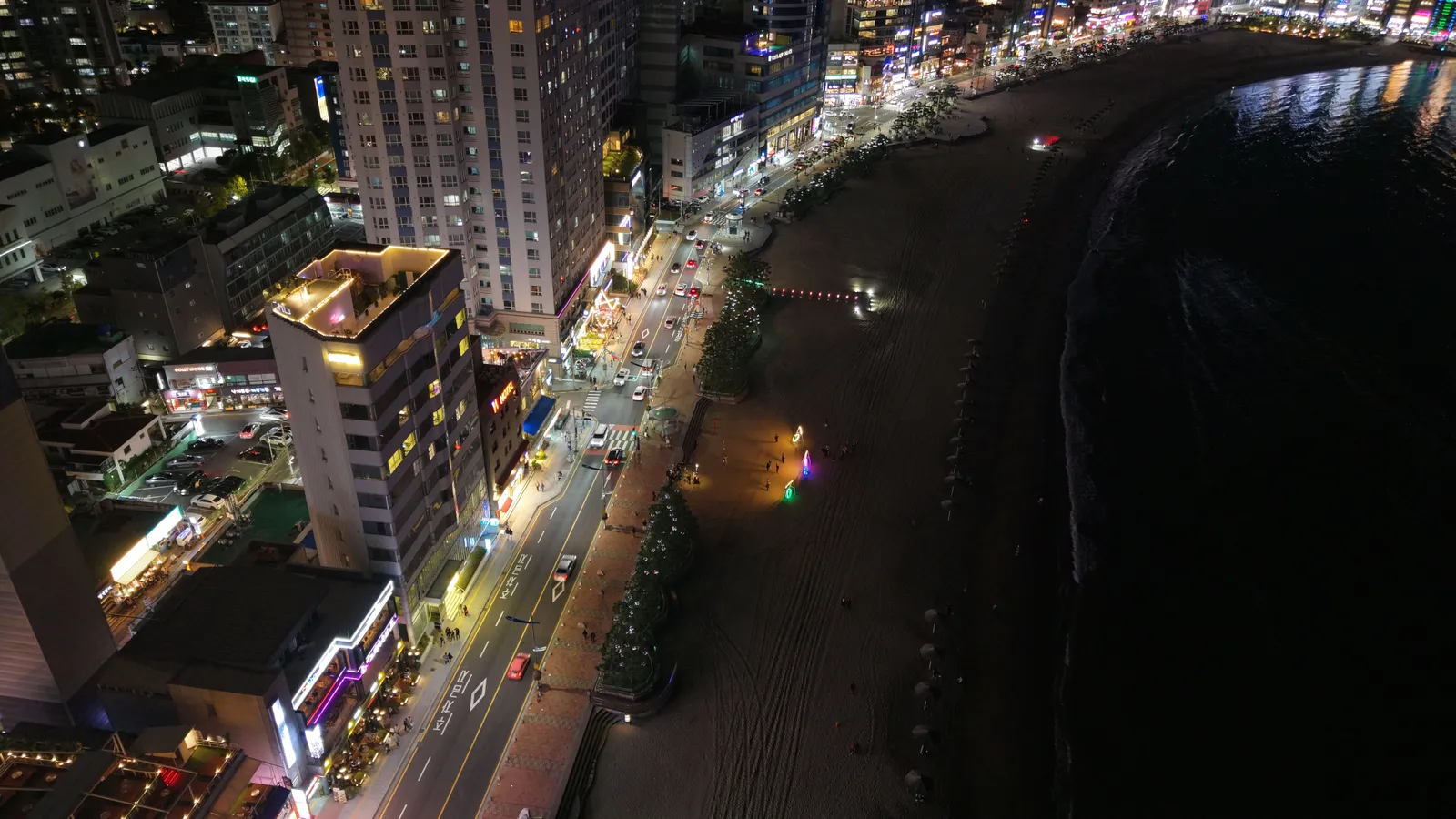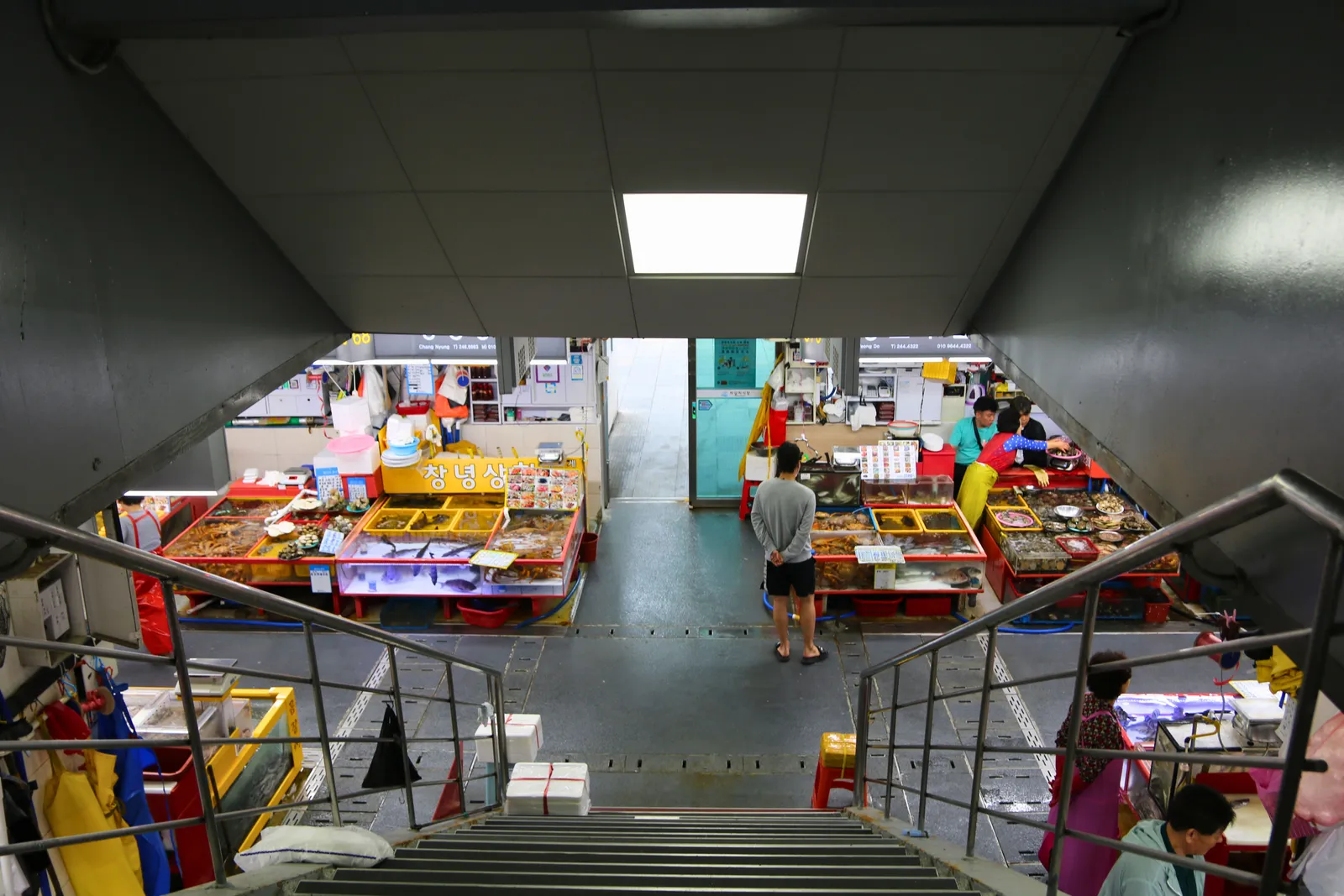
Busan is a port and Jagalchi is the reason. It is the largest fish market in the country, on the waterfront in the old part of the city, and it has been run for generations largely by women whose title in Korean means market woman and is used with respect. The ground floor is tanks, trays and ice. The floors above are restaurants that will cook whatever you have just bought. It is the single best hour of eating in Korea if you understand how it works and an expensive muddle if you do not.
How the market is arranged
The main hall, on the waterfront, with the live tanks and the fresh trays on the ground floor.
Restaurants above, which prepare what you buy for a fee per person.
The street market around the hall, which is older and more chaotic.
Gukje Market immediately inland, enormous and general.
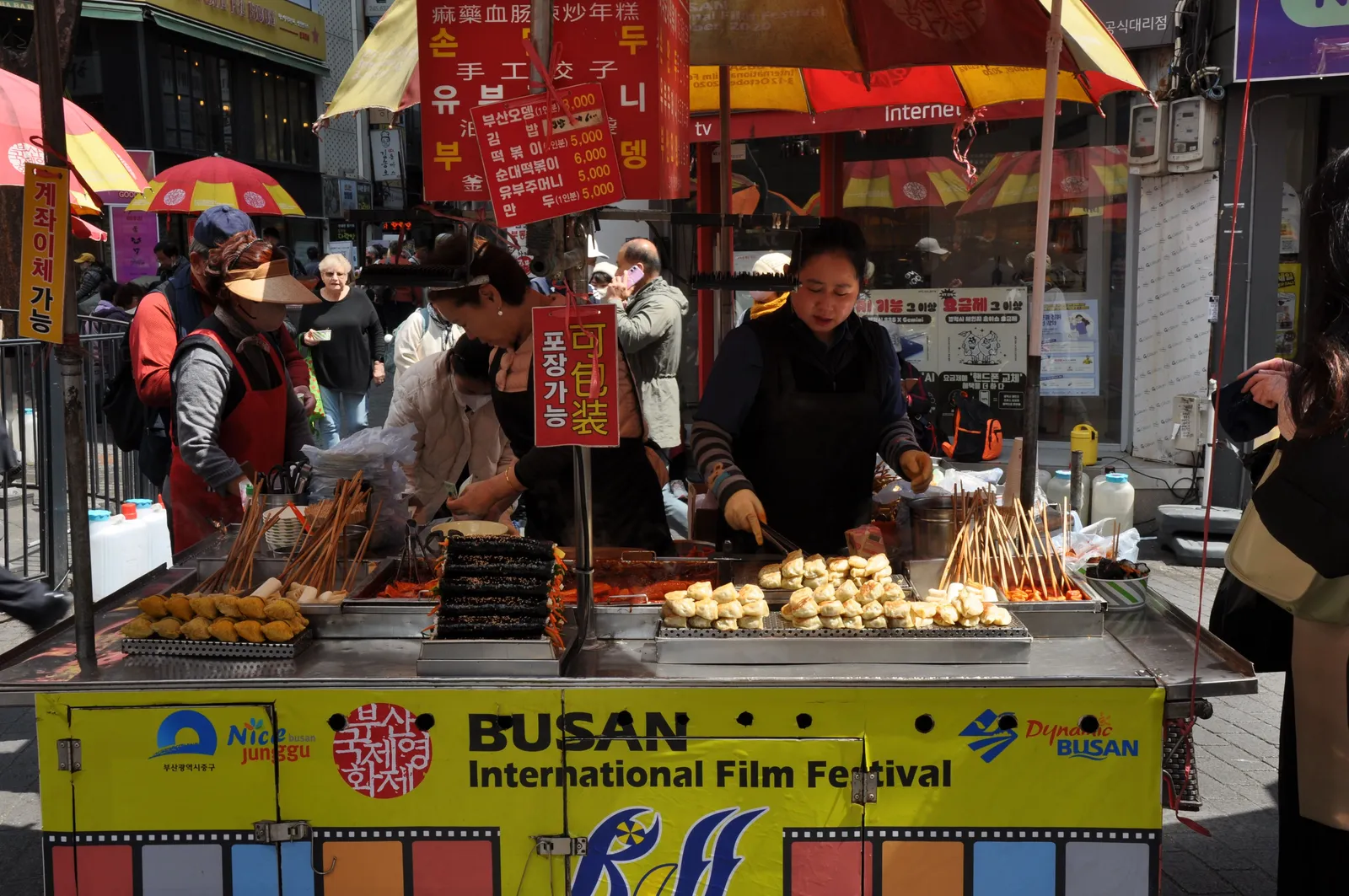
BIFF Square, the film festival street, for street food.
Bupyeong night market, which starts when the fish market winds down.
The two part price
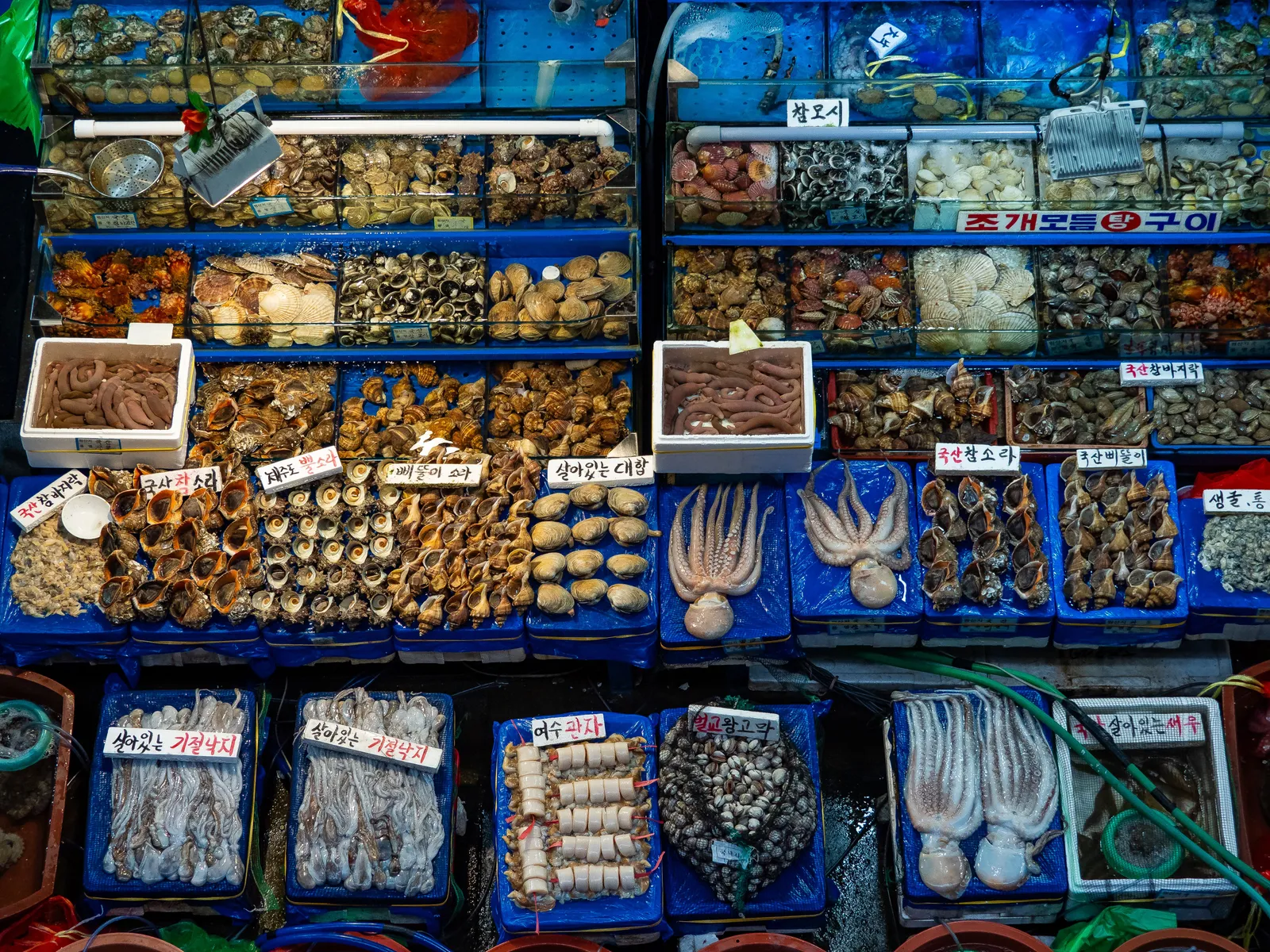
Buy downstairs, agreeing a price by weight or by piece.
Cook upstairs, at a separate charge per person, with side dishes included.
Ask for the total before anything is bagged.
Grilled is cheapest, hoe is the local order, shellfish is charged by weight.
Side dishes arrive regardless and are part of the cooking fee.
Cards are accepted in the restaurants; the stalls prefer cash.
What to be careful about
Live octopus, which is a real choking hazard and not an experience worth the risk.
Premium items quoted without a total, which is where the money goes.
Shellfish if you have any doubt about it, particularly in high summer.
Photographing the traders without asking, which is their workplace.
The cooking fee, which is the thing nobody tells you about.
Raw fish if you are pregnant or immunocompromised, as anywhere.
The rest of the eating nearby
Eomuk, the Busan fish cake, from the long established shops in Nampo.
Ssiat hotteok, a seeded sweet pancake, from the BIFF Square stalls.
Dwaeji gukbap, pork and rice soup, which is the Busan dish.
Milmyeon, cold wheat noodles, another local speciality.
Gukje Market food alleys, which are cheaper than the fish hall.
The night market, in the evening, for the street food version of all of it.
Where this fits in a Busan trip
A morning at the market and a lunch above it, then the surrounding streets in the evening.
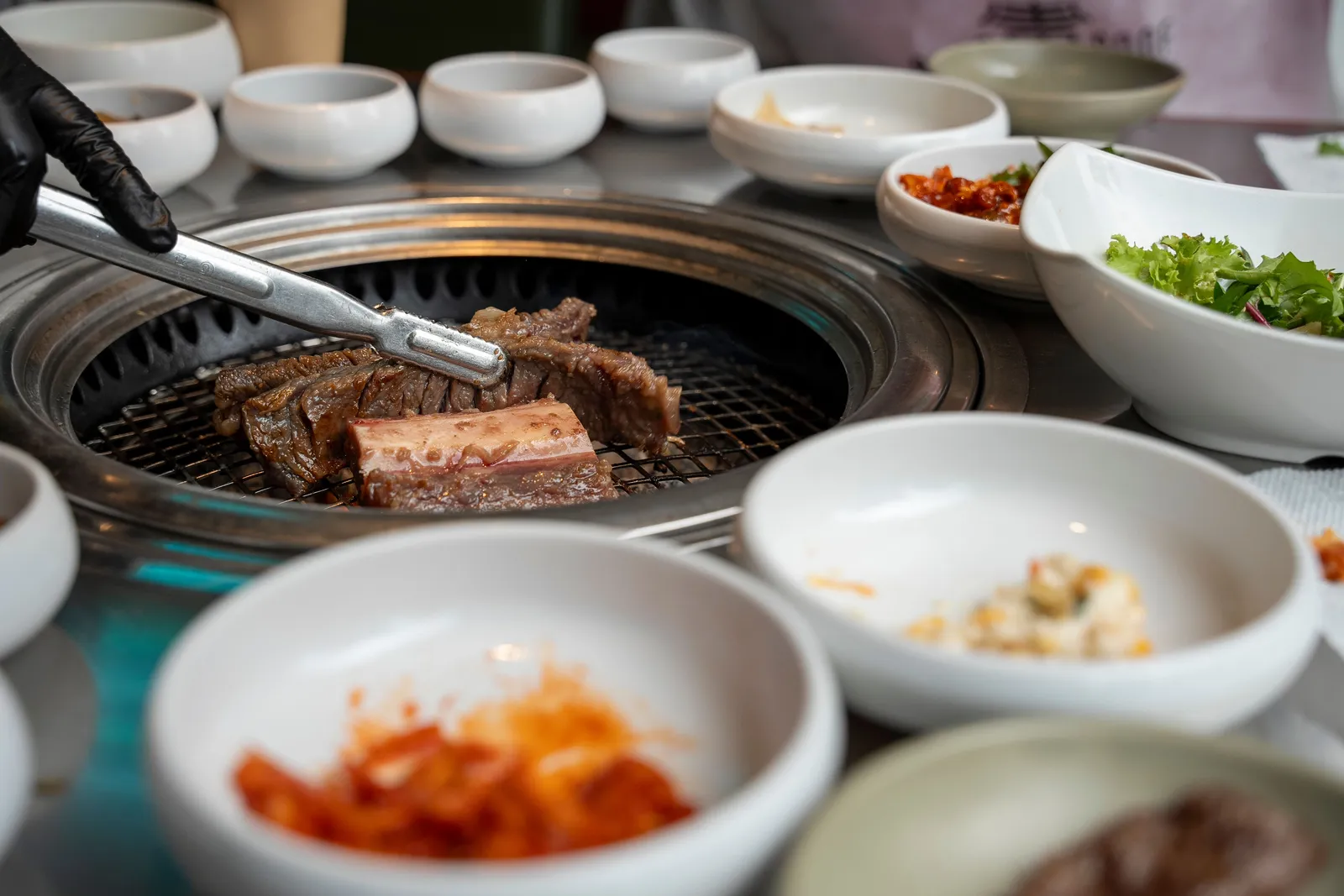
For how a Korean menu is structured and what everything is, our guide to Korean food covers the ground.
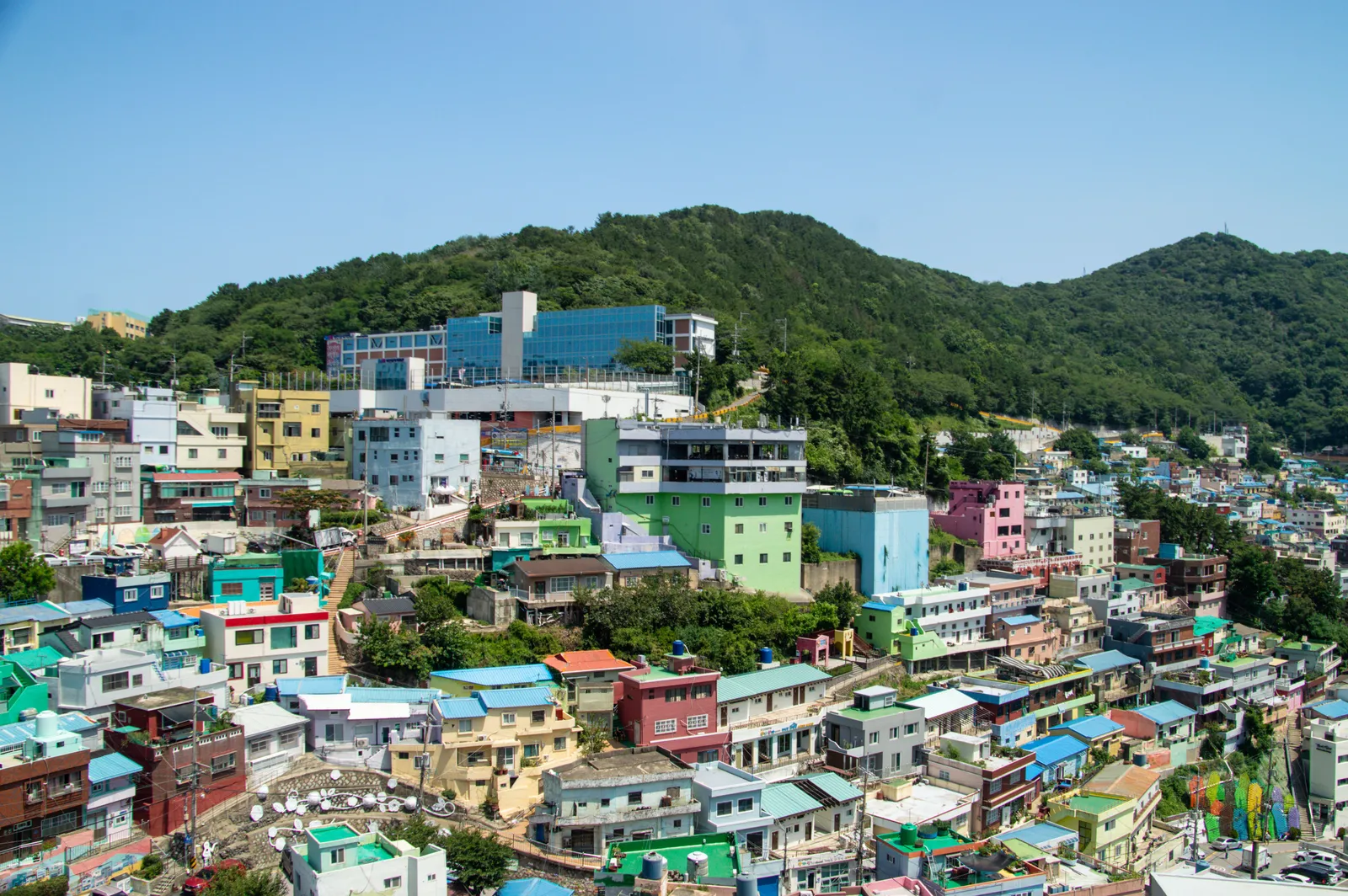
For the hillside village a short metro ride away, our guide to Gamcheon Culture Village covers the visit.
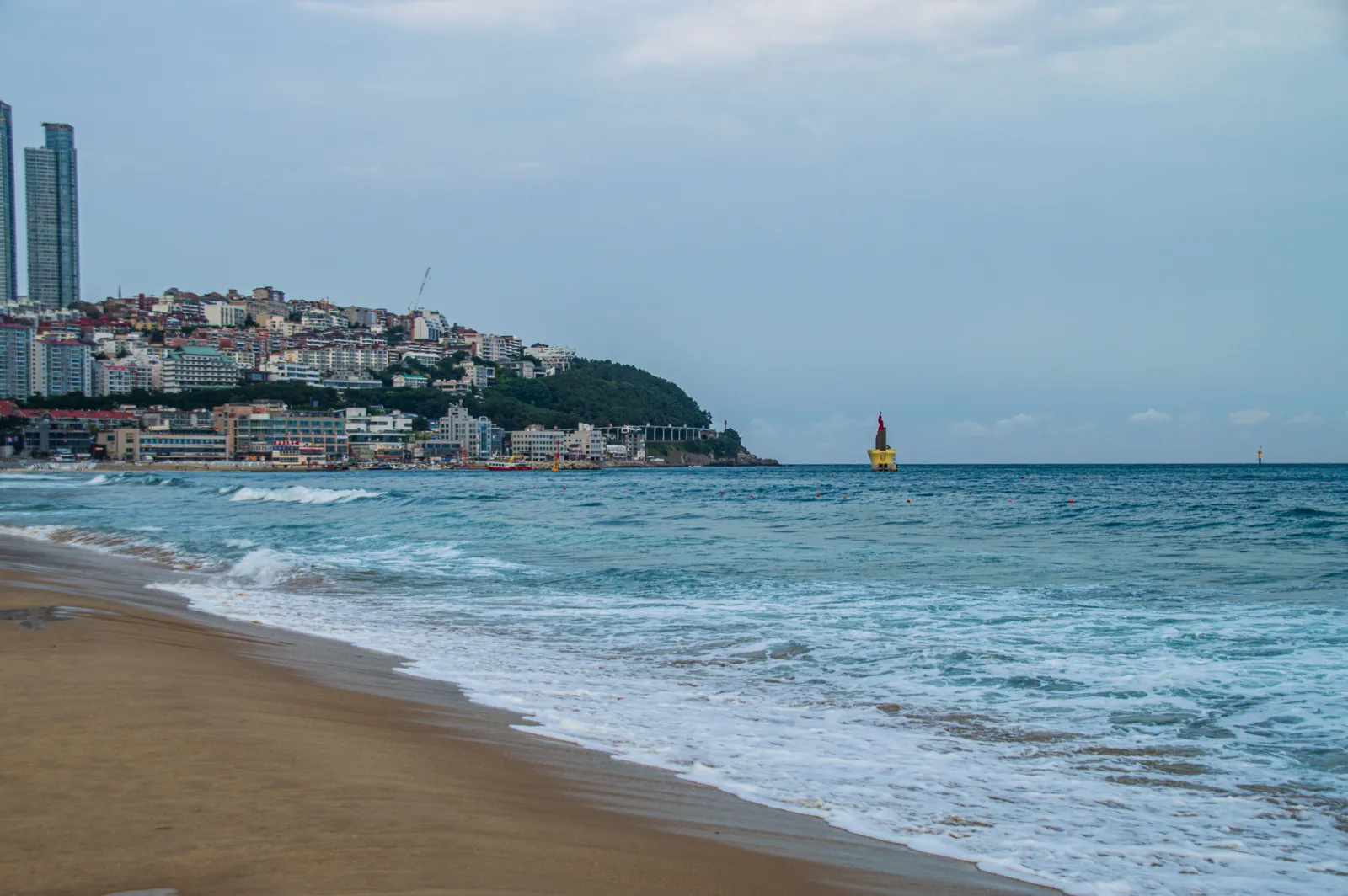
And for the beaches on the other side of the city, our guide to Haeundae and Gwangalli covers the coast.
The short version
Go between seven and nine in the morning to see the market working, and eat at lunchtime. Choose your fish downstairs, take it to a restaurant upstairs, and ask for the total including the per person cooking fee before anything is bagged, because that fee is the thing that catches everybody. Order grilled for value or hoe for the local experience. Skip the live octopus. Then walk inland for fish cakes, seeded pancakes and the night market.