Korean food is generous, social and built for sharing, and it is one of the best reasons to make the trip. This is a cuisine of contrasts: fire and ferment, grilled meat and cool pickles, comforting stews and crunchy street snacks, all arriving at once in a happy sprawl of small dishes. You do not order a single plate and eat it alone; you gather a table, cook and share, and let the free side dishes keep coming. Come hungry, come curious, and this guide will help you order like you have done it before.
The table, and the free banchan
The first thing that surprises visitors is how much food arrives unbidden. Almost every meal comes with banchan, a spread of small shared side dishes: several kinds of kimchi, seasoned spinach and beansprouts, pickled radish, fish cake, marinated tofu and more, refilled free of charge. They are not a starter to finish before the main; they are companions to the rice and the centrepiece dish, meant to be picked at throughout the meal.
Rice and soup usually anchor the table, and the main event, whether a grill, a stew or a plate of noodles, sits in the middle to share. Understanding this rhythm is half the battle. You are not ordering one dish per person; you are building a table together.
Korean barbecue, the main event
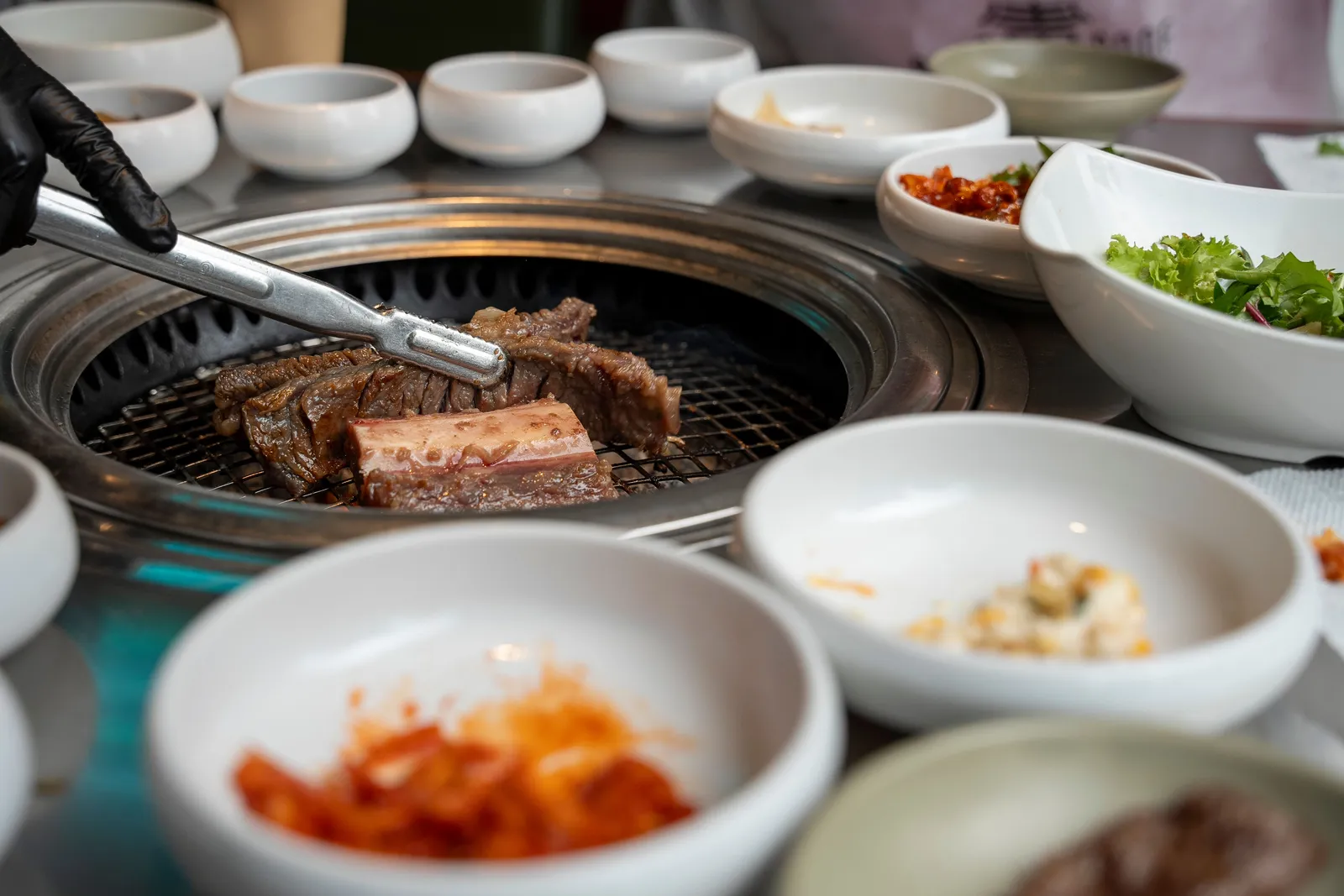
If you try one thing, make it Korean barbecue. You sit at a table with a grill set into it, order raw meat by the cut, and cook it yourself: samgyeopsal (thick pork belly), galbi (marinated short rib), or bulgogi (sweet soy-marinated beef). As it sizzles, you wrap bites in lettuce leaves with garlic, a smear of ssamjang paste and a little kimchi, and eat the whole parcel in one go.
It is interactive, unhurried and deeply fun, usually washed down with soju or beer. The staff will often help with the grilling if you look lost, and the endless banchan and a bowl of cold noodles or stew round out the feast. No first trip to Korea is complete without a barbecue night.
There is more to it than choosing a cut, from how long each meat needs on the grill to what goes into the lettuce wrap and when to order the cold noodles that traditionally finish the meal. Knowing the cuts, the order to grill them in and the small etiquette around the table turns a slightly baffling first attempt into the meal everyone remembers.
Stews, soups and rice bowls
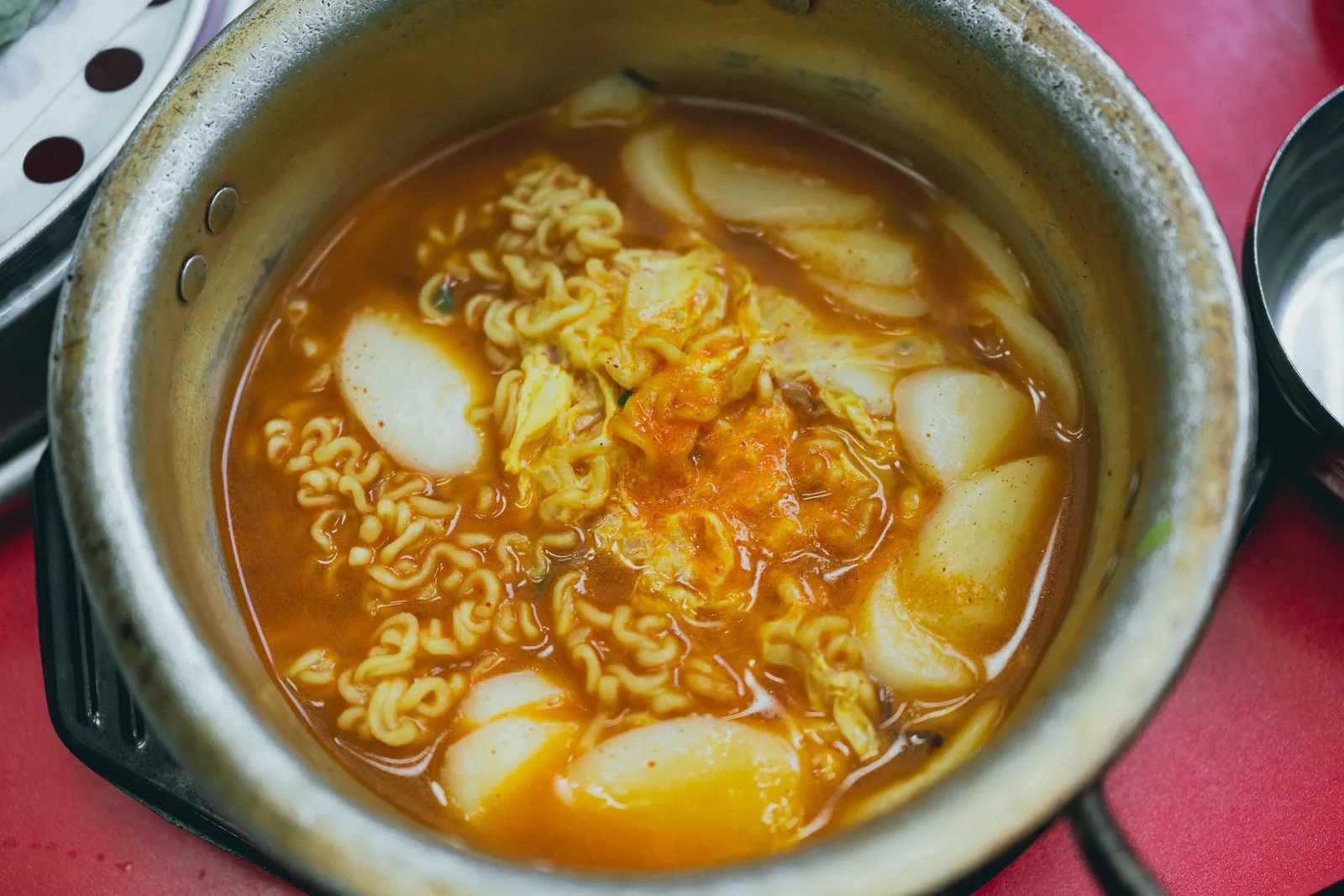
Beyond the grill lies Korea’s world of comforting one-pot cooking. Kimchi jjigae is a tangy, spicy stew of aged kimchi and pork; doenjang jjigae is an earthy soybean-paste stew; sundubu jjigae is a bubbling pot of silken tofu you crack a raw egg into. Samgyetang, a whole young chicken stuffed with rice and ginseng in a milky broth, is the summer restorative.
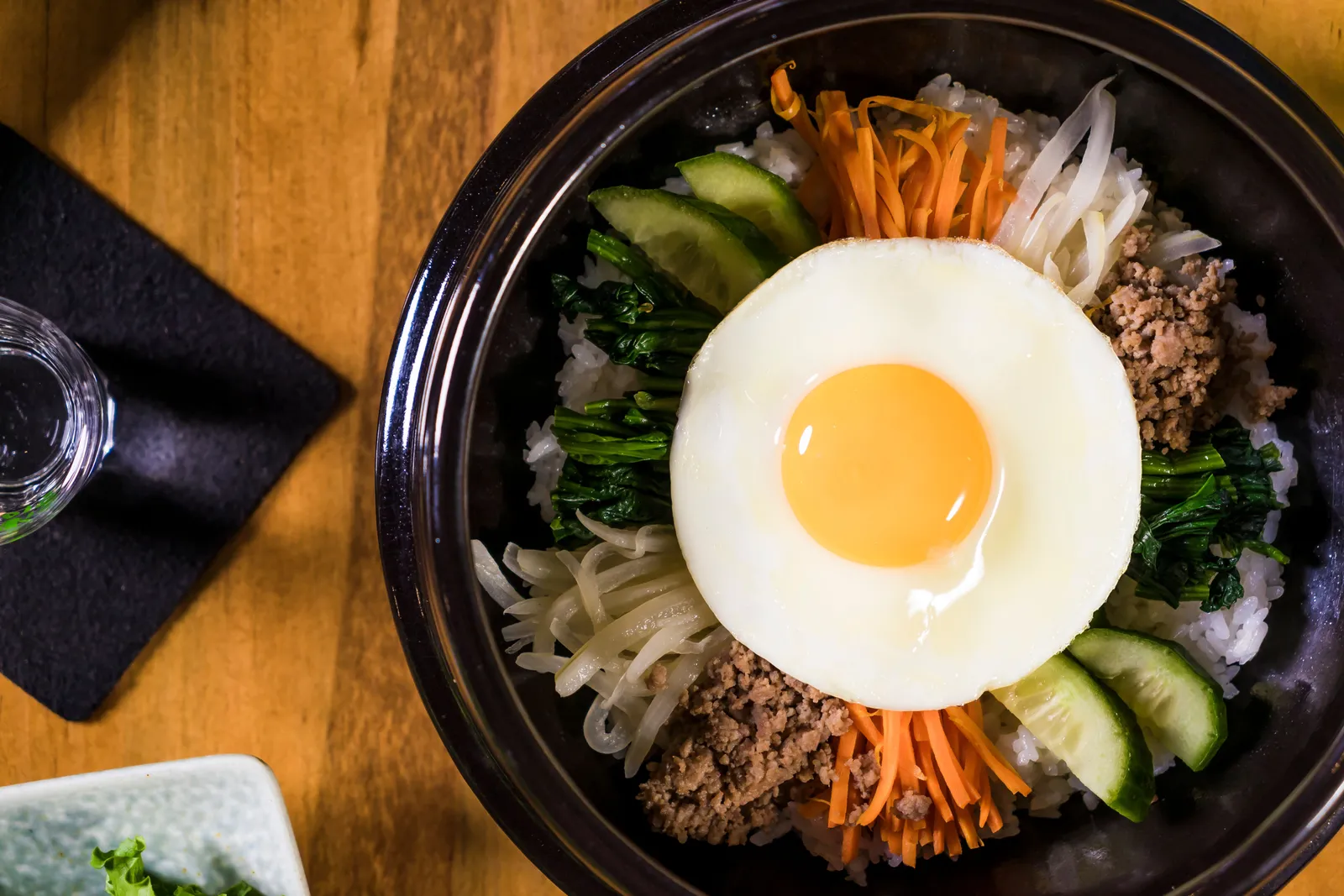
For a lighter meal, bibimbap is the famous bowl of rice topped with seasoned vegetables, an egg and a spoon of chilli paste that you mix together yourself. Gimbap, seaweed-wrapped rice rolls, and kalguksu, hand-cut noodle soup, are everyday favourites. These dishes are the soul of home cooking, warming and cheap, and found on every corner.
Find the stalls locals queue atA market food tour takes the guesswork out and points you to the dishes worth crossing town forThe food changes as you travel
Korea is compact and its regional kitchens are distinct enough to plan around.
| Where | The character | Order this |
|---|---|---|
| Seoul | Everything, plus the best modern cooking | Barbecue, market street food, fried chicken |
| Busan and the south coast | Seafood, refugee-era comfort food | Dwaeji gukbap, milmyeon, raw fish |
| Jeonju | The spiritual home of bibimbap | Bibimbap, the old-town food alleys |
| Jeju | Island produce and black pork | Black pork barbecue, abalone porridge |
The point is not to chase dishes across the country but to eat what is local wherever you land. A bowl of pork soup in Busan and a bibimbap in Jeonju both taste of somewhere in a way the same dish in a Seoul food court does not.
Street food and market snacks
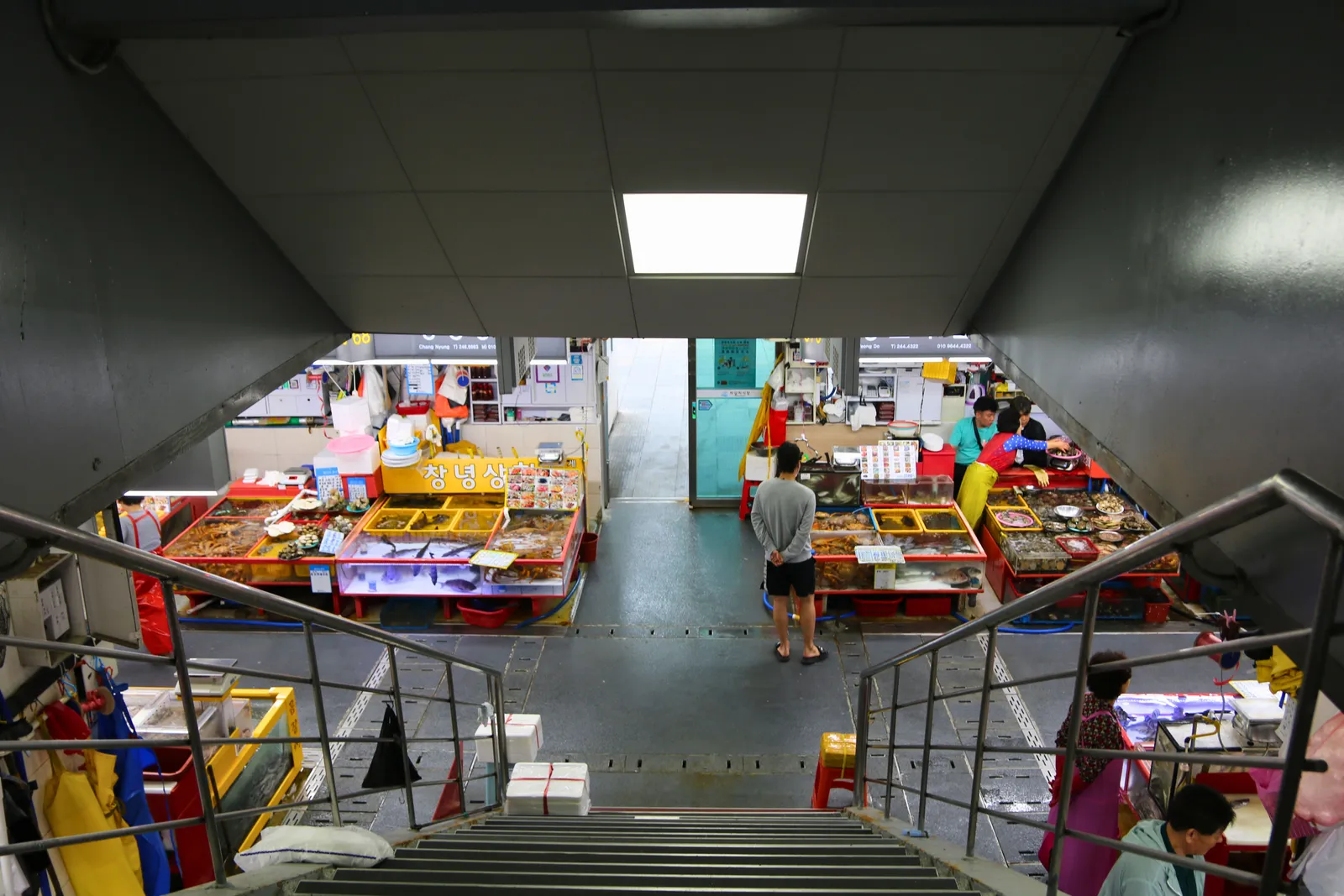
Korea’s street food is a cuisine in itself, and the markets are its stage. Look for tteokbokki, chewy rice cakes in a sweet-spicy red sauce, the nation’s favourite snack; hotteok, a griddled pancake oozing brown sugar and nuts; gimmari and twigim, crunchy fried rolls and fritters; and odeng, fish-cake skewers in warm broth on cold days.
At a proper market like Seoul’s Gwangjang or Busan’s Gukje, you can eat a whole progressive dinner from stall to stall: mung-bean pancakes, fresh gimbap, blood sausage, and a paper cup of makgeolli rice wine to wash it down. And no late night is complete without chimaek, Korean fried chicken and beer, double-fried to a shattering crunch and glazed in soy-garlic or sweet-spicy sauce.
Fermentation, and why the food tastes the way it does
Three fermented pastes do most of the heavy lifting in this kitchen, and knowing them makes menus legible. Gochujang is the sweet, deep red chilli paste behind bibimbap and much of the spice. Doenjang is the earthy fermented soybean paste at the bottom of the everyday stew. Ganjang, soy sauce, is the third. Together with kimchi, they are why Korean food tastes savoury and layered rather than simply hot.
Kimchi itself is more varied than its reputation: cabbage is only the most famous version, and there are mild white and water kimchis, radish and cucumber versions, and seasonal ones. Age matters too, since fresh kimchi is crisp and bright while old kimchi turns sour and is destined for a stew rather than a side dish. Once you notice that, half the menu explains itself.
Cafes, sweets and the afternoon
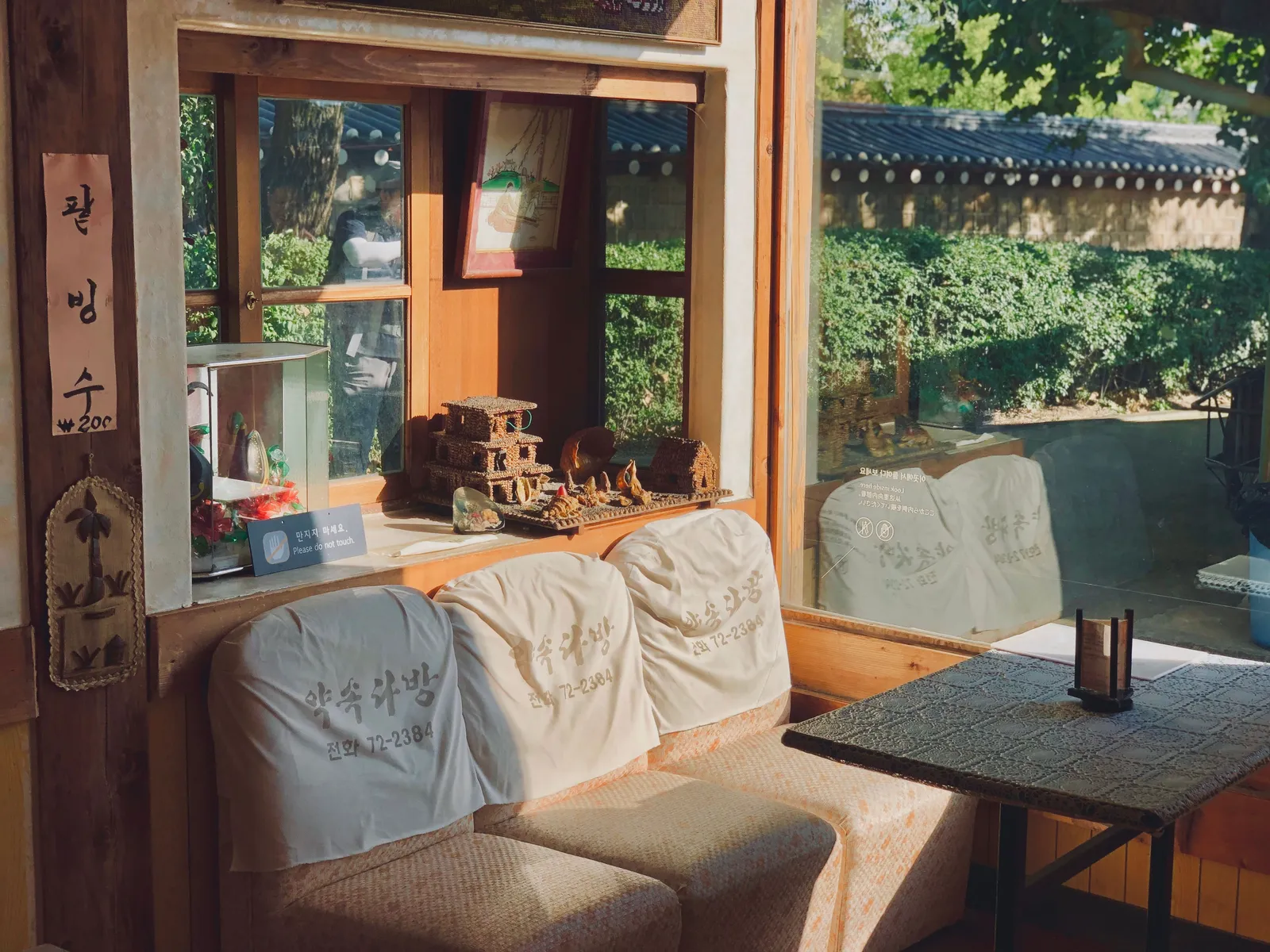
Korea has one of the highest concentrations of cafes on earth, and they are not an afterthought to the food scene, they are a central part of how the country socialises. Cafes here are places to spend two hours rather than ten minutes, the coffee is taken seriously, and the interiors range from minimalist to gleefully themed.
The dessert to order is bingsu, a mountain of finely shaved milk ice topped with fruit, condensed milk or sweet red bean, served in a bowl the size of a small hat and meant to be shared with spoons. It is the national summer dessert and a genuine experience. The scene is strongest in a handful of neighbourhoods, and each of them does it differently.
Drinking culture and etiquette
Korea takes its drinking seriously and sociably. Soju, a clear, mildly sweet spirit, is the national drink, often shared over barbecue; makgeolli, a cloudy, lightly fizzy rice wine, pairs with pancakes on a rainy day; and craft beer has boomed in the cities. Drinking is communal, and a few customs matter: pour for others, not yourself, hold the bottle with two hands when serving an elder, and turn slightly away when you drink in front of someone senior.
A little table etiquette goes a long way anywhere. Use two hands to receive a dish or a drink from someone older, do not stand your chopsticks upright in a bowl of rice, and wait for the eldest to lift their spoon first at a shared table. None of it is a test; a small effort is warmly received.
Eating with dietary requirements
Korea is improving fast and still needs care. The recurring trap for vegetarians and vegans is stock: soups, stews and even apparently vegetable side dishes are frequently built on anchovy or beef broth, and fish sauce turns up in kimchi. The best answers are temple cuisine, an established Buddhist tradition that is fully plant-based, along with bibimbap ordered without meat or egg, vegetable pancakes and tofu dishes. Say clearly that you eat no meat, no fish and no seafood stock, since one of the three is usually the one that gets missed.
Halal eating is easiest in Seoul, where certified restaurants cluster around the central mosque area, and harder elsewhere, since pork is common. For allergies, sesame, soy, peanut and shellfish are all widespread, so carry a written explanation in Korean rather than relying on a conversation. In every case, a translation app and a written card work better than English.
Ordering, paying and eating alone
The mechanics are easier than the language barrier suggests. Menus in the cities often carry photographs or English, pointing is entirely acceptable, and a great many restaurants now use touchscreen kiosks that usually offer an English option. You typically pay at the counter on the way out rather than at the table, tipping is not part of the culture and can confuse rather than please, and water and banchan are free and self-service in many places.
Two things to know before you sit down. Some barbecue restaurants have a minimum of two people, because the portions and the grill assume sharing, so solo diners should look for a place advertising single portions or eat at a noodle, gimbap or stew shop instead. And a great deal of Korean eating happens fast and standing at markets and counters, which is a perfectly respectable way to have lunch.
Eating on the move
Two things make travel days easy here. The first is the convenience store, which in Korea is a genuinely good place to eat: hot food, proper meals, gimbap, coffee, and instant noodles you make yourself at a counter with hot water and a microwave, all cheap and open at any hour.
The second is the station, since Korean rail hubs are food destinations in their own right, with bakeries, snack counters and local specialities to take on board. Onboard catering on the fast trains is limited, so the move is to buy before you board rather than hoping. Our guide to getting around Korea covers the trains and buses themselves, and a station stop is worth building ten spare minutes around.
The short version
Eat a Korean barbecue at least once, order a bubbling stew and a bibimbap, and graze a market from stall to stall for the street food. Let the free banchan keep the table full, try soju or makgeolli the local way by pouring for your neighbour, and finish a night with fried chicken and beer. Ask if a dish is spicy when you need to, use two hands with your elders, and above all come hungry. In Korea the meal is the main event, and the table is where the trip really happens.
Two practical notes make the eating easier. Where you sleep decides which food streets are a walk rather than a journey, and in a city this size that changes how many meals you actually get out to; our guide to where to stay in Seoul covers the districts by what is on their doorstep. And the transport card pays at convenience store counters as well as on the subway, which matters more than it sounds in a country where the convenience store is a genuine food category; our T-money card guide covers it.
What are you most looking forward to, the grill or the market?