Here is the good news that makes Korea such an easy country to travel: the transport just works. Trains run on time to the minute, city subways are clean and cheap and signed in English, and a single tap-and-go card covers almost all of it nationwide. You do not need to rent a car, you do not need to speak Korean to ride the metro, and you can cross the country in the time it takes to watch a film. Get a few basics sorted on arrival and the whole peninsula opens up.
The T-money card, your master key
Before anything else, buy a T-money card. Sold at every convenience store and station machine for a small fee, it is a rechargeable tap card that works on subways, city buses and many taxis across the entire country, from Seoul to Busan to Jeju, plus at convenience stores. Top it up with cash at any store or machine, tap in when you board and out when you leave, and never think about single tickets again.
One card can cover a whole group as you pass it back, and the small distance-based fares are among the cheapest of any developed country. It is genuinely the first thing to pick up when you land, before you even leave the airport.
There are a few varieties, some top-up quirks and a refund process for the balance you do not use. The short version for most visitors: buy the plain one at a convenience store, load more than you think you need, and stop thinking about it.
Getting from the airport into the city
Almost every trip starts at Incheon, the big international airport west of Seoul, and the journey in sets the tone. The airport railway is the standard answer, with a direct express to Seoul Station and a cheaper all-stop service that plugs straight into the metro, both quick and immune to the traffic. Limousine buses are the better call if your hotel is far from a station or you are travelling with heavy cases, and a taxi makes sense mainly late at night or split between a group.
Seoul’s second airport, Gimpo, is closer to the city and handles domestic flights and some regional routes, which makes it the convenient one for a hop to Jeju. The options differ in cost and journey time, and the case worth planning for in advance is the late arrival, when the train has stopped running and a bus or a car is the only way into the city.
The KTX and intercity trains
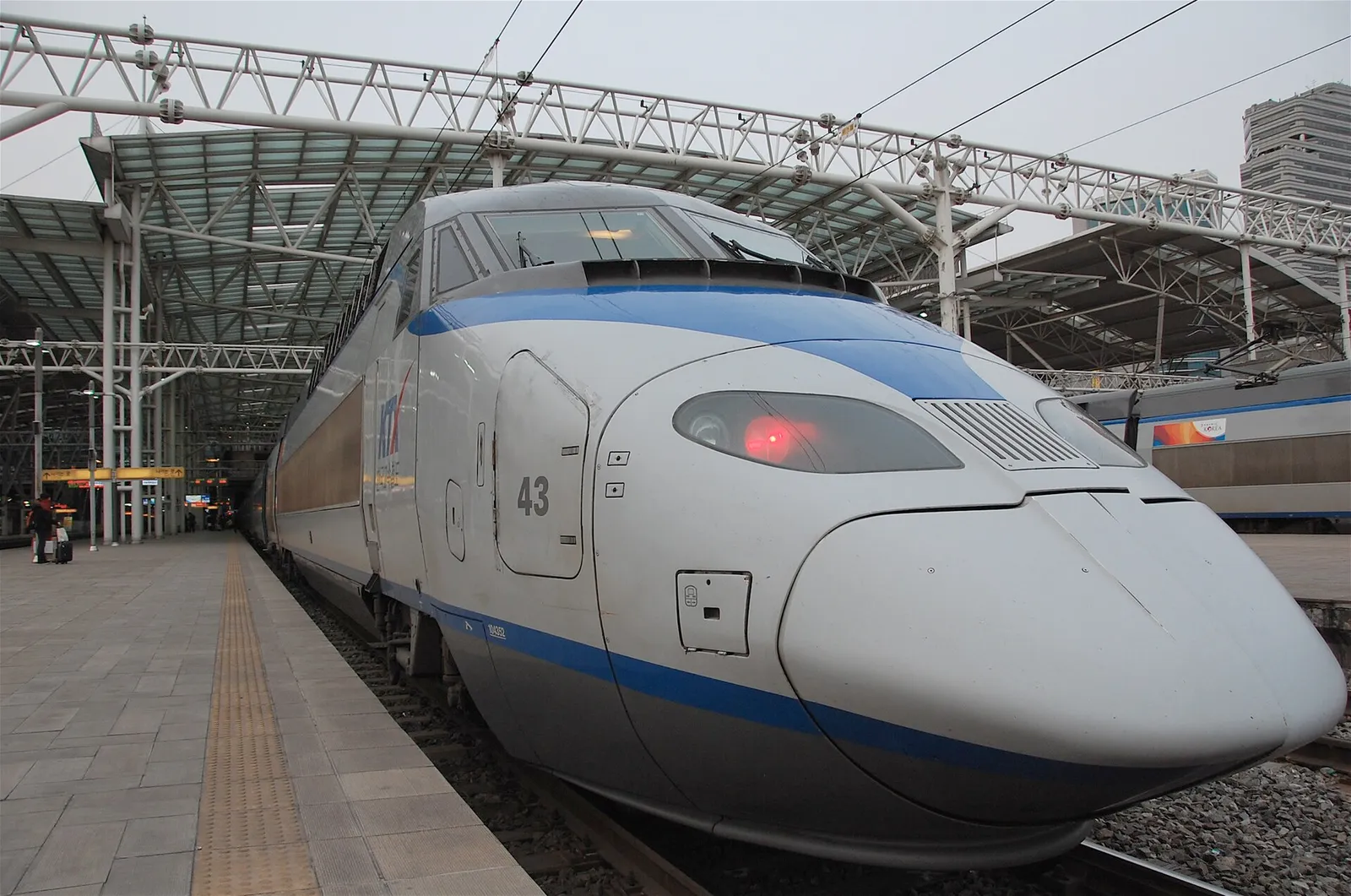
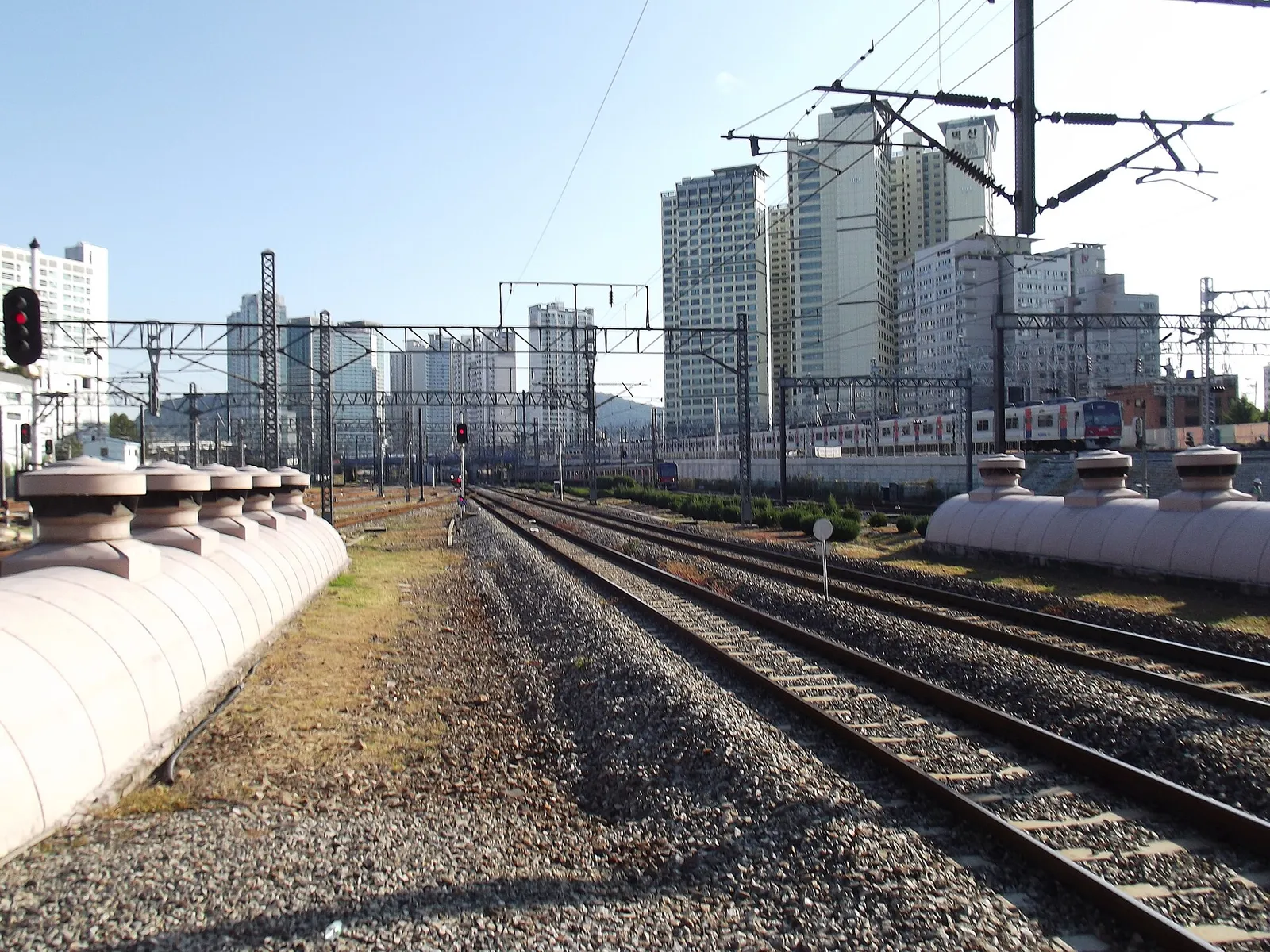
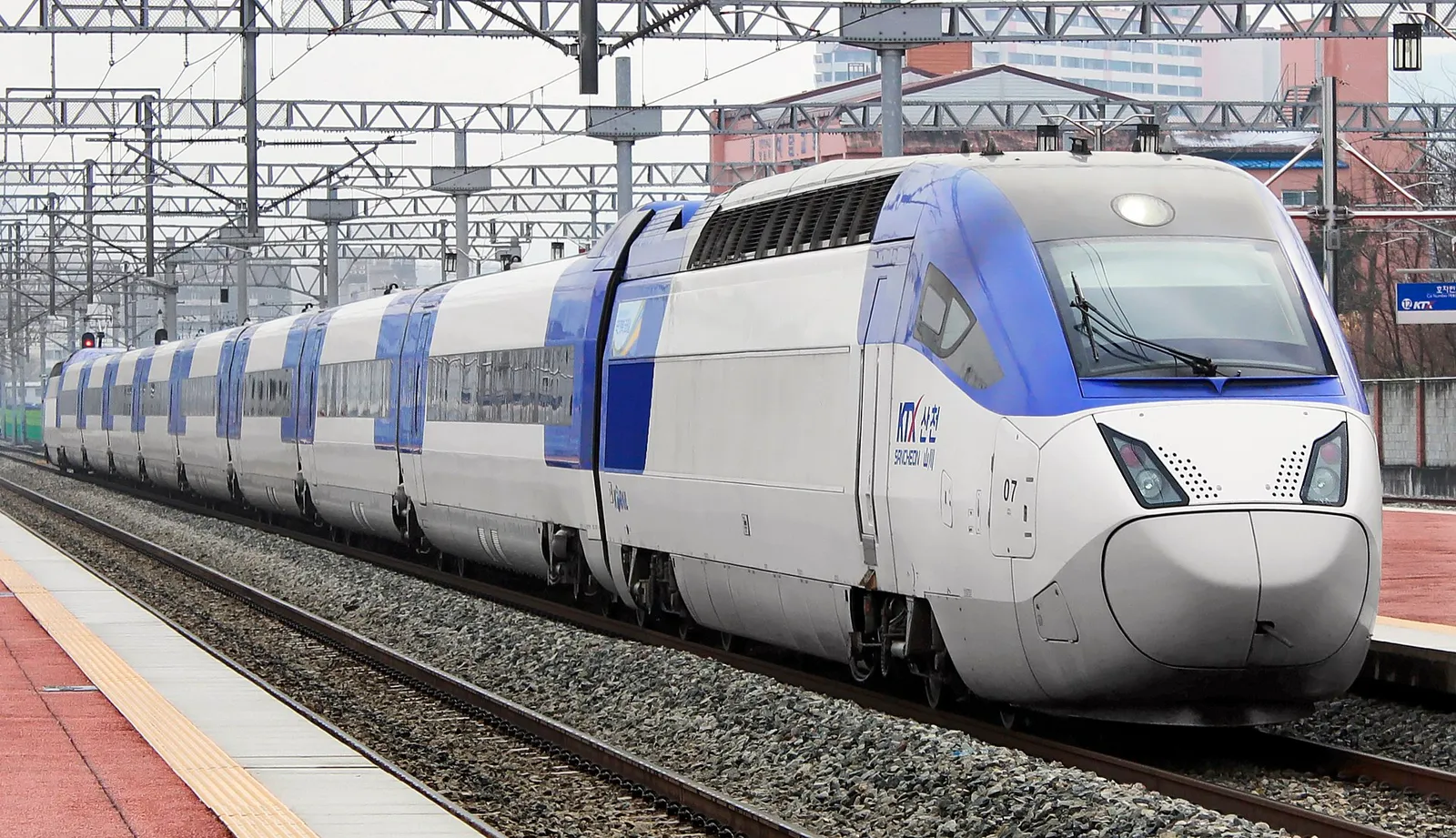
For distance, Korea’s pride is the KTX high-speed rail. The flagship line links Seoul to Busan in around two and a half hours, running at up to roughly 300 kilometres per hour through the heart of the country, with frequent departures all day. Other KTX and SRT lines fan out to Gwangju, Gangneung on the east coast and beyond. Slower, cheaper ITX and Mugunghwa trains serve smaller towns.
Book online, through the rail app, or at a station counter or machine; reserved seats are cheap and worth it on holidays and weekends. Trains are spacious, quiet and punctual, with luggage racks and a snack trolley. For getting between the major cities, the train almost always beats flying once you count airport time.
Two details help. There is a second high-speed operator, the SRT, running from a different Seoul station on some of the same routes, so if the KTX looks full it is worth checking. And onboard catering is minimal, so the local habit is to buy food at the station before boarding, which Korean stations make very easy and rather enjoyable.
The buses nobody tells you about
Visitors default to the train and miss half the network. Korea’s express intercity buses are frequent, comfortable and cheaper than the KTX, with generously reclining seats on the premium services, and they reach a great many towns the railway simply does not: national park gateways, coastal villages, small cities off the main line.
Terminals are well organised, tickets are bought at a counter or machine, and journeys are direct rather than winding. If your itinerary includes anywhere that is not a major city, check the bus before assuming the place is hard to reach. It usually is not.
Should you buy a KORAIL Pass? It is sold only to foreign passport holders, which is a rare piece of good luck for visitors, and it comes in a consecutive-day version and a flexible one, on which you choose which days you travel inside a set window rather than burning consecutive days. It covers KTX and the slower KORAIL services, but not the SRT high-speed trains and not city subways, and you still have to reserve a seat for each journey. Whether it pays depends entirely on how much ground you cover: a single return such as Seoul to Busan and back will not usually beat buying tickets, while a genuinely rail-heavy loop taking in Gyeongju, Busan and the east coast can. Price your actual route on the KORAIL site against the current pass cost before committing.
City subways, buses and taxis
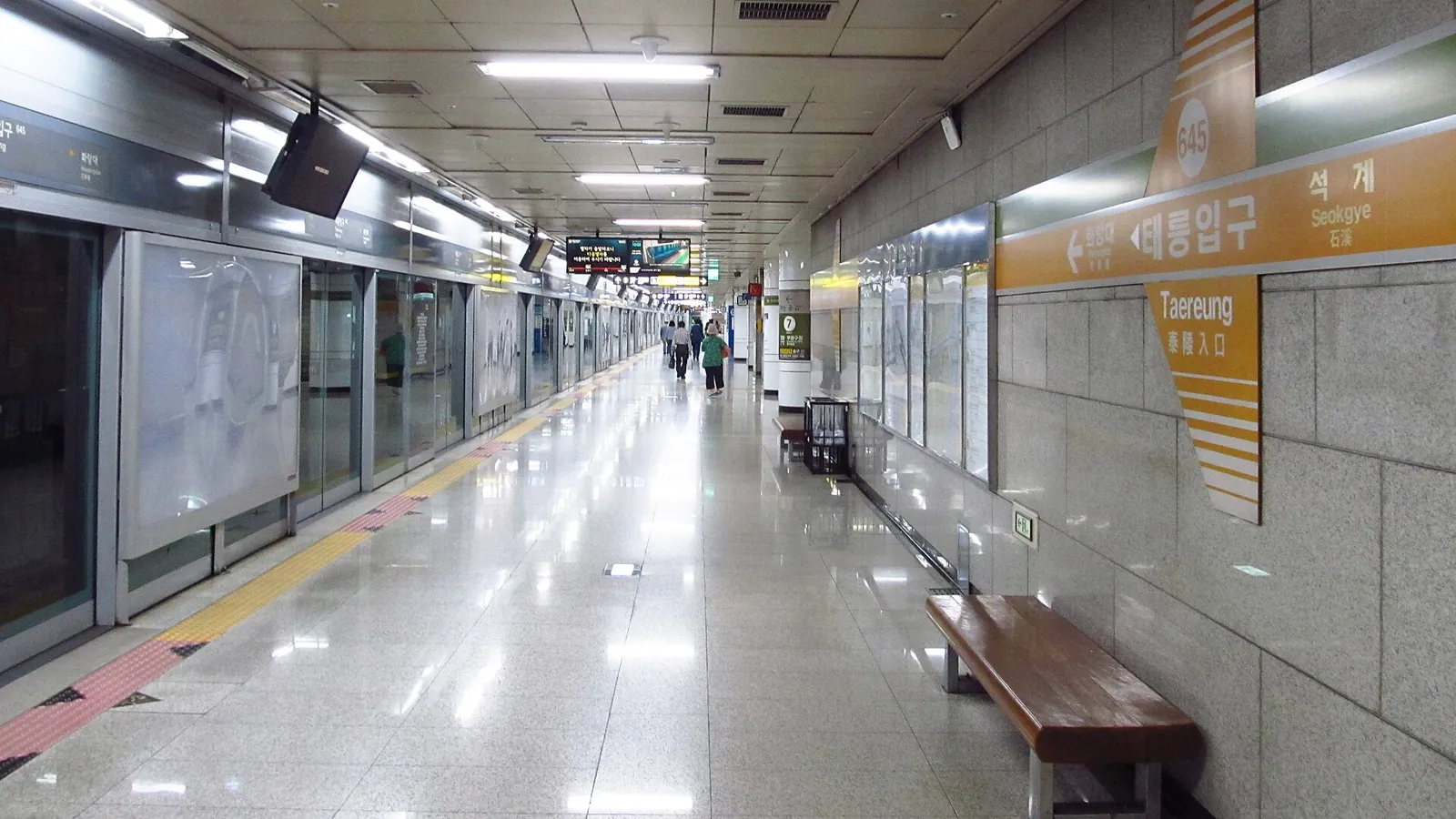
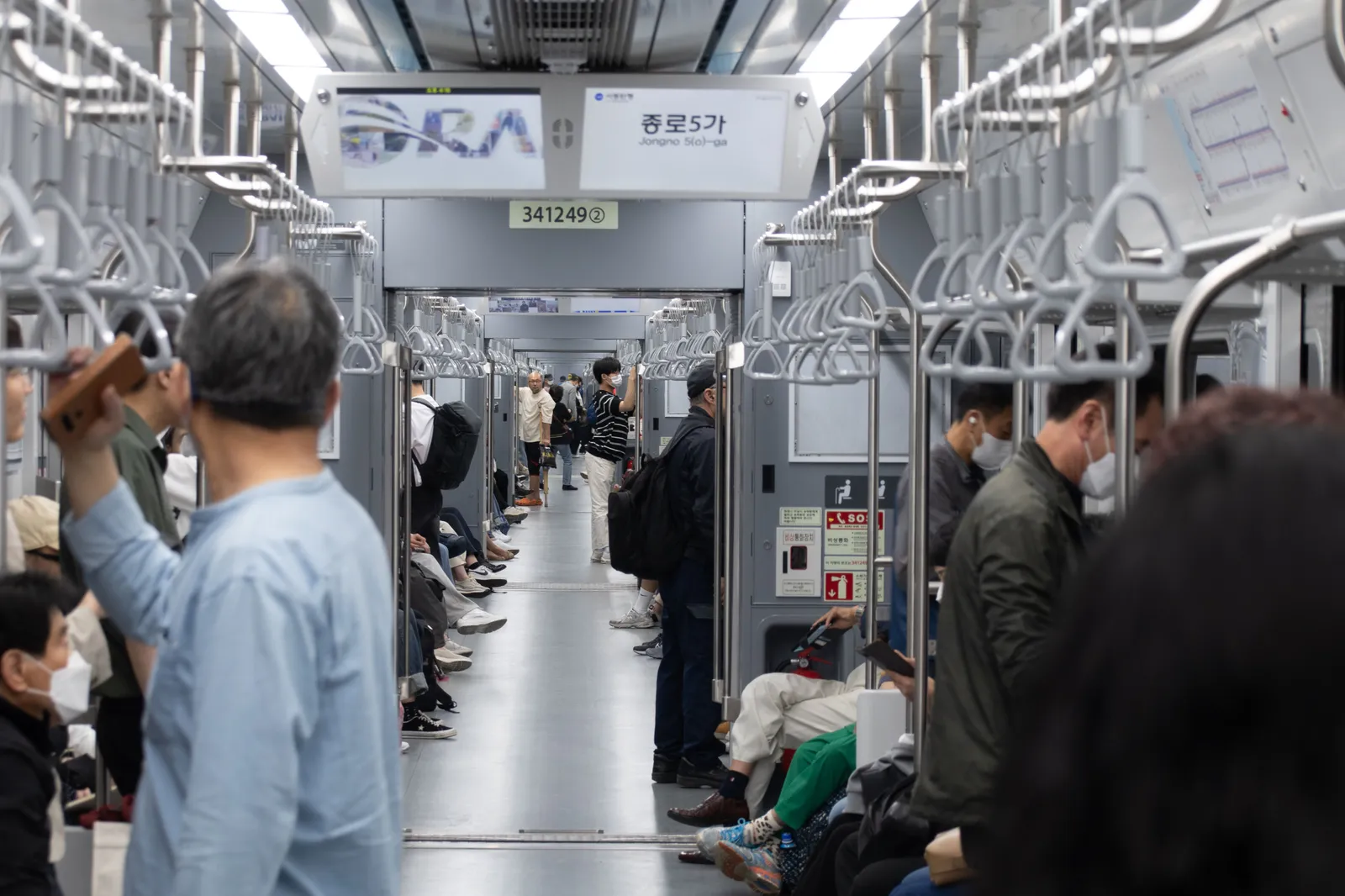
Within the cities, the subway is king. Seoul’s network is one of the largest in the world, and Busan, Daegu and other cities have their own clean, English-signed systems. Stations number their exits, trains are frequent, and your T-money card is all you need. Fares are tiny and the coverage is enormous.
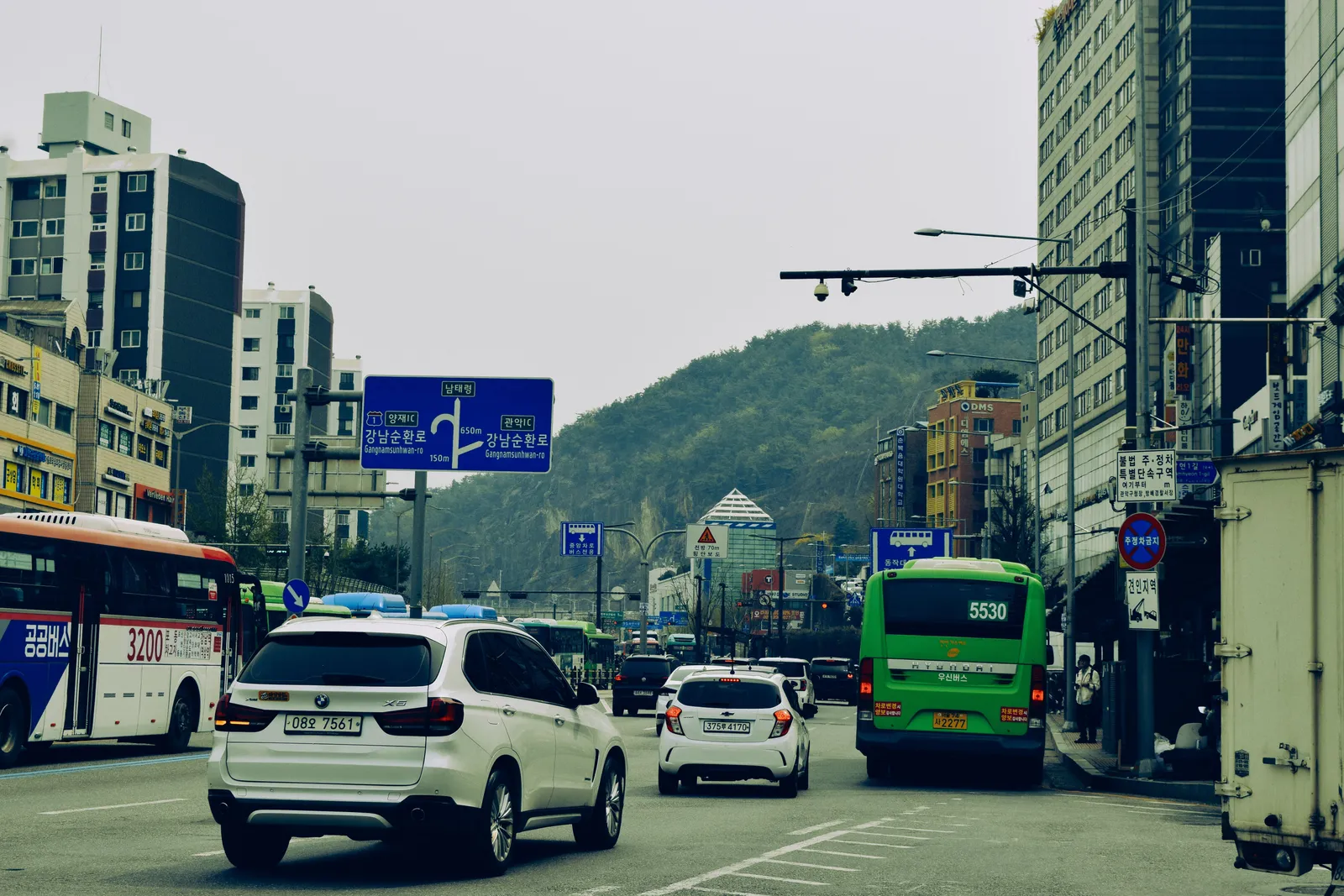
City buses fill in the gaps the subway misses and also take T-money, though route signs can be Korean-only, so lean on a map app. Taxis are plentiful, metered and reasonably priced for short hops; the Kakao T app lets you hail one and pay without a language barrier, which is a huge help. Between the subway and Kakao T, you will rarely be stuck.
Three things make the subway easier. Exits are numbered and matter enormously, since a large station can have a dozen and the wrong one means a long walk around a block; Korean map apps tell you which to use. Priority seats are genuinely respected and left empty even on a crowded train, so do not take one. And the last train runs around midnight, after which you are looking at a night bus or a taxi, which is worth knowing before a long evening. Our guide to Seoul covers which neighbourhoods sit on which lines, which is the practical way to plan a day here.
Skip the logistics on the far-out sightsFor spread-out spots and border tours, a guided day trip saves you juggling buses and timetablesGetting to Jeju and other flights
Jeju Island has no bridge or rail link, so you fly. The Seoul to Jeju route is one of the busiest air corridors on the planet, with flights every few minutes from both Seoul airports, plus links from Busan and other cities. Fares are often cheap and the hop is short, so book domestic flights ahead if your dates are set, especially in peak season.
For most mainland journeys, though, the train wins. Domestic flights between mainland cities rarely save time once you factor in getting to and from the airports, so reserve flying for the island.
The dates when everything sells out
Two holidays move the entire country, and both shift each year with the lunar calendar. Seollal, the lunar new year, and Chuseok, the autumn harvest festival, are when families travel home en masse: trains sell out weeks ahead, express buses fill, motorways gridlock and flights spike in price.
If your trip overlaps either, book every intercity journey the moment tickets open and treat same-day travel as impossible rather than difficult. The compensation is that the cities themselves empty out and the palaces are at their most atmospheric, so a holiday-week trip is not a bad one, it is simply a trip you cannot improvise.
Driving and the apps you need
Most visitors never rent a car, and in the cities you should not: parking is scarce, traffic is heavy and the transit is superb. Where a car pays off is on Jeju and in the rural countryside, where buses are infrequent and the best beaches, viewpoints and villages sit off the transit map.
If you do drive, the paperwork is non-negotiable. Korea requires an International Driving Permit, carried together with your own national licence and your passport, and rental desks genuinely check all three. Korea accepts permits issued under both the 1949 Geneva and the 1968 Vienna conventions, so whichever version your country issues will be recognised. The important part is that you cannot obtain one after you arrive, so apply through your home motoring organisation before you leave.
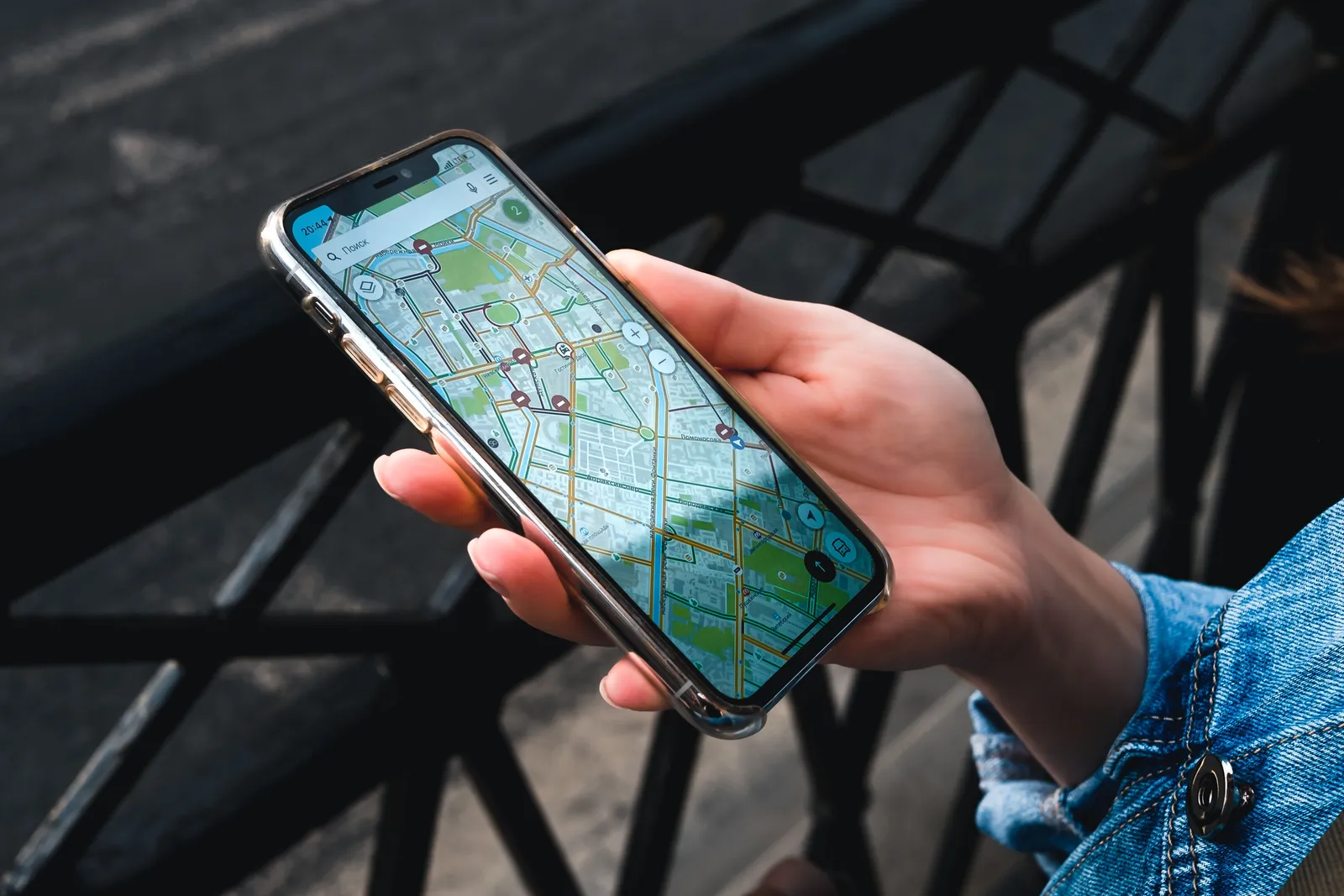
Whatever you do, download the right apps. Naver Map or KakaoMap handle directions properly, Kakao T hails taxis, and Papago translates on the fly. Google Maps remains the weak link: Korean rules on exporting mapping data have long limited what it can do, and although the government moved in 2026 to loosen those restrictions, reliable turn-by-turn walking and driving navigation had not arrived with it. Treat Google Maps as useful for finding a place and checking a transit route, and use the Korean apps for actually getting there. Set up an eSIM before you fly so all of this works the moment you land.
The short version
Grab a T-money card the moment you arrive and use it for every subway, bus and short taxi ride nationwide. Take the KTX between cities, especially Seoul to Busan, and price a KORAIL Pass against your actual route rather than buying one by default. Skip the rental car unless you are on the island or deep in the countryside, and if you will drive, bring an International Driving Permit from home. Download Naver Map, Kakao T and a translation app, and set up an eSIM before you leave home so it all works from the airport. Do that, and Korea’s transport turns from a worry into one of the best parts of the trip.
Two parts of the system are worth reading on their own, because both have details that decide whether the week runs smoothly. Our T-money card guide covers buying, topping up, the transfer discount and the refund at the end, including the trap where station machines refuse foreign cards. And our guide to KTX trains in Korea covers routes, booking as a visitor, the classes and whether a rail pass actually pays for your route.