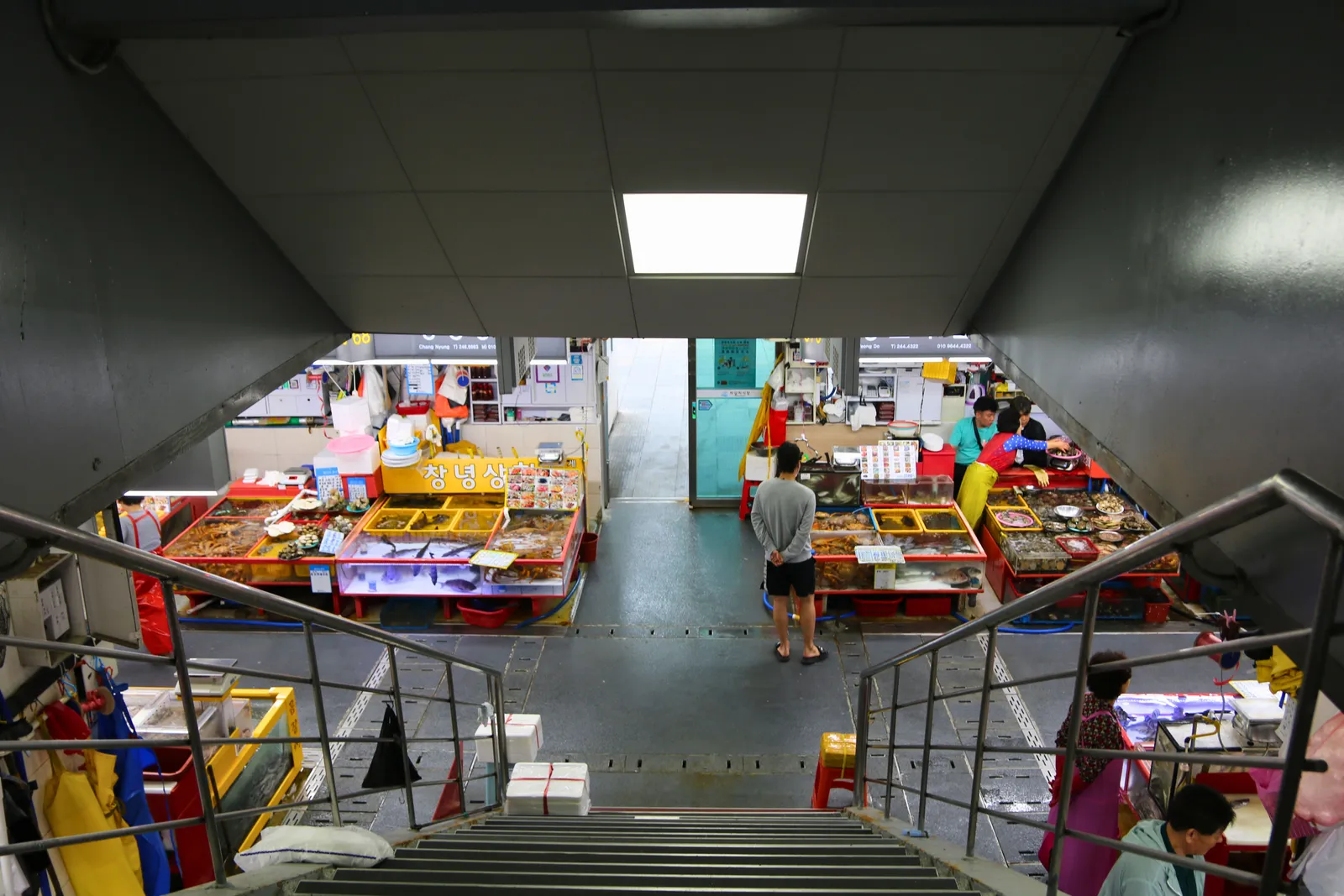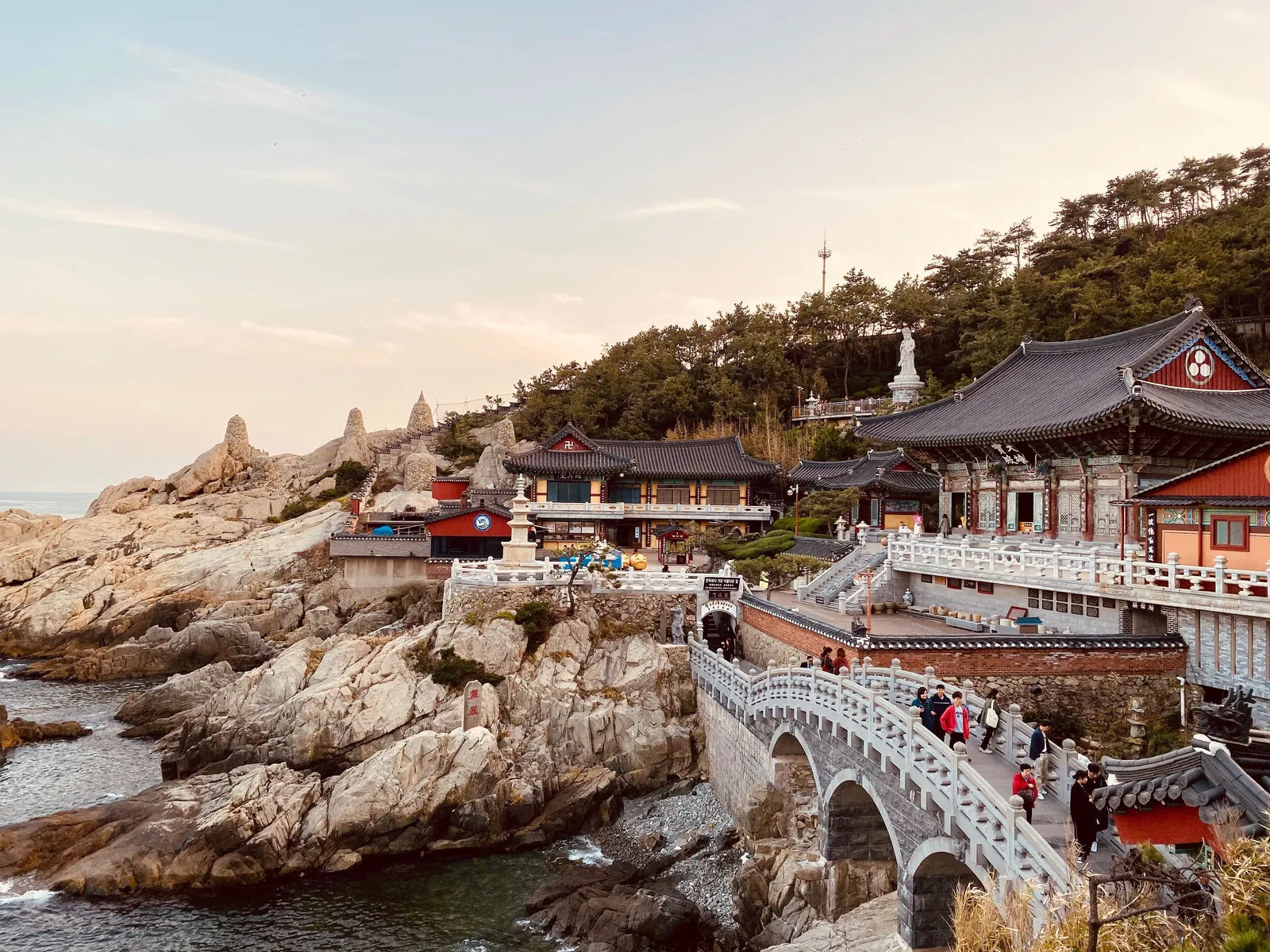
Korean Buddhist temples are mountain temples. They sit in forested valleys, up a road of switchbacks, with the quiet that distance buys. Haedong Yonggungsa does the opposite: it is built onto the rocks directly above the sea on the eastern edge of Busan, close enough that spray reaches the lower walkways in rough weather. That single fact is why it is one of the most visited temples in the country, and why the hour you choose matters more here than at almost any other temple in Korea.
Why sunrise is the visit
The complex faces roughly east over open water. The sun comes up out of the sea in front of the halls, the rocks below go from grey to gold, and for a short while you have one of the busiest temples in Korea nearly to yourself.
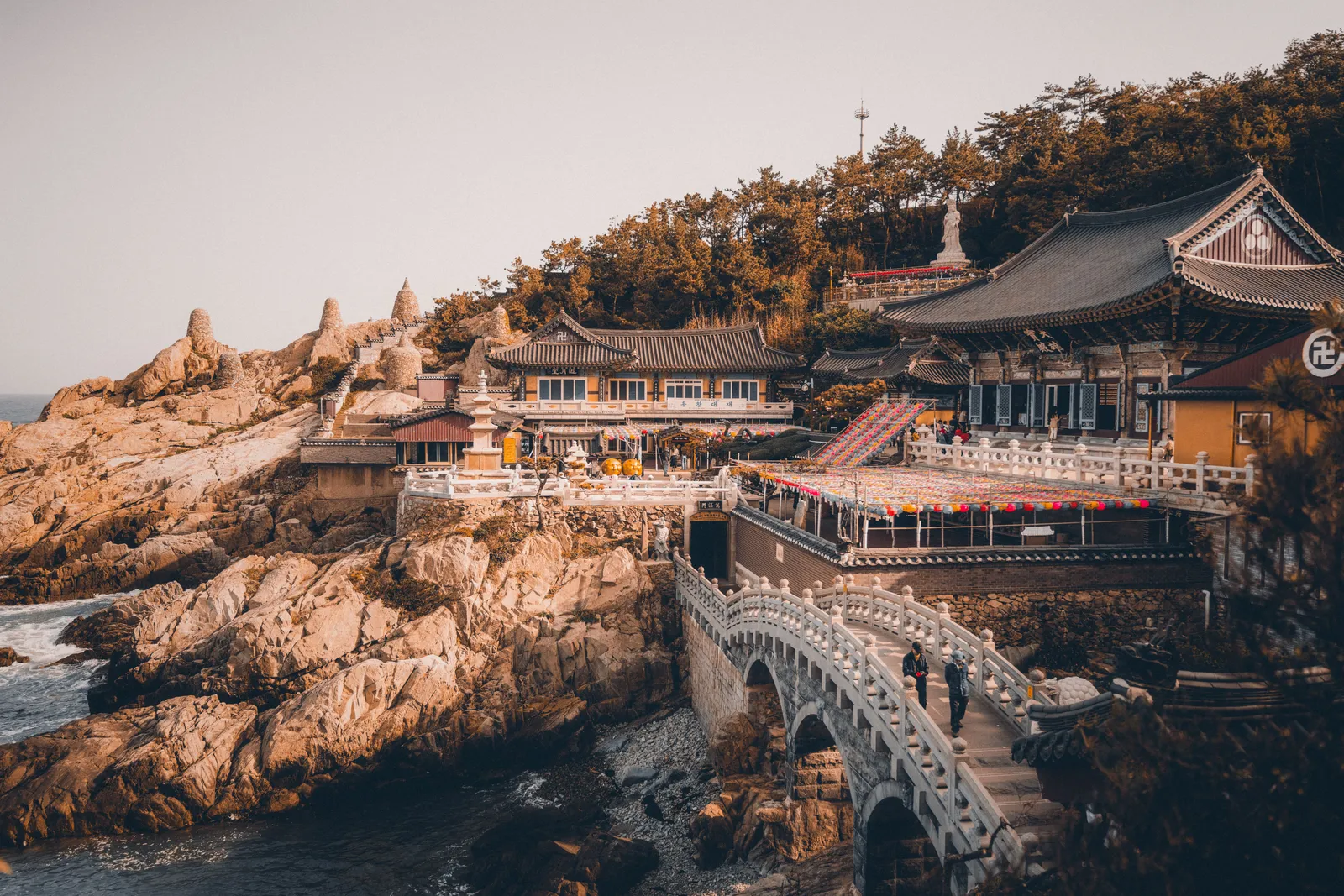
By mid morning it is a different place: a steady file of visitors along the same narrow walkways, and flat light on stone that photographed beautifully an hour earlier. Nothing is wrong with the later visit, and plenty of people are perfectly happy with it. But if you are going to set one alarm in Busan, set it for this.
Getting there
The temple is out on the coast east of the city centre, past Haeundae. City buses run from the Haeundae area and drop you a short walk from the entrance, which is the cheap and straightforward option in daylight hours.
For a sunrise start the buses may not be running yet, and a taxi shared between two or more people is the usual answer. It is not a long drive. Bus numbers and first departures change, so confirm locally rather than relying on a route number printed in an article.
Staying on the eastern side of the city makes all of this easier, which is one of the arguments for basing yourself around Haeundae and Gwangalli rather than downtown.
The route inside, from the gate to the rocks
The approach is the part people do not expect. You come in from above and walk down through the gate and a long flight of steps, rather than climbing up to a temple as you would anywhere else in Korea. The complex reveals itself gradually as you descend.
At the bottom there is a stone bridge, then the main halls stacked against the rock face, then a path out onto the rocks themselves at the water’s edge. That last stretch is where the temple earns its reputation, and it is also where you should watch your footing: wet stone, uneven steps and no barrier in places.
An hour to an hour and a half covers the circuit at a comfortable pace.
An active temple, not an attraction
This matters and is easy to forget in the queue for a photograph. Monks live and practise here, services run to their own schedule, and people come to pray rather than to sightsee.
The expectations are not complicated. Keep your voice down. Do not walk through or photograph anyone at prayer. Inside the halls, follow whatever signage there is about photography and remove hats. Dress is not strictly policed at this temple, though covered shoulders and knees are the respectful default at any working religious site in Korea. If temple manners in general are new to you, the wider Busan guide sets the context for the city’s sites.
Early May, when the lanterns go up
Around Buddha’s Birthday, which falls in spring and moves with the lunar calendar, Korean temples are hung with rows of paper lotus lanterns. At a temple this size, in this setting, the effect is considerable.
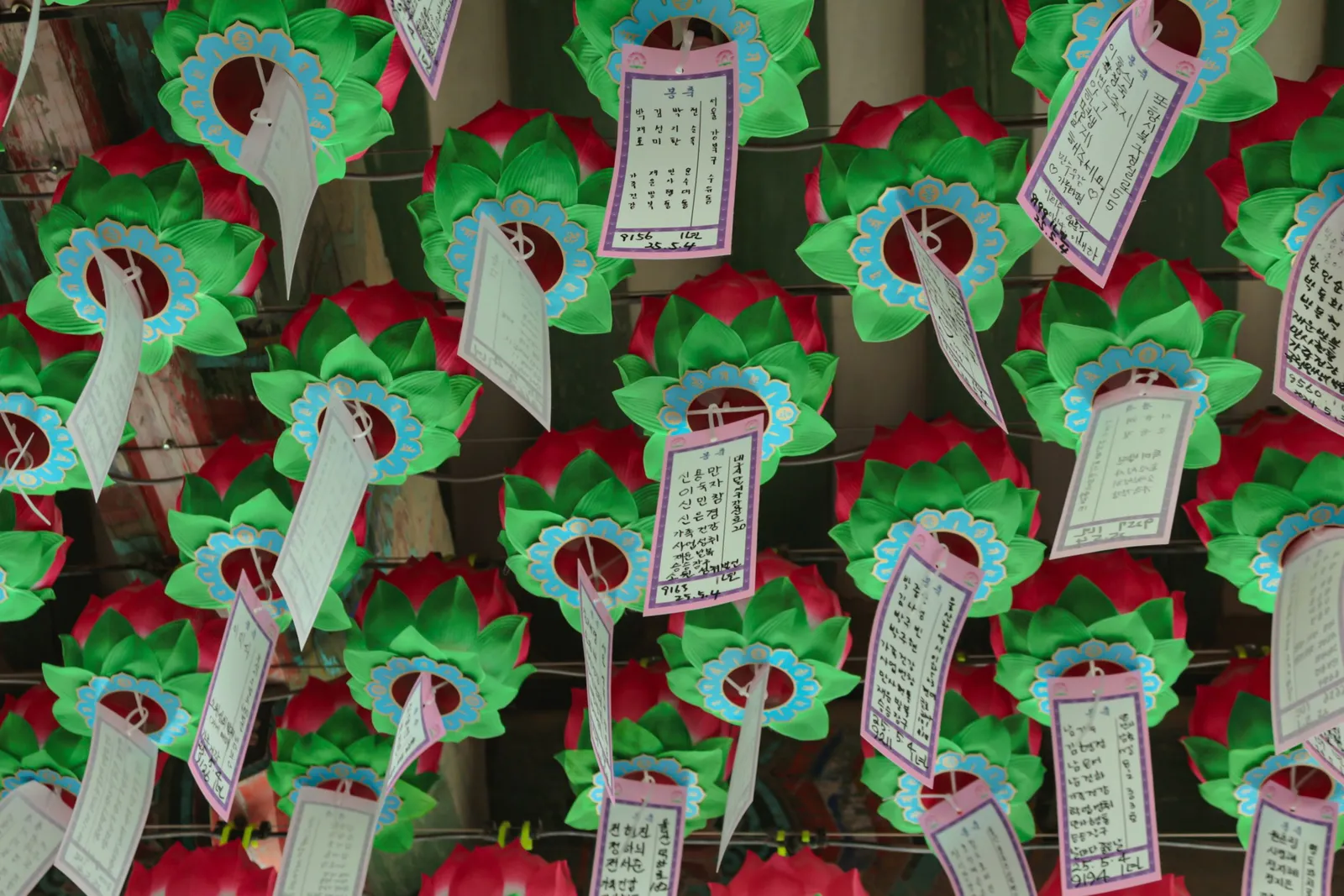
If your dates land anywhere near it, the visit is worth doing twice, once at sunrise for the sea and once later for the lanterns. The exact date shifts each year, so check it against the year you are travelling.
What to combine afterwards
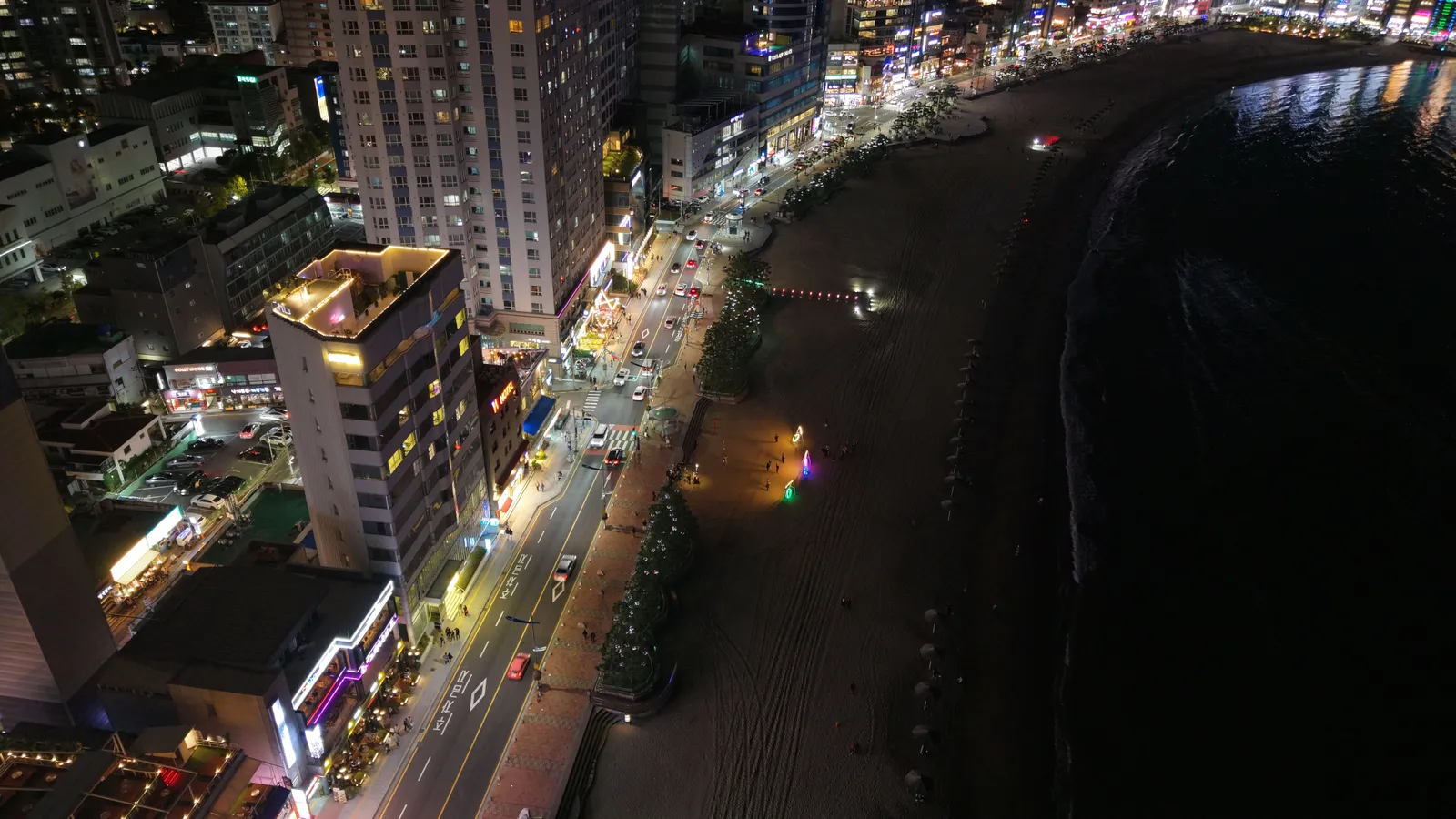
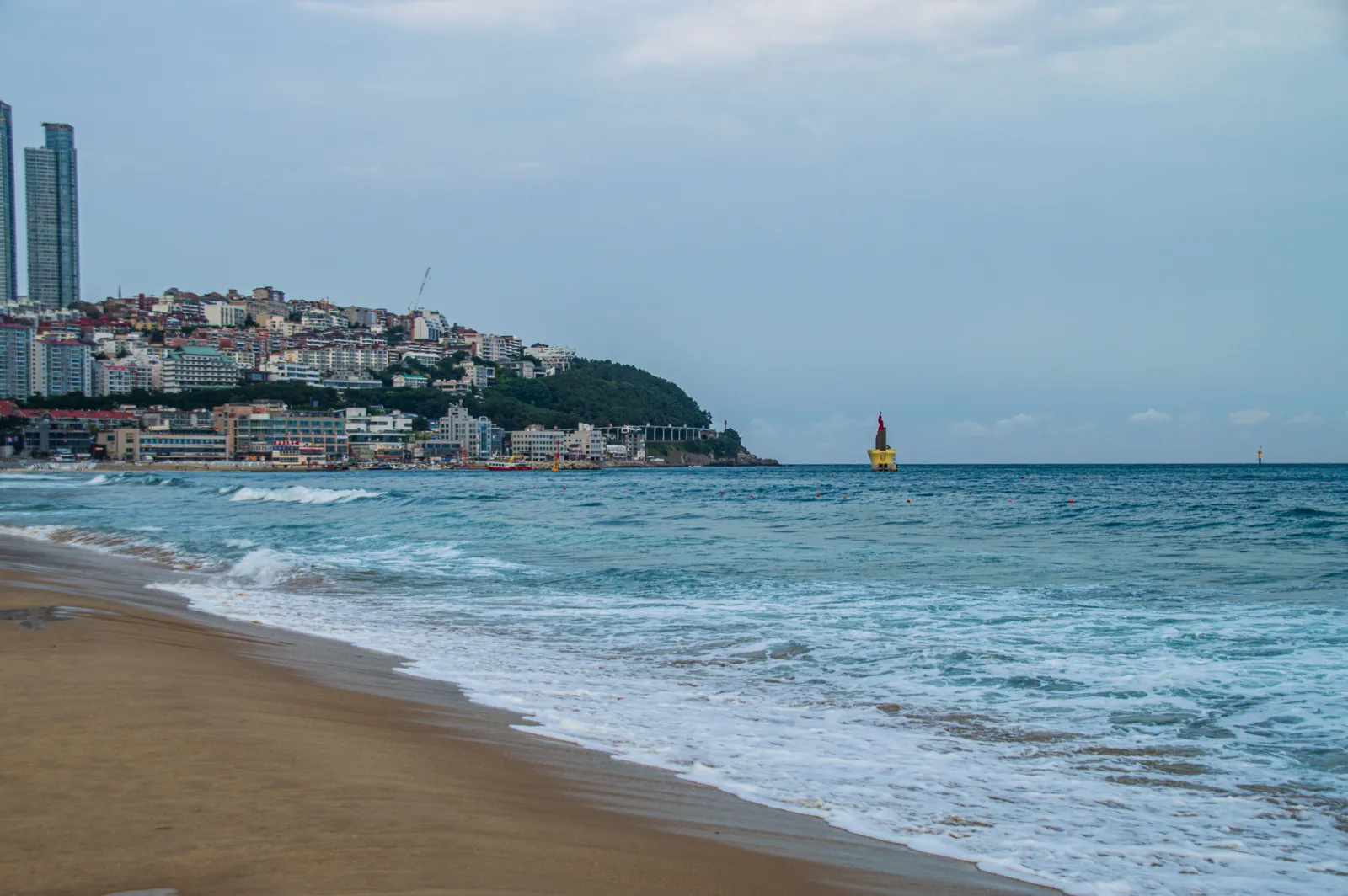
The temple sits far enough east that it pairs naturally with the coast rather than the city. The beaches and the bridge views around Haeundae and Gwangalli are the obvious afternoon, particularly if you started at first light and want somewhere to eat and slow down.
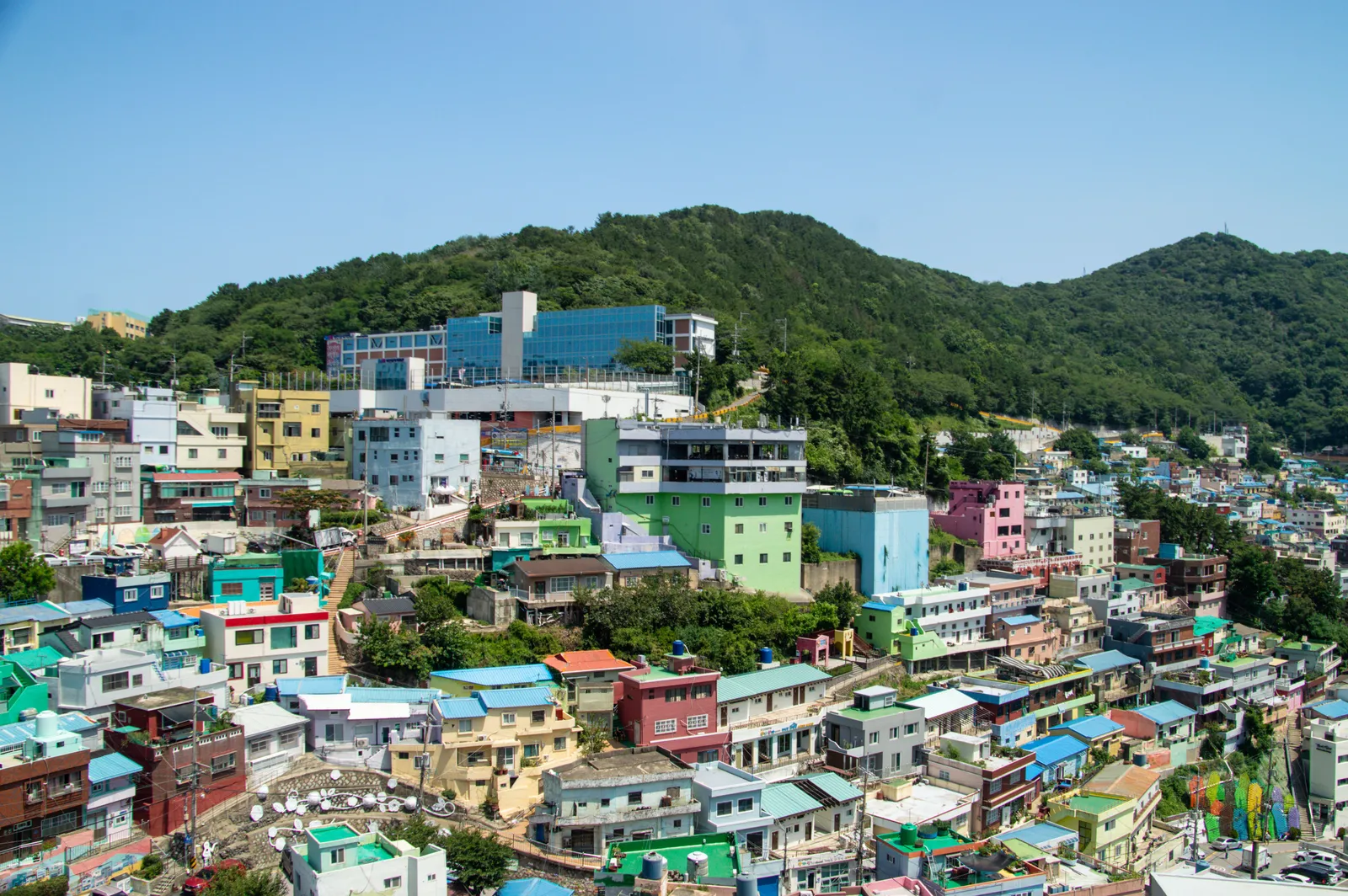
For a complete contrast, the painted hillside lanes of Gamcheon culture village are on the other side of Busan and make a good second half to the day, provided you accept the cross city journey between them.
Most temples in Korea ask you to climb away from the world to reach them. This one asks you to walk down towards the sea, and then puts the sunrise in front of you. It is a short visit and an early one, and it is the one people remember from Busan.