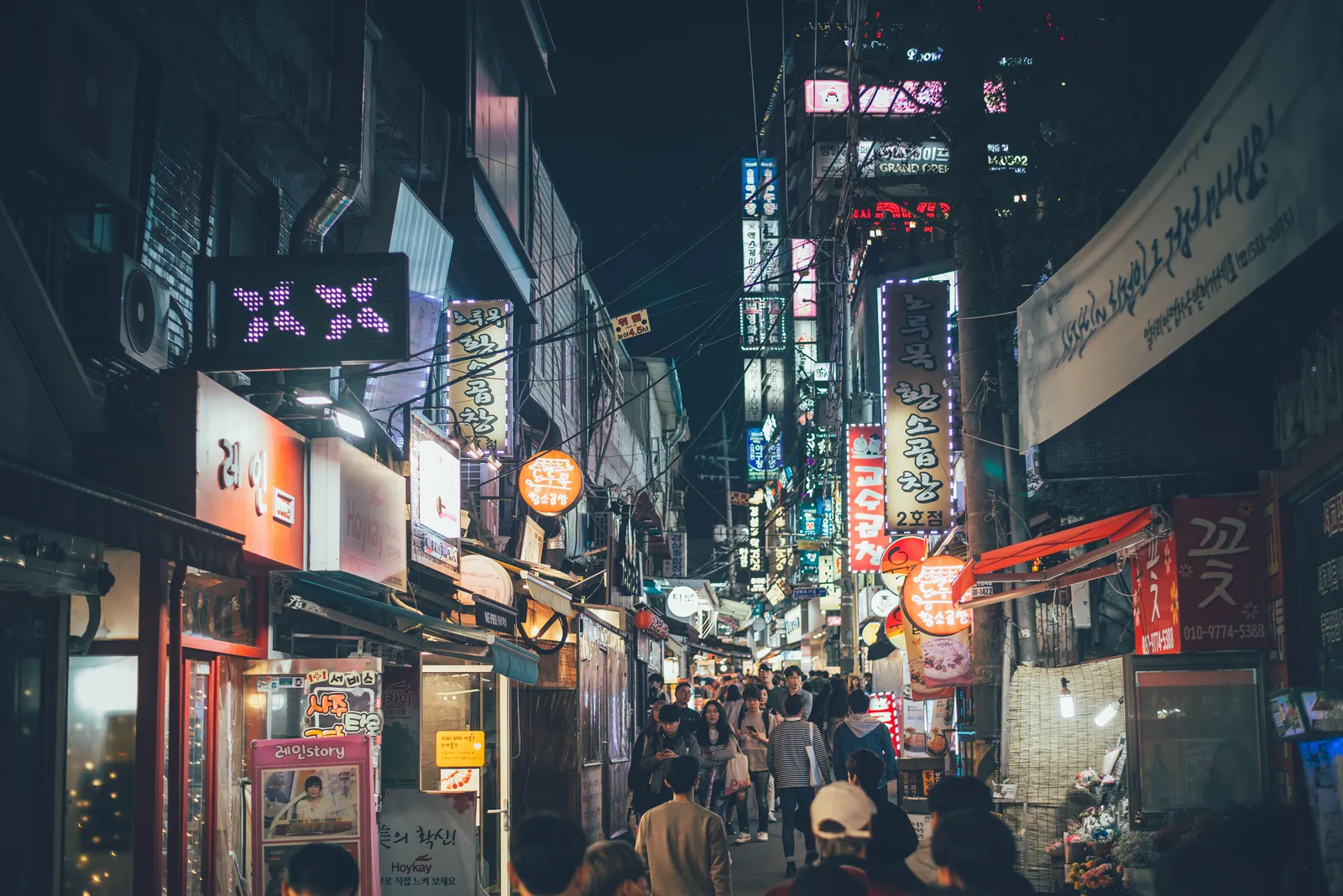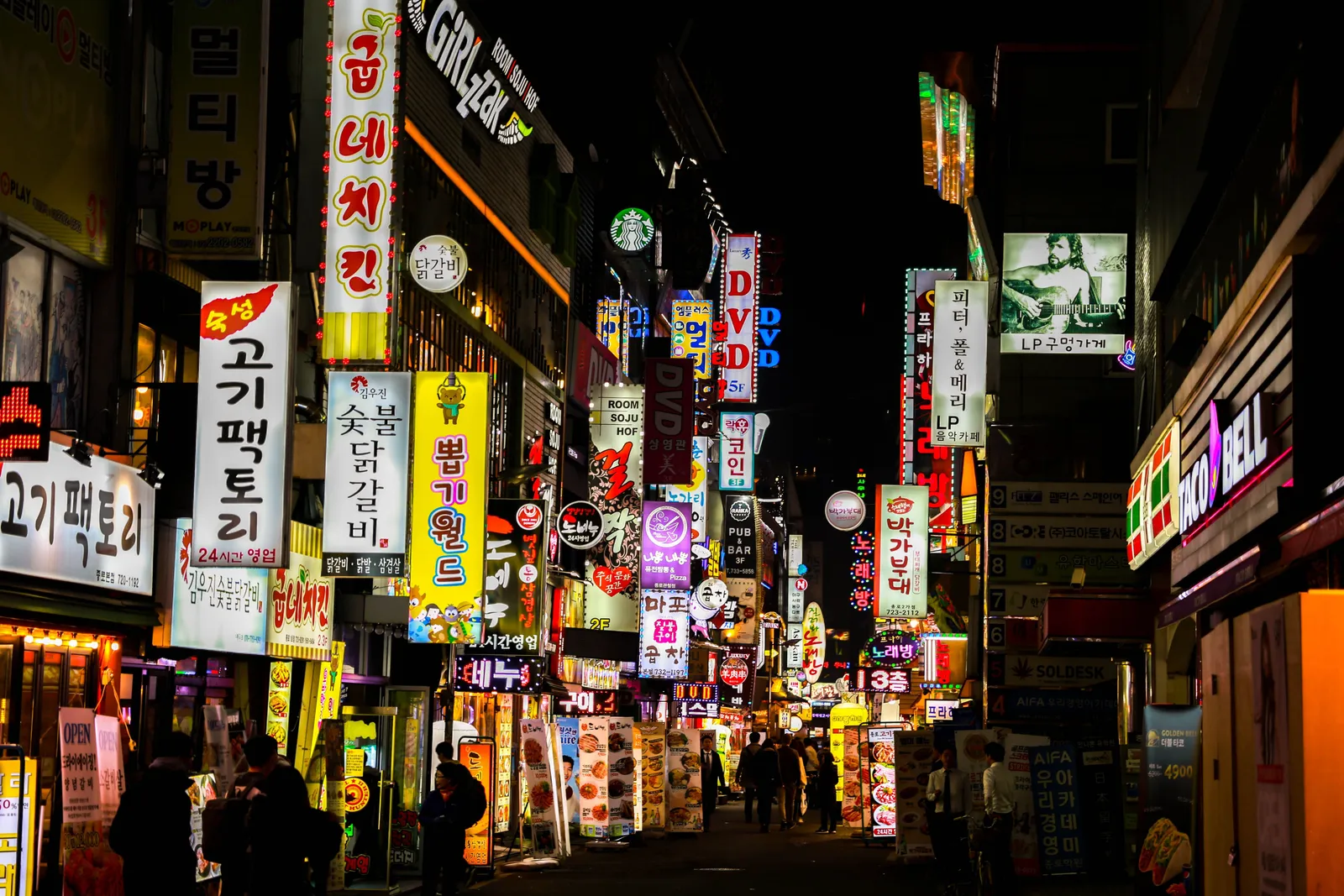
Seoul has several nightlife districts, and each one draws a different crowd. Hongdae, named after the arts university at its centre, is the youngest, the loudest and the easiest to arrive at without a plan. There is no dress code, no need to book a table and no requirement to know anyone before you walk in. It is also the district visitors most often misjudge, because the real night here starts a good deal later than the early evening buzz suggests.
A night that runs in shifts, and starts later than you think
The evening in Hongdae works in stages, and you can drop into any one of them. Early on, small restaurants and street grills fill with students and office workers grabbing dinner before the night properly begins. Once the sky goes dark, the main street turns into an open stage, with singers, dance crews and buskers setting up along the road and around the small square nearby, and this part is entirely free. After ten, the bars fill in, most of them tiny, plenty of them tucked into basements with barely a sign to mark the door. Midnight is when the clubs actually get going, and they stay full until the sky starts to lighten.
Anyone who arrives at nine and leaves by eleven sees a pleasant but half empty neighbourhood and goes home wondering what the fuss was about. Hongdae simply runs on its own clock, and it is one of three nightlife hubs described in our full Seoul guide, alongside Itaewon and Gangnam across the river.
The street performances that make Hongdae different
This is the one thing that has no real equivalent elsewhere in the city. Every evening, along the main street and in the small plaza beside it, performers set up and play to whoever stops. Some of it is genuinely accomplished, from dance crews rehearsing for competitions to singers with a full sound system and street artists working the crowd. It is free, it starts as the light fades, and on weekends several acts run at once on the same stretch of road, each with its own ring of onlookers.
One practical note is worth keeping in mind: the crowds around a performance can block the pavement completely, and moving through them takes far longer than it looks like it should. If you have a fixed destination in mind, it is often quicker to take the parallel street instead.
Basement bars, games bars and the ones with no sign at all
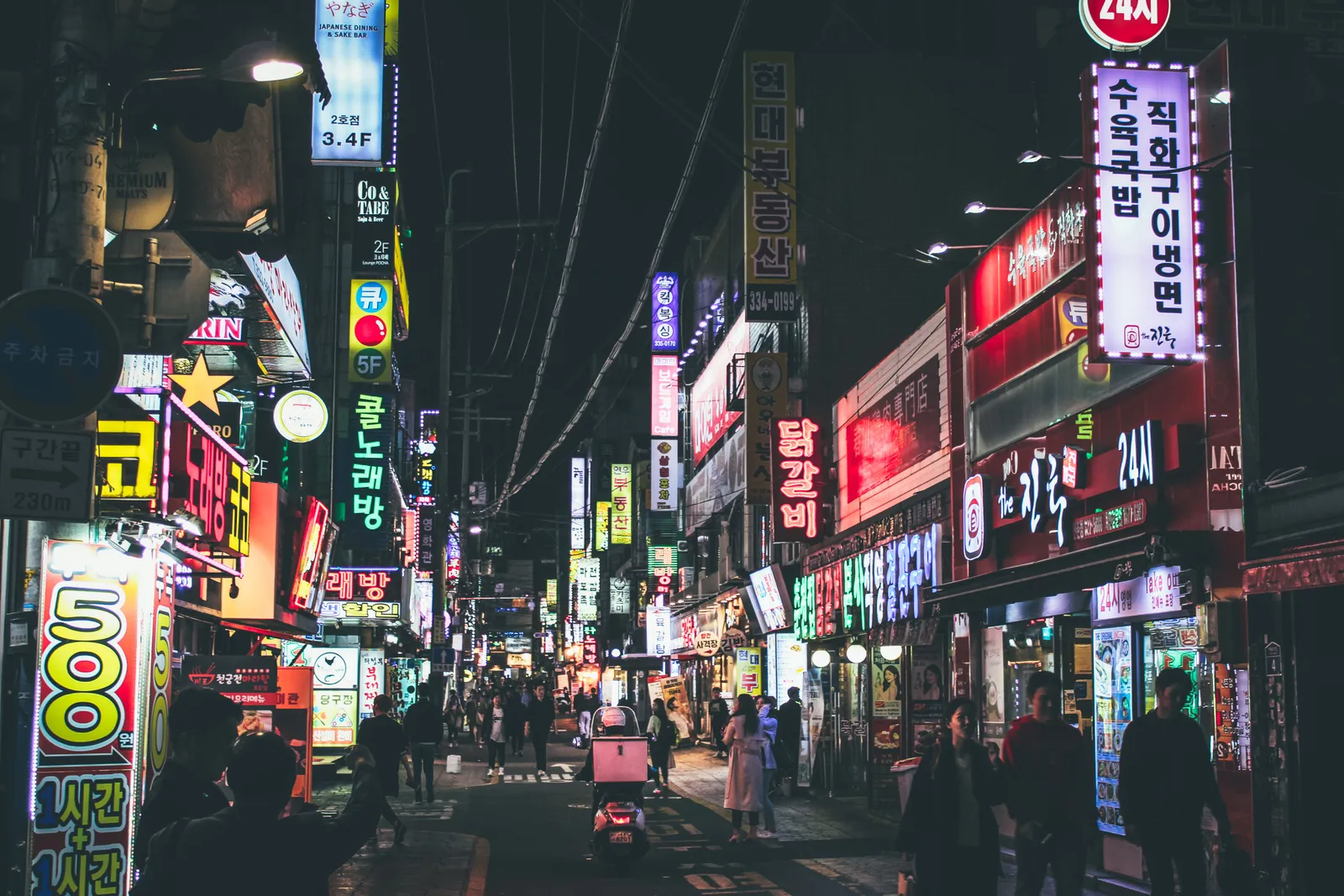
Hongdae is full of small bars, and they are far more varied than the main street suggests.
| Type | What it is | Feel |
|---|---|---|
| Basement bar | Small, music led, often unmarked | Intimate |
| Rooftop bar | Terrace with street views | Relaxed |
| Games bar | Order a drink, get a stack of board games | Sociable |
| Club | Dance floor, proper crowd after midnight | Loud, young |
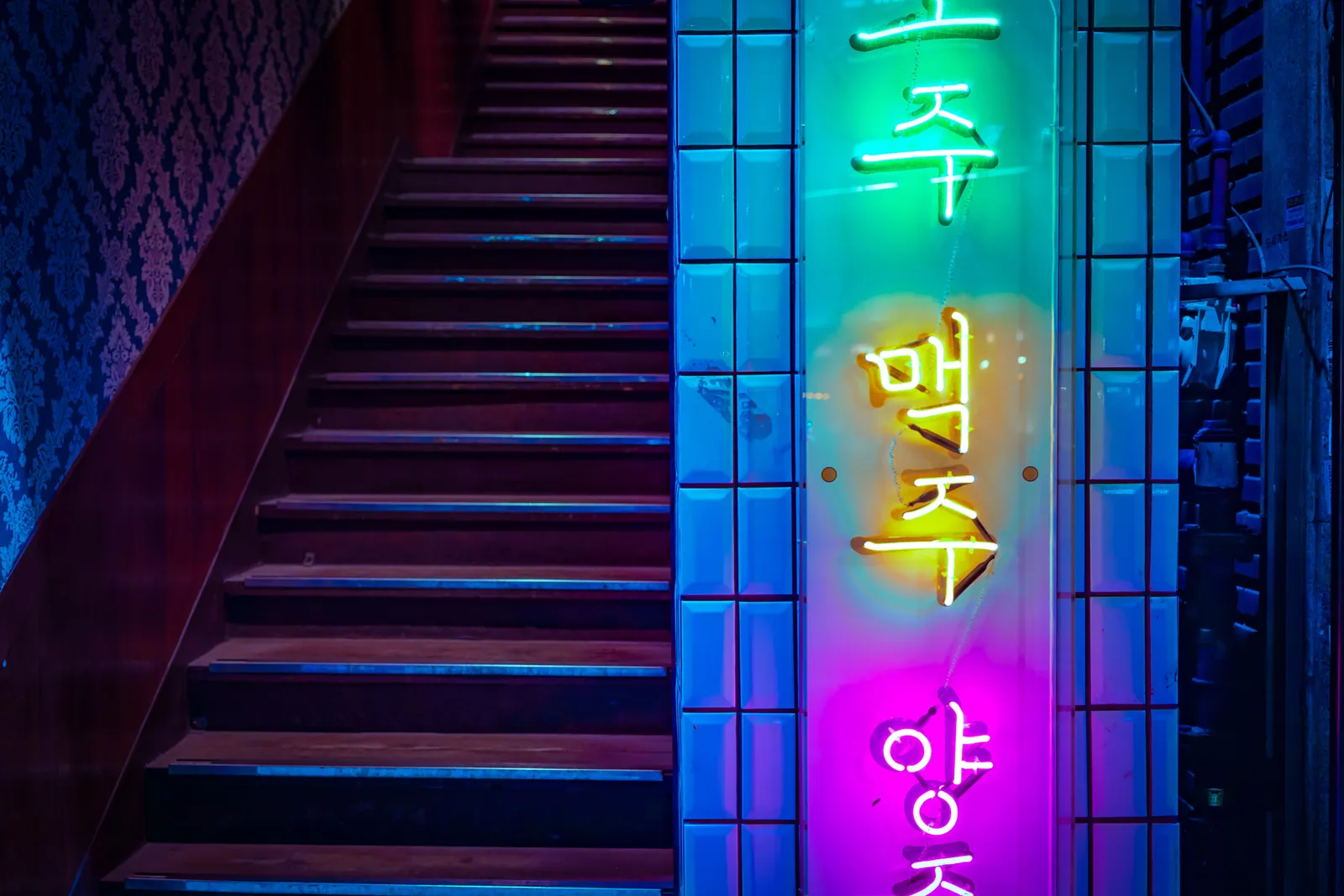
The basement bars are the real draw here. Some have nothing outside but a plain door and a staircase, and that is deliberate rather than an oversight. If you see a door with music leaking out from underneath it, that is very likely the entrance you are after.
Games bars are worth knowing about specifically. You sit down, order a drink and some snacks, and a stack of board games arrives with them. It is a relaxed way to spend an evening without shouting over a speaker, and a good option for anyone who wants to sit and talk.
The clubs, and why nobody can quote you a price
This is the question people ask most, and the honest answer is that there is no standard rate. Some clubs charge a cover that includes a drink, some charge nothing at all on weeknights, and a few price entry differently for men and women. Weekends and nights with a booked event push the price up further, sometimes considerably.
Rates change often enough that any figure printed here, including this one, would be out of date within a season, so asking at the door is the only reliable method.
What stays constant is the gap between a bar and a club. Bars are noticeably cheaper, and the difference is not small. Anyone who wants a good night without spending much will get further sticking to the bars and skipping the club cover altogether.
Chimaek and the street stalls that never really stop
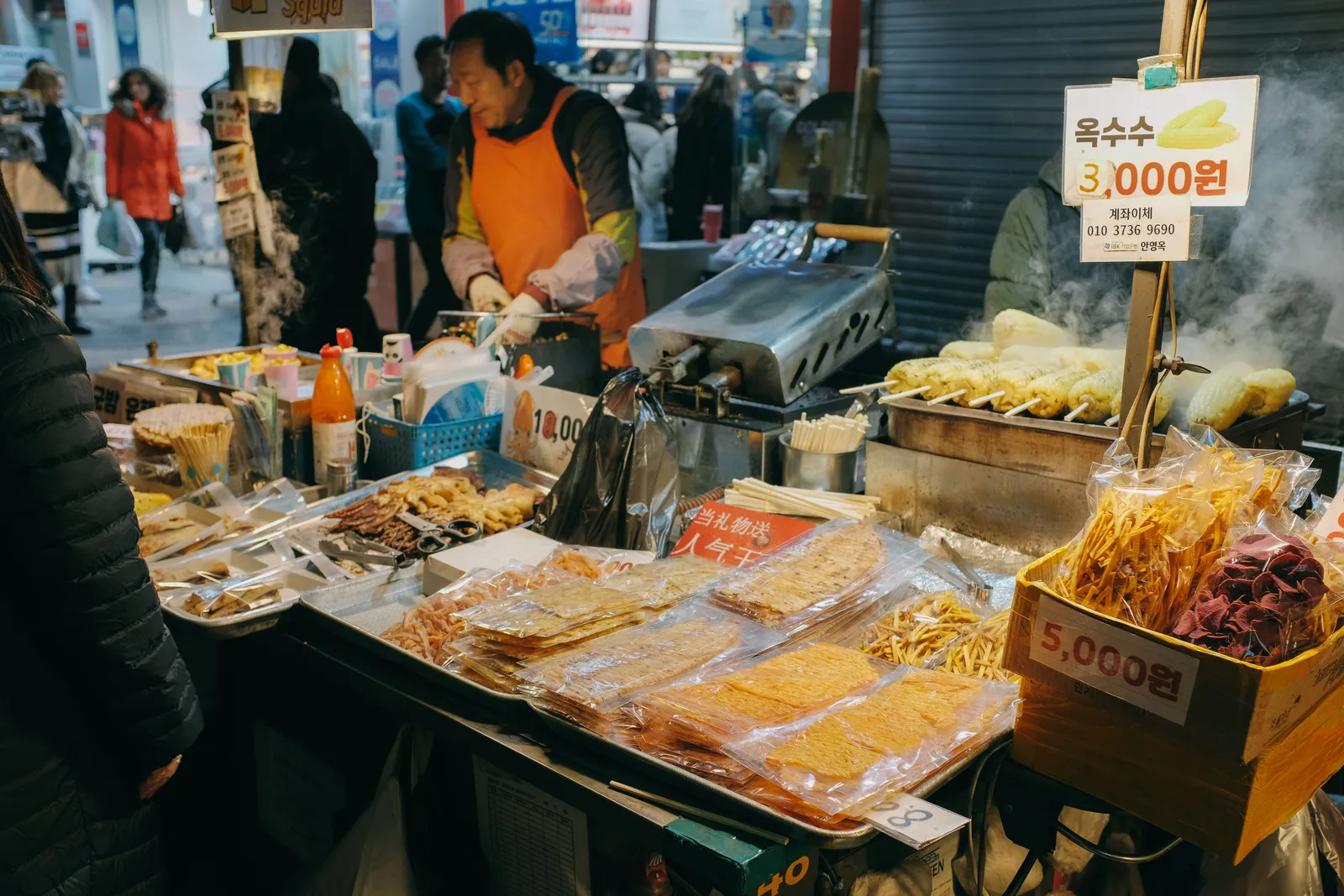
Korea does not stop eating because of the hour, and Hongdae shows that off better than most districts. Street stalls run late into the night, with spicy rice cake, fried squid, steamed buns and skewered seafood all easy to find within a few minutes of walking.
Chimaek, fried chicken with beer, is the national pairing for a night out, and Hongdae has dozens of places built around exactly that combination. It is the meal most locals eat here before moving on somewhere else, and it comfortably feeds two people or more.
Later still, soup restaurants stay open until sunrise, and Koreans finish long nights in them. It doubles neatly as the local answer to the morning after.
Getting home once the last train has gone
Seoul’s subway stops running around midnight, which is far earlier than a Hongdae night usually finishes, and this is exactly where people get caught out.
Night buses run set routes right through until morning and cost very little. Taxis are available too, though the stretch of time when the clubs empty out is the busiest and hardest for hailing one on the street, so a ride hailing app installed beforehand solves most of that problem.
The simplest fix of all is to stay in the area, which removes the question entirely.
Where to sleep, and how far from the noise to go
Rooms directly over the main street are convenient and genuinely loud, and you should expect to hear the street until sunrise on weekends.
Two streets back, the noise drops off almost completely while you are still within easy walking distance, and that is the right balance for most visitors.
Further out, in the quieter residential pockets nearby, prices come down further and Hongdae itself is one stop away on the subway. Our full guide to where to stay in Seoul breaks down every district by the kind of trip you are planning, not just the nightlife.
Hongdae by day: cafes, small shops and street art
The district is not only a night district, and most visitors never see the other half of it.
Cafe density here is among the highest in Seoul, including a run of concept cafes that are worth the detour on their own; our guide to Seoul’s cafe scene covers the best of them.
Small shops run by art and design students sell clothes, cosmetics, stationery and gifts at prices well below the smarter shopping districts across the river, and the side streets around the university are covered in street art that changes constantly.
In short: arrive after ten, start with the street performances, move on to a basement bar, and work out how you are getting home before the last train leaves.