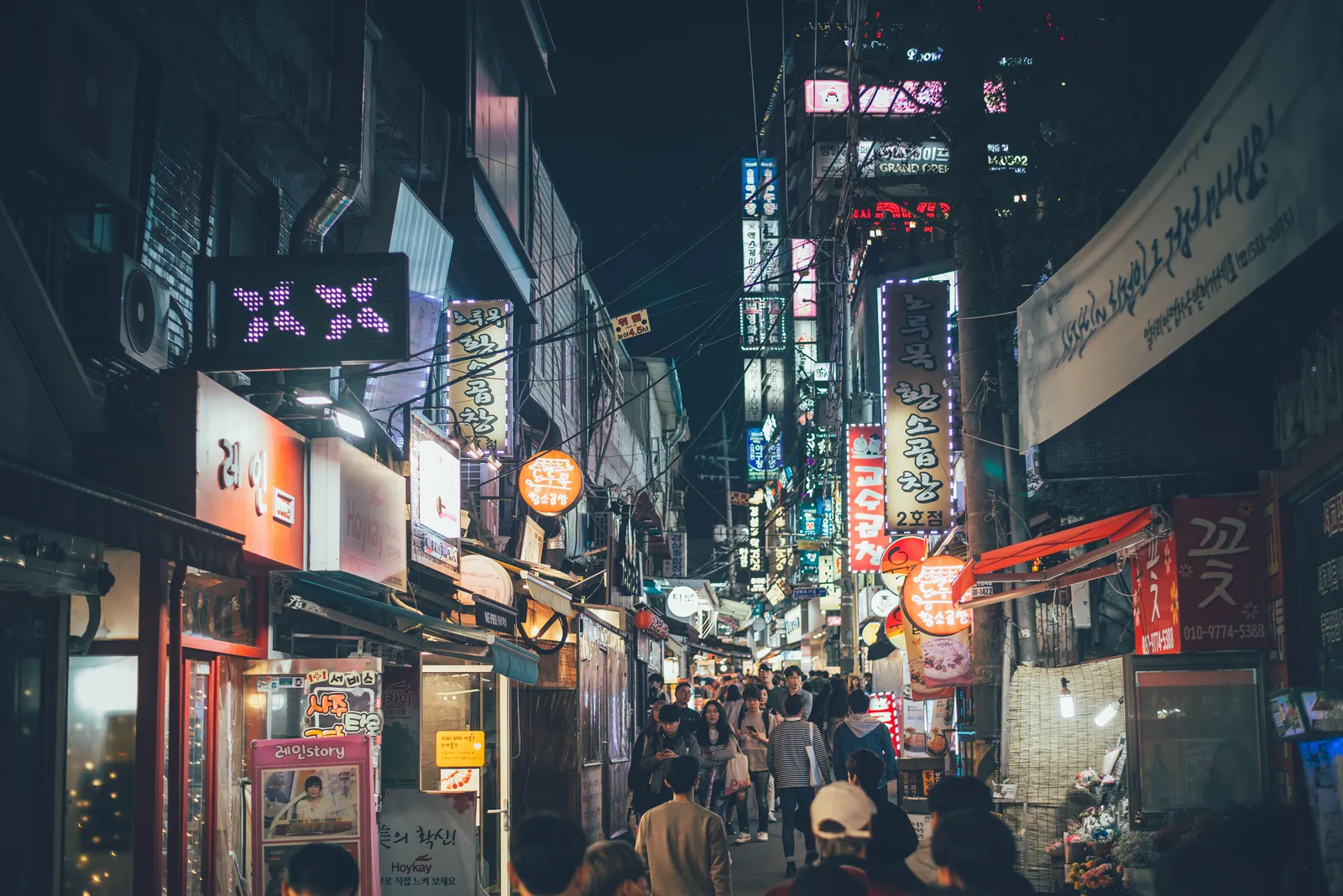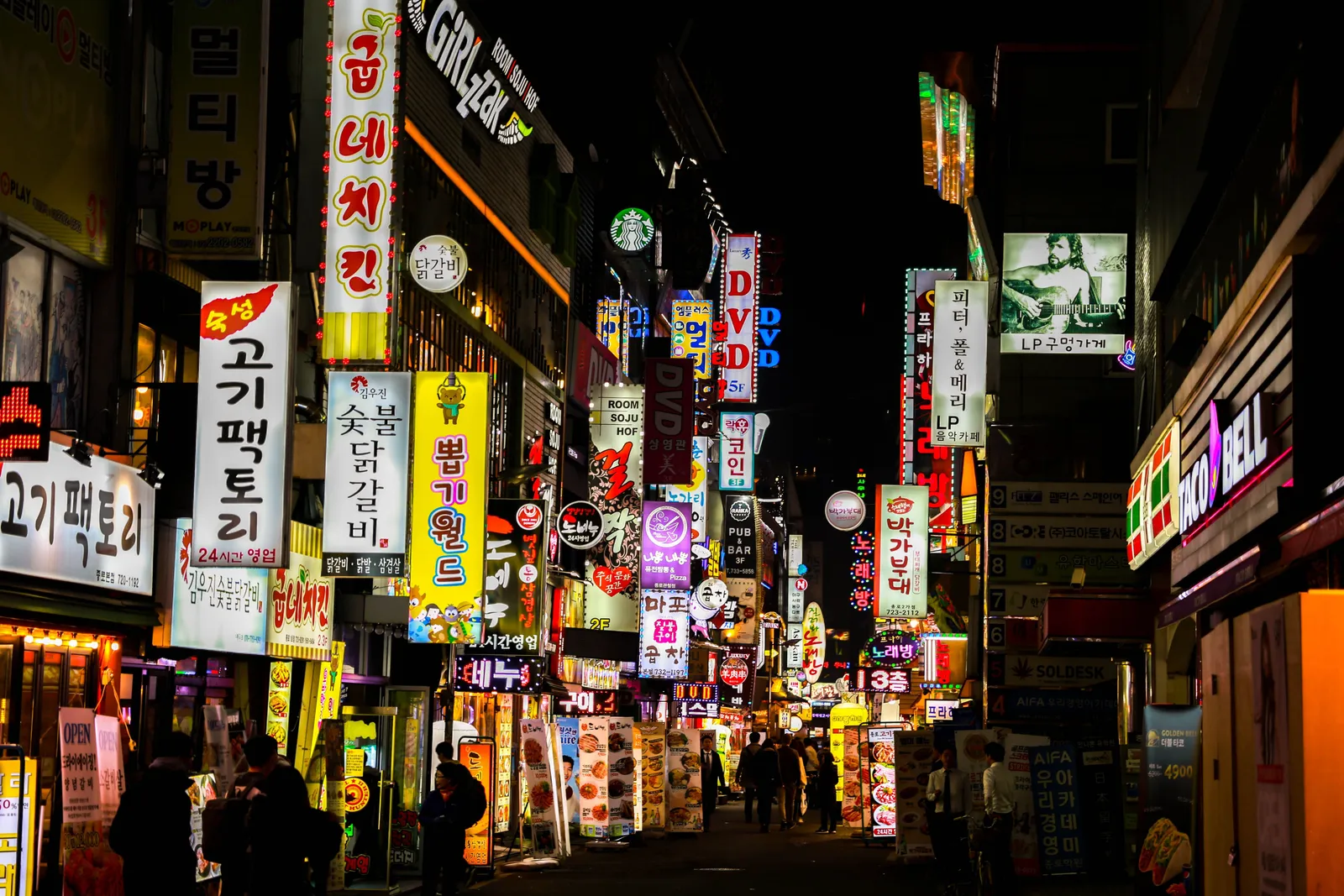
In short: The main party district in Seoul is Hongdae, around Hongik University, the loudest and youngest scene with live music, cheap bars, street performance and packed weekend clubs. Itaewon has the most international crowd and the widest range of bars across its hillside, Gangnam south of the river is for big, expensive clubs and a dressier crowd, and Euljiro hides small bars in old printing workshops. The night starts early and moves in rounds, and since the metro stops around midnight, pick one district and stay in it rather than crossing the city late.
Seoul goes out more thoroughly than almost any city its size, in a shape that does not match the European or American pattern. The night does not start late, it starts early and simply does not stop, because the metro closes and the natural point at which people would go home disappears. That single fact explains most of what follows.
Which is the party street in Seoul?
Seoul has party districts rather than one party street. Hongdae is the nearest to what most visitors picture, and the table below is the quick comparison.
The four districts compared
| District | Crowd | Best for | Watch out for |
|---|---|---|---|
| Hongdae | Students, twenties | Live music, cheap bars | Packed weekends |
| Itaewon | Most international | Widest range of bars, English | Less distinctly Korean |
| Gangnam | Dressier | Big clubs, table service | Entry charges, high prices |
| Euljiro | Not the Hongdae crowd | Hidden bars in old workshops | Often unmarked |
Who should choose what
- Loud, cheap and live music: Hongdae.
- Most English spoken and the widest choice of bars, especially for nightlife in Seoul as a foreigner: Itaewon.
- A big club night with table service: Gangnam.
- A quieter drink somewhere unmarked: Euljiro.
Rounds, and why the night is long
The three rounds
A Korean night out moves in rounds, called cha. The first round is dinner with drinks, usually somewhere with grilled meat or a stew and soju or beer on the table. The second round is a bar, or different food, or both. The third is often a noraebang, a private karaoke room hired by the hour, or a late-night restaurant.
A typical timeline
Dinner and the first drinks begin from around seven. Bars are busy by ten and clubs fill from midnight. After that there is no natural stopping point, so a genuine night out often runs until the metro restarts in the morning.
What it means for your evening
Nobody announces the rounds and it is not a rule, but it is why a group that sat down at seven is still together at two. Expect less standing in one bar for four hours, more moving through several places with food at most of them.
Noraebang
A noraebang is a private room, so nobody outside your group is listening. That makes it one of the easiest parts of a Korean night for a visitor to join, and rooms range from basic to elaborate.
Hongdae
Hongdae, around Hongik University, is the loudest and youngest district. Live music venues, cheap bars, street performance, clubs, and a crowd dominated by students and people in their twenties.
Best for, and the catch
It is the best district for live music in the city by some distance, with a long tradition of small indie venues, and the cheapest for drinking. It is also the busiest and least comfortable if crowds are not what you want. Weekends here are genuinely packed, so go earlier in the evening or on a weekday if you want room to move.
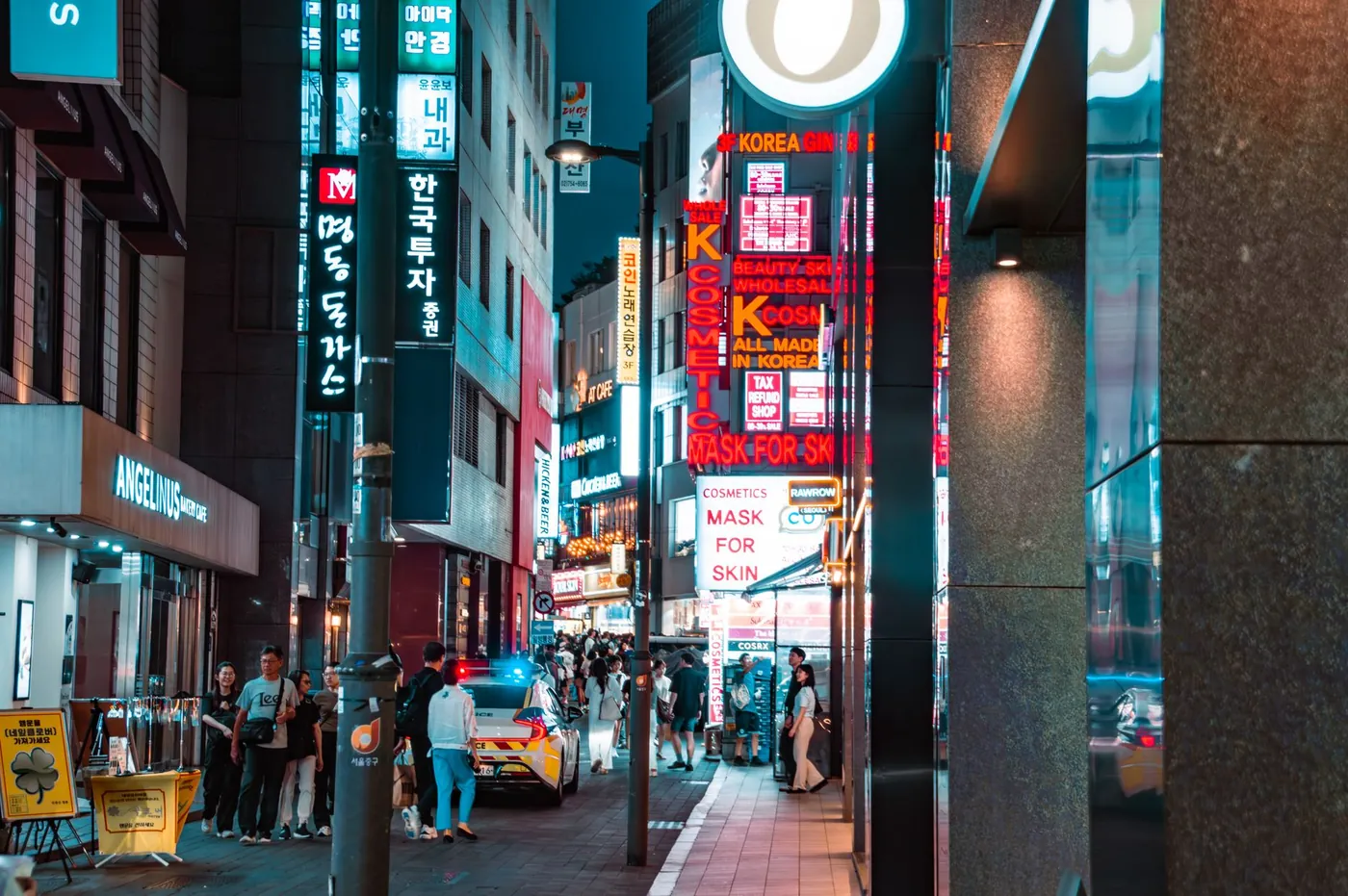
Itaewon
Itaewon is the most international part of the city, historically shaped by the nearby foreign population, and it has the widest range of bars in Seoul: craft beer, cocktails, rooftops, small dive bars and clubs, spread across a hillside rather than one street.
The easy first night
It is also the district where a visitor is most likely to find English spoken and the widest choice of non-Korean food, which cuts both ways depending on what you came for. The streets climbing the hill above the main road hold most of the more interesting bars, so walk up rather than staying on the main road.
Gangnam
Gangnam, south of the river, is the expensive option: large clubs, a dressier crowd, table service, entry charges and considerably higher prices than the north of the river.
Club or bar?
If you want a big club night with production values, it is where that happens. If you want a bar, the streets around Sinsa and the Garosu-gil area are more relaxed than the club district proper. Getting between Gangnam and the northern districts late at night is a long trip, which is worth factoring in before you commit to one side of the river. Ask about entry charges and table minimums before you commit to a club.
Euljiro and the smaller scenes
Euljiro, in the centre, has become one of the more interesting evening districts in Seoul: small bars hidden in and above old printing workshops and hardware shops, often unmarked, in an area that is industrial by day and quietly busy by night.
It is the opposite of Hongdae in almost every respect and appeals to a different crowd. Seongsu, further east, does something similar in converted factories.
For a completely different evening, our guide to Seoul cafes covers the city’s other obsession, which runs late enough to be a genuine alternative to a bar.
Drinking, and what is on the table
What to drink
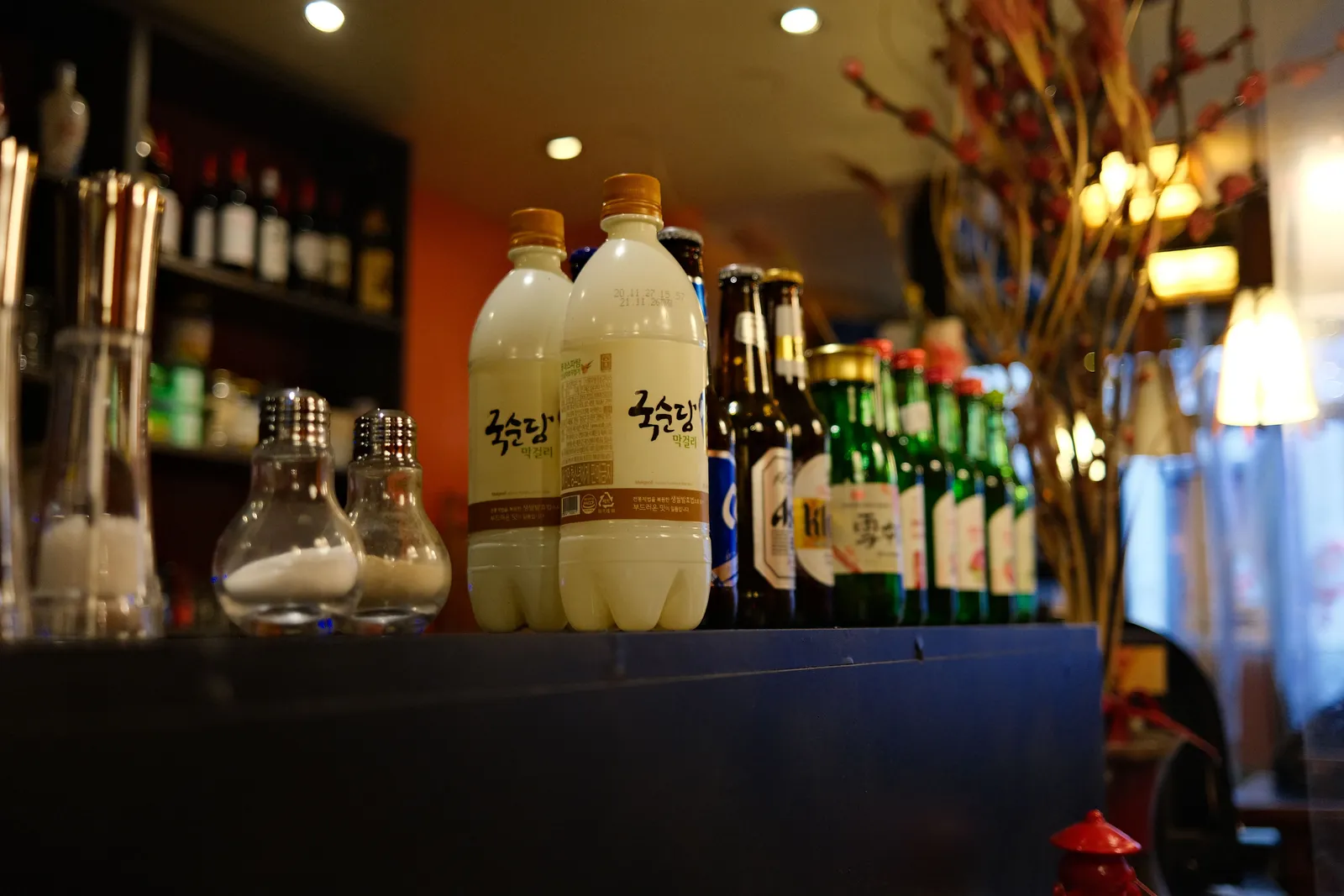
Soju is the default, cheap, and stronger than it tastes. Beer is usually drunk alongside it. Makgeolli, a cloudy rice wine, is the traditional alternative and is having a serious revival with small producers.
Food and manners
Food is not optional. Korean drinking culture assumes anju, food ordered to accompany the drinking, and most bars expect you to order something. This is a good arrangement and it is one of the reasons the nights run as long as they do.
Pour for others rather than yourself, and hold the glass with two hands when someone older pours for you. Those are the two etiquette points worth knowing, and our guide to Korean etiquette covers the rest.
Getting home
The Seoul metro stops around midnight and restarts early in the morning. That leaves three options: stay out until it restarts, which is what a large share of the city does, take a night bus, or get a taxi.
Taxis are the hard part. Between roughly midnight and two in the busy districts, demand far exceeds supply and hailing one in the street is difficult. Ride-hailing through a local app is the practical answer, and it is worth setting up before you go out rather than at one in the morning. Our guide to transport in Korea covers the apps and the cards you need.
Practical points
Identification and bills
Identification is checked at clubs and some bars, and the original passport is the reliable form for a visitor, since a copy is not always accepted. Bill structures vary. Most bars charge straightforwardly, but some venues aimed at visitors work on table charges or bottle minimums, and it is worth asking before sitting down rather than after.
Is it safe?
Seoul is generally considered a very safe city to be out in late, and the main districts are busy and well lit through the night. The usual precautions around heavy drinking apply, and it is worth checking current advice for your own circumstances before you travel.
A simple one-night plan
Start with dinner and drinks in your chosen district from around seven, move to a bar by ten, and decide at midnight between a club, a noraebang or heading home before the taxi crush. Bring your passport and have your ride-hailing app ready.
The common mistake: crossing the city
The districts are far apart. Choosing one and staying in it is a better night than trying to see three, particularly once the metro has closed. Our guide to Seoul covers how the districts sit relative to each other.
In short, Hongdae is the loud one, Itaewon the international one, Gangnam the expensive one and Euljiro the hidden one, and the night runs long whichever you choose.