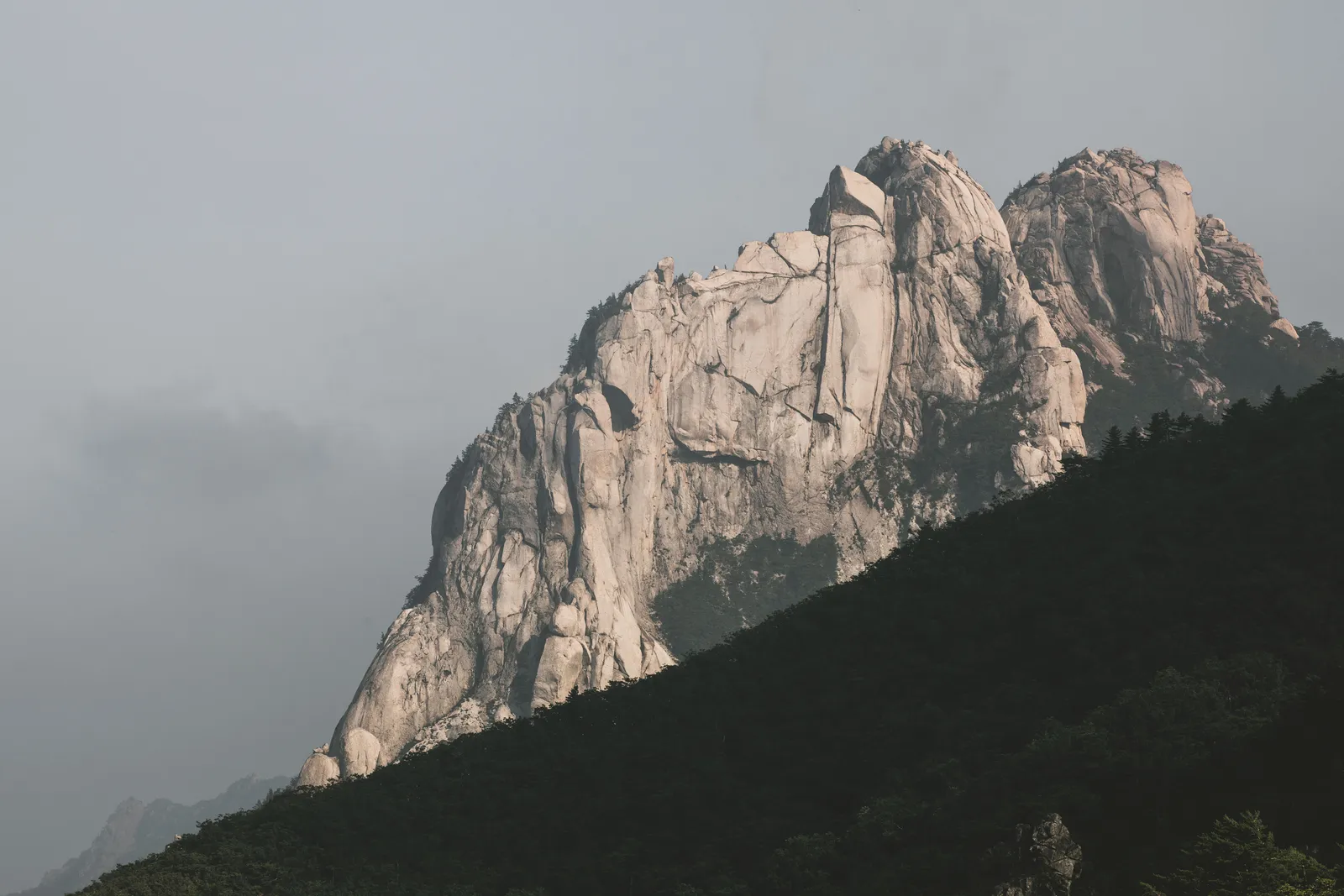
Visitors arrive in Korea expecting palaces, barbecue and neon, and are genuinely surprised to discover that the country is mostly mountain and that walking up it is close to a national obsession.
Something like two thirds of the land here is upland, which is why the cities are squeezed into the flat bits and why almost every one of them has a proper peak visible from the street. On a Saturday morning the metro fills with people in full technical clothing at an hour when the bars are only just emptying.
Why it is a national sport
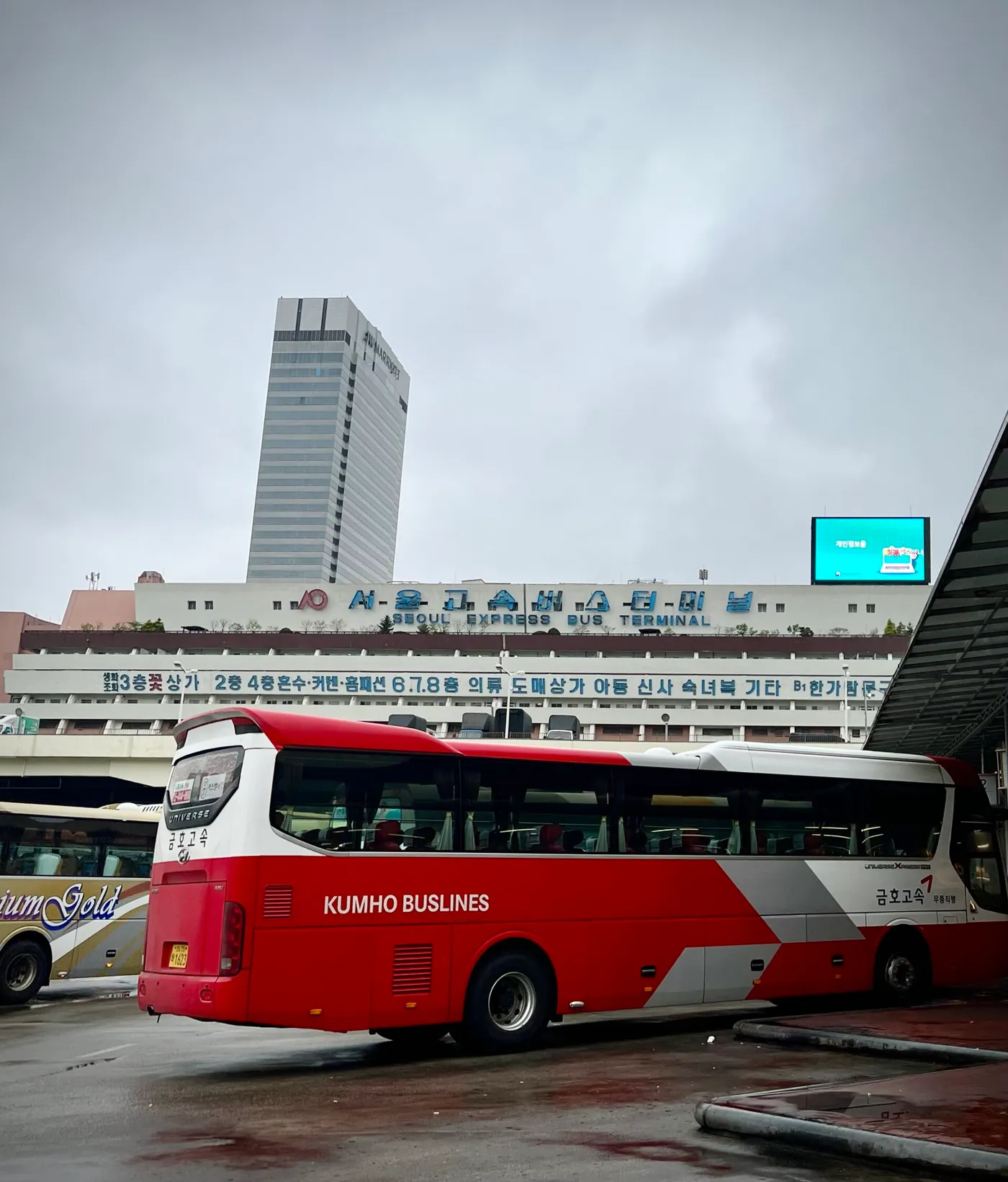
The mountains are close to everybody. This is not a country where hiking means a two-hour drive. It means a bus.
It crosses every demographic. Company groups, retired couples, university clubs and families all do the same trails, and the seventy-year-old who overtakes you on the steps is a standard Korean experience.
It is social rather than solitary. Groups walk together, stop together, eat together at the top and come down together, which is a different activity from the solo hill walking many visitors have in mind.
🔑 Which is why the trails are busy in a way that surprises people. A popular peak on an autumn weekend is not a wilderness. It is closer to a queue with a view at the end.
What the trails are actually like
Steep, and direct. Korean paths tend to head straight at the summit rather than switchbacking across the slope, so the height gain arrives early and does not let up.
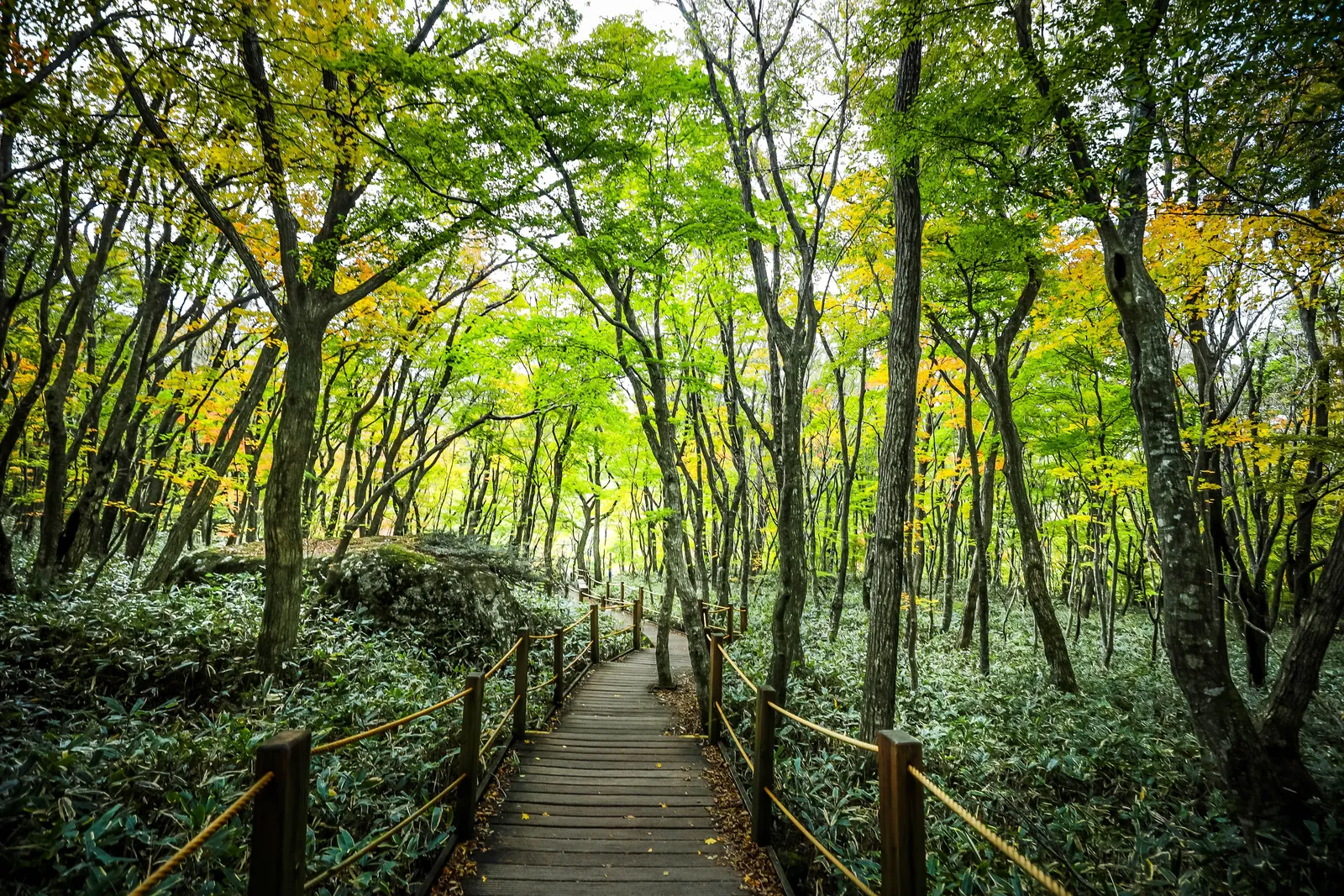
Stone steps and boardwalk for long stretches, built to protect the ground rather than to be pleasant underfoot.
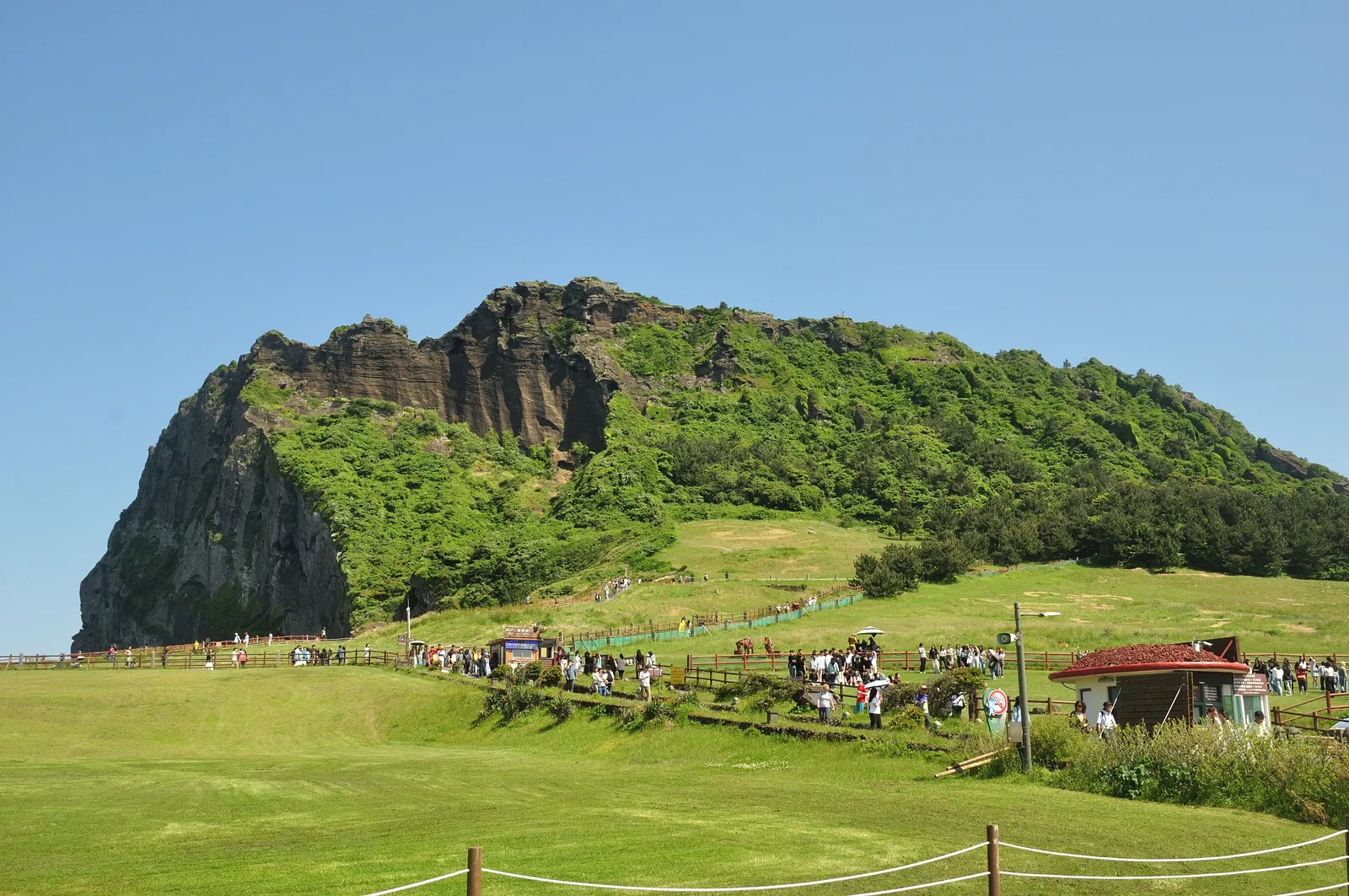
Bare granite on the upper sections of many mountains, with fixed ropes and chains where it steepens.
⚠️ Read the elevation, not the distance. A route listed at four kilometres can be a genuinely hard three hours, and the descent on stone steps is harder on the knees than the ascent is on the lungs.
Signage is good and mostly in Korean, with distances and estimated times posted at junctions. Numbered location posts along major routes exist so that anyone in trouble can give rescuers an exact position, which is worth noticing on the way up rather than on the way down.
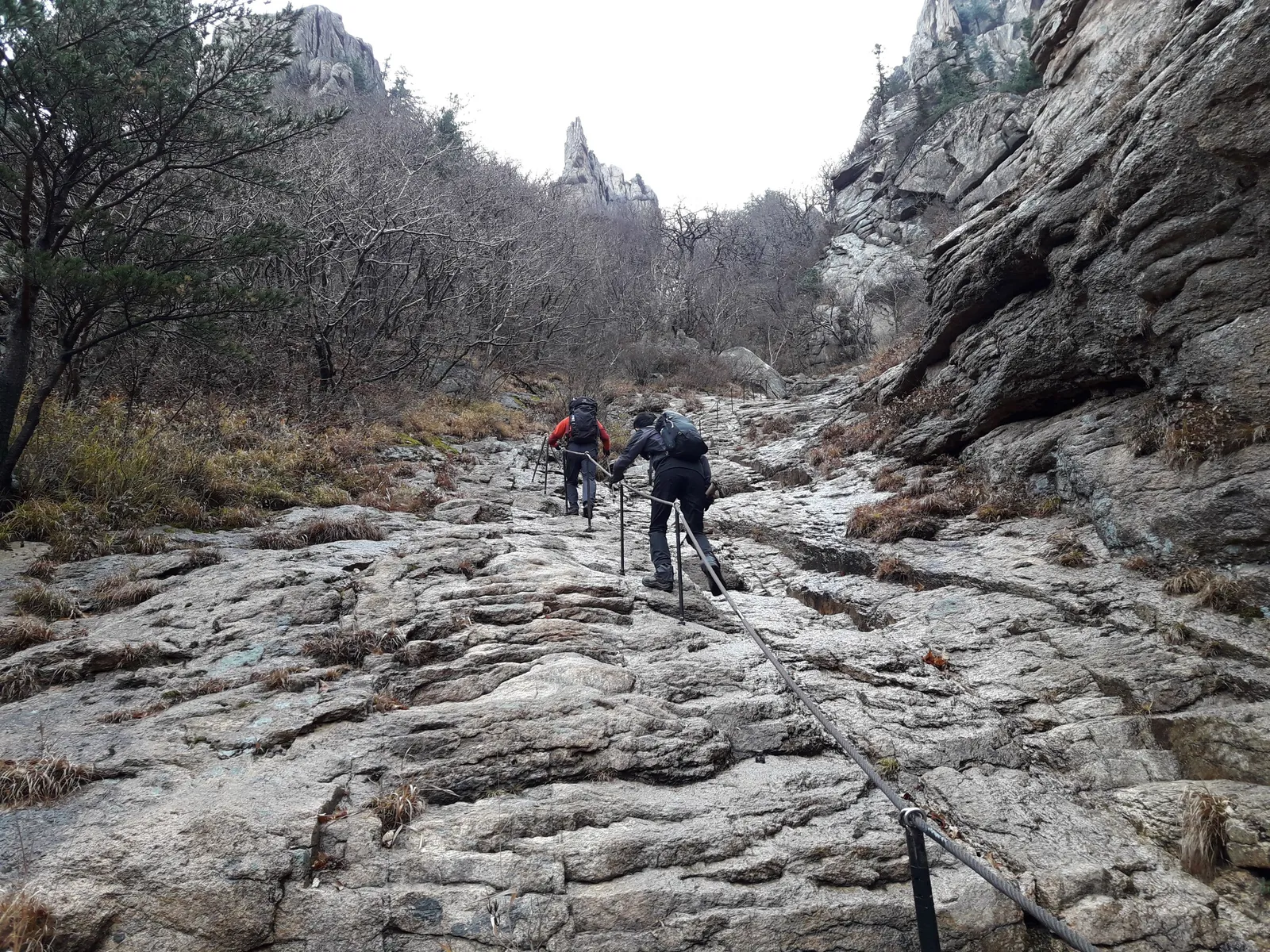
The gear, and why everyone looks like that
The outfits are extraordinary and they are not a sign that the trail is extreme. Full technical shells, matching trousers, poles, gaiters, gloves, sun sleeves and a wide hat are normal dress for a two-hour hill.
Hiking clothing is a mainstream fashion category here, which explains more than the terrain does.
What you genuinely need is far less: shoes with grip, more water than you think, a warm layer because ridges are colder than car parks, and sun cover.
Poles are the one optional item worth borrowing, because those stone descents are relentless and they take a real amount of load off the knees.
The mountains inside Seoul
This is the part that sounds invented and is not. Several full mountains sit inside or hard against the Seoul city limits, with proper trails, granite summits and a view back across ten million people.
Bukhansan is the large one, a national park reachable on public transport, extremely busy at weekends and a genuine day out.
Smaller peaks around the city give a couple of hours with a fraction of the crowd and are the better first move if you want to test your legs before committing to anything larger.
The practical version is a half day. Metro, a short bus, up, down, and a bathhouse or a late lunch afterwards, which is roughly how a Seoul weekend works for a large share of the city.
Check the hiking clause before the trailheadStone-step descents produce more twisted ankles than ridges produce dramaThe season is the whole decision
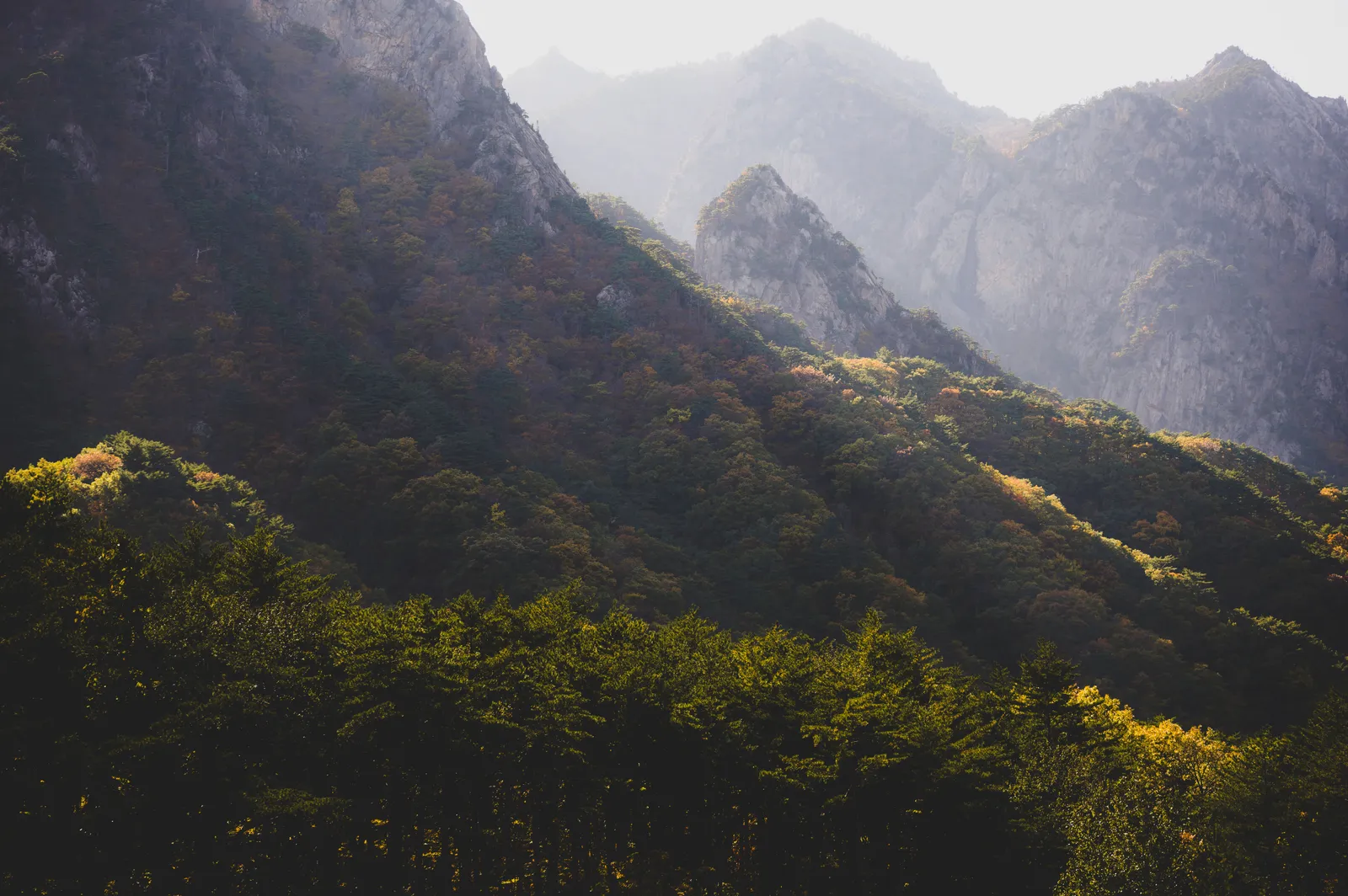
Autumn is the peak of the Korean outdoor year, with stable weather and foliage that works its way down the country through October and into November. Our guide to Seoraksan in autumn covers the park where it happens first and hardest, including why you should not spend a Saturday at the gate.
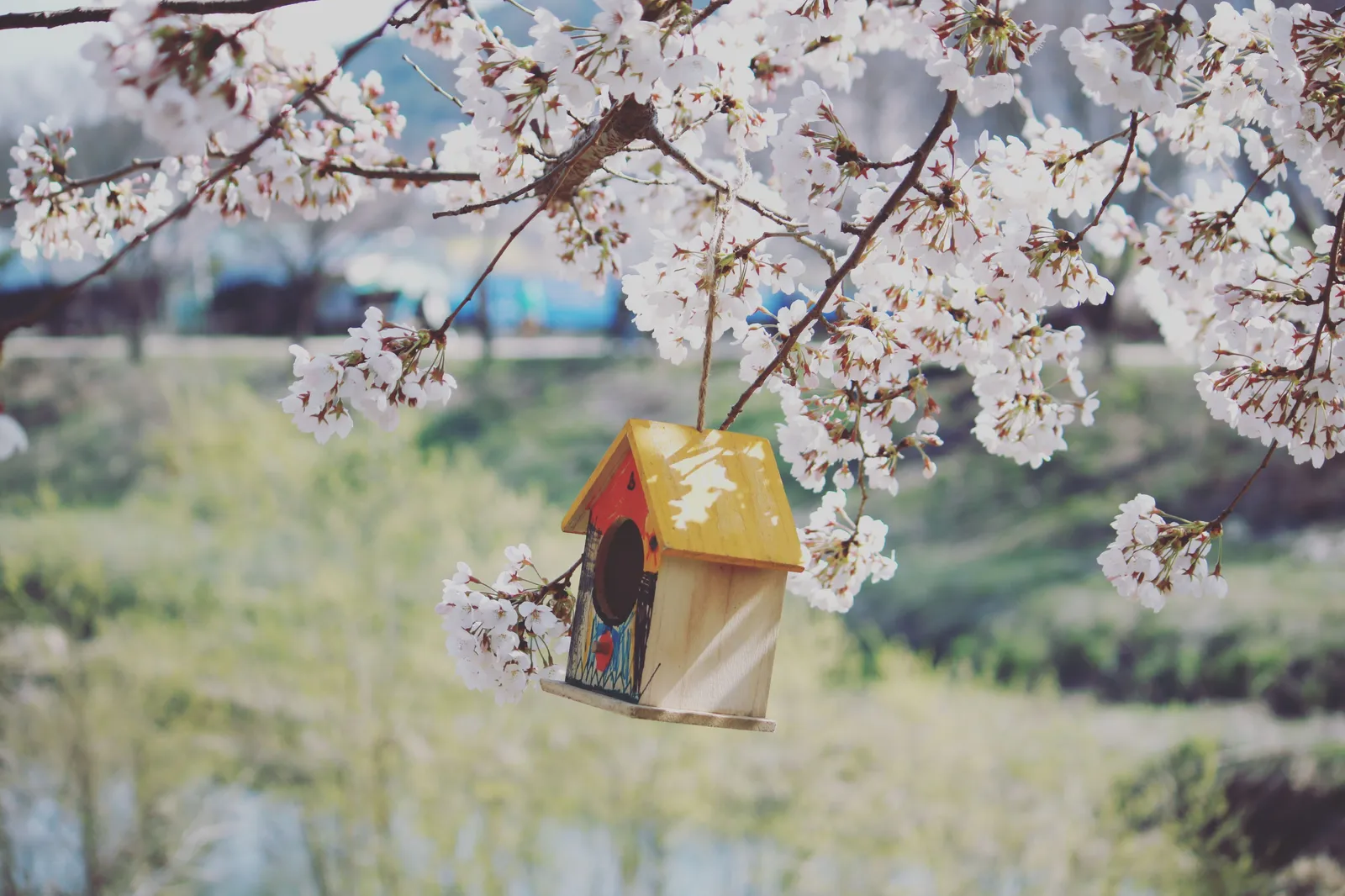
Spring is mild and green, with blossom low down and azaleas higher up, and it is the quieter of the two good seasons.
Summer is hot, humid and interrupted by the monsoon rains and by typhoons, both of which close trails outright. Early starts are not optional in July and August.
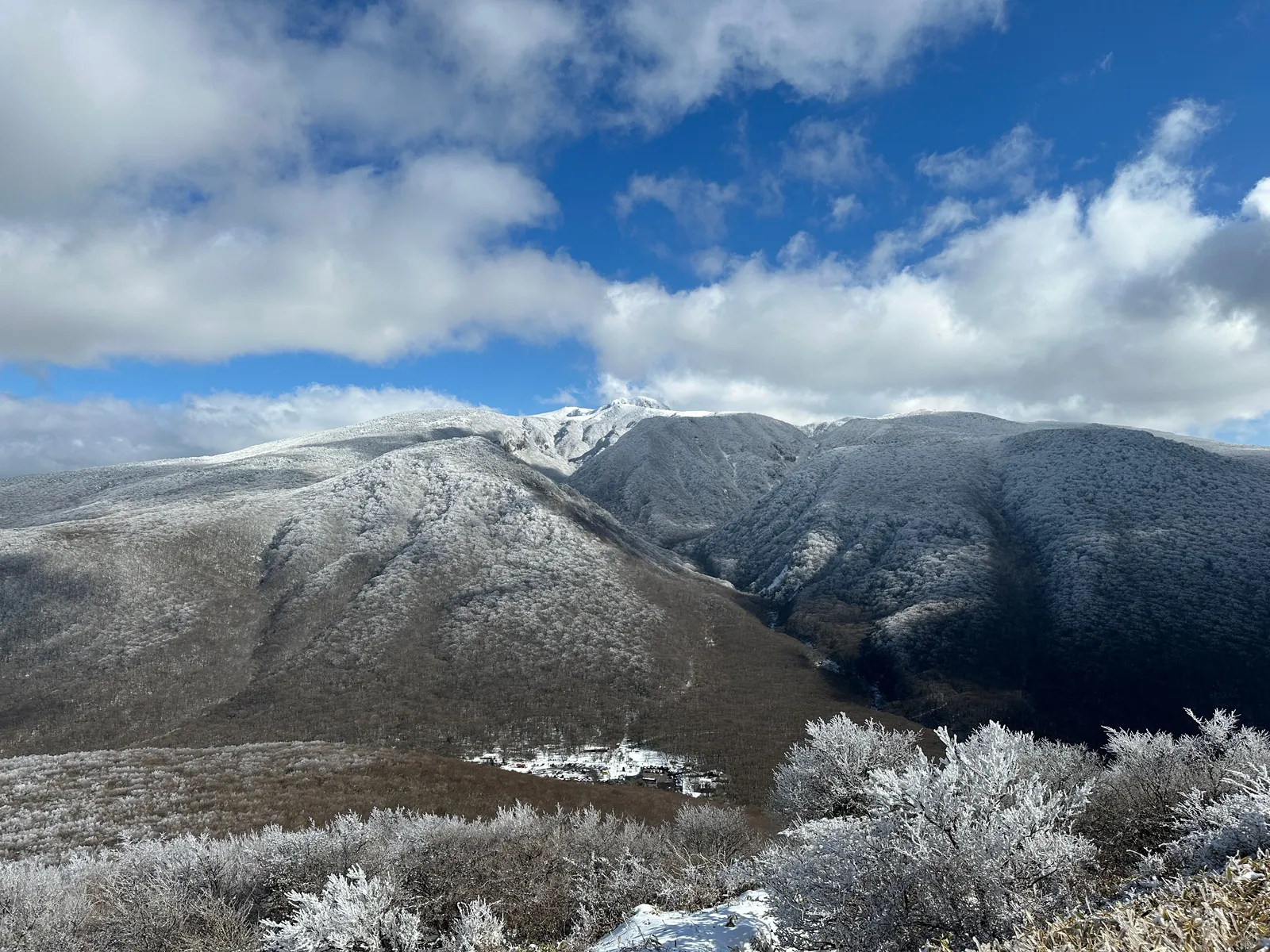
Winter is beautiful, clear and genuinely cold, and any serious ascent needs crampons, which are sold cheaply near most trailheads.
The month-by-month picture for the whole country, hiking included, is in our guide to the best time to visit Korea.
Rules that catch visitors out
Entry cut-off times exist at many trailheads and at points along longer routes. They are enforced, rangers do turn people back, and fitness is not an argument.
Reservation systems apply to some summit routes and to mountain shelters, and they have been revised more than once. The only reliable source is the park authority for your dates.
Fire prevention closures in spring and autumn shut selected trails entirely for weeks at a time, which is the closure visitors never see coming.
⚠️ Check the specific mountain rather than the country. Rules here are set park by park and change, so an article, including this one, is a starting point and not an authority.
The clearest example of all of this in one place is the highest peak in the country, and our guide to hiking Hallasan on Jeju covers the cut-offs, the reservation question and the eight to ten hour reality of it.
Trail etiquette and the summit ritual
Greet people. A short greeting on a narrow path is normal and the silence a lot of visitors default to reads as odd.
Give way to those coming up, who are working harder and have less choice about where they stop.
Expect to be offered food. Groups carry a great deal of it, and handing some to a foreigner on a summit is a standard piece of Korean hospitality. Accepting is the right answer.
Convenience store gimbap and boiled eggs are the classic trail lunch, bought on the way to the bus rather than carried from home.
And the rice wine at the top is a real tradition, tempered by the fact that drinking is restricted in designated areas of national parks. Read the signs at the trailhead.
The short version
Korea is a mountain country with the trailheads on the metro, which makes hiking here easier to start and harder to finish than most visitors expect. Judge routes by height gain rather than distance, wear shoes with grip, and check the specific park for cut-off times, reservations and fire closures before you build a day around a summit. Go in autumn if you can and spring if you cannot, start early to beat the weekend crowds, and accept the food you are offered at the top.