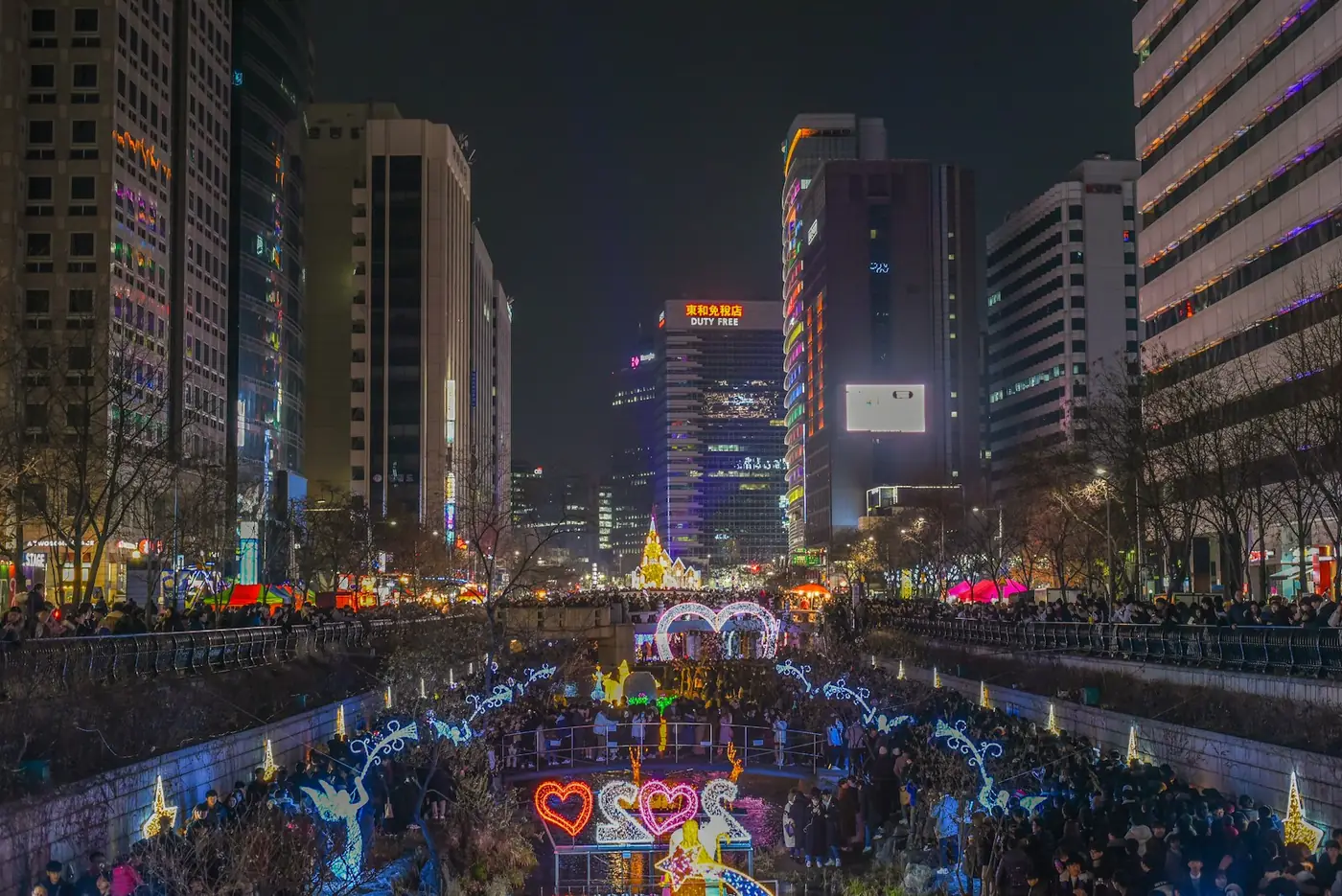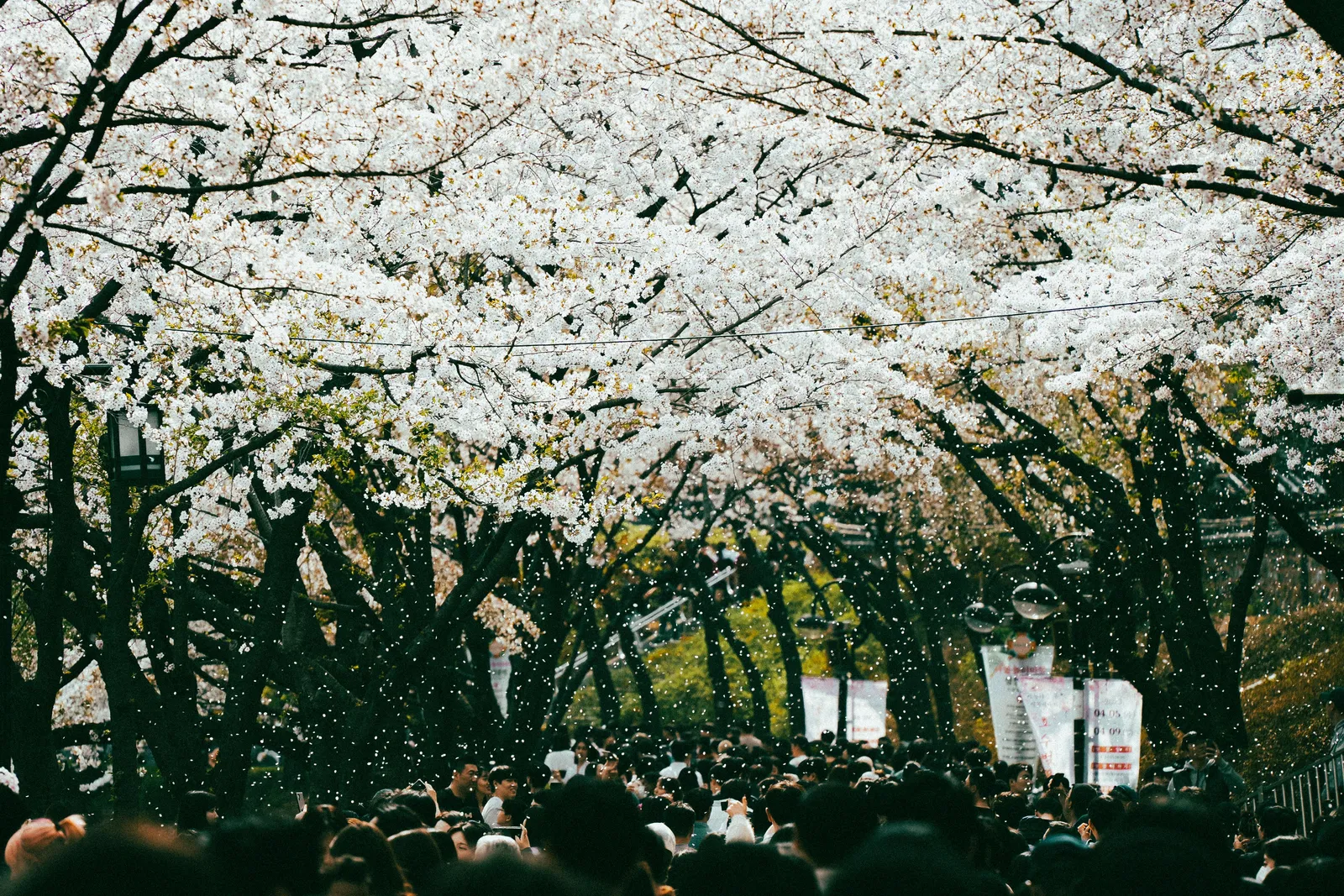
Cherry blossom in Korea is a national event with a published forecast, and that combination is the most useful thing to understand about it. The bloom starts in the far south, on Jeju and the southern coast, and moves north over roughly two weeks until it reaches Seoul. Full bloom at any one place lasts a few days. The whole country turns out for it, festival towns fill completely, and the difference between arriving in the right week and the wrong one is total.
The timing
Late March to mid April, broadly, with real variation between years.
South first: Jeju and the south coast, then the southern cities.
Then the middle: Daegu, Gyeongju, Daejeon.
Seoul last, roughly a fortnight after the south.
A few days of peak at any single location.
Published forecasts each spring, updated as the season approaches.
Where to see it
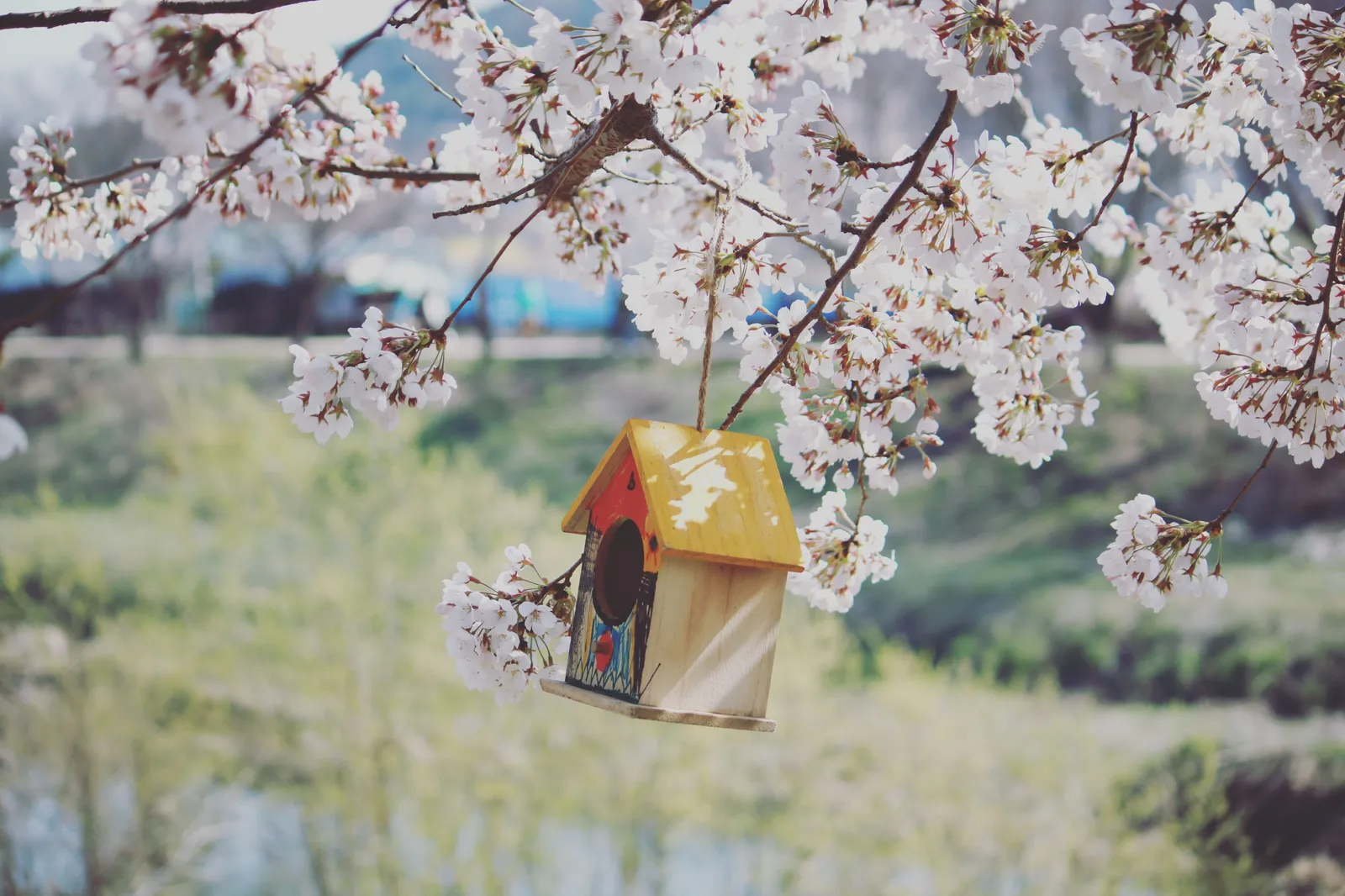
Jinhae, on the south coast, for the largest festival, the railway line and the stream.
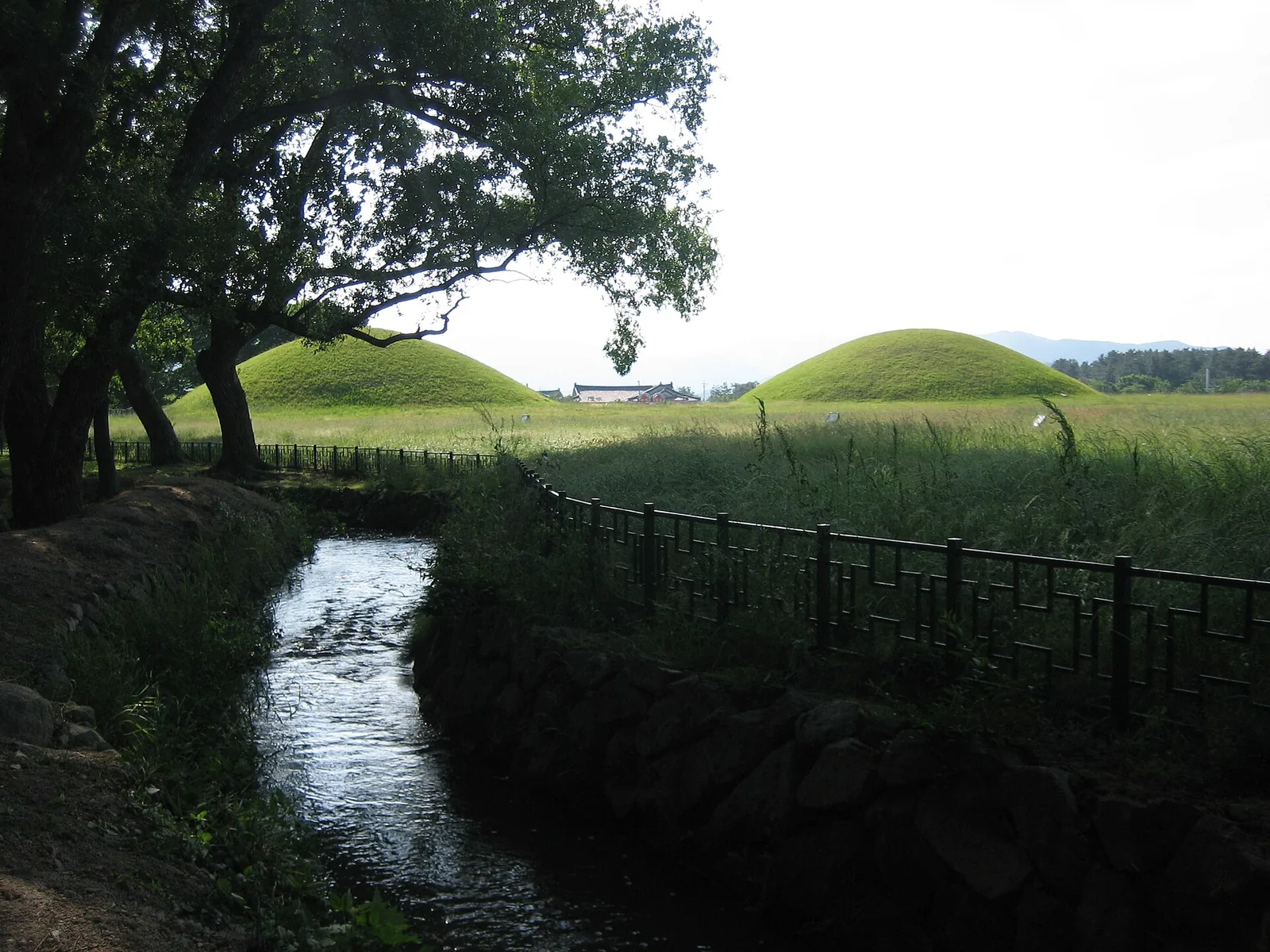
Gyeongju, where the roads run between royal burial mounds, which is unmatched.
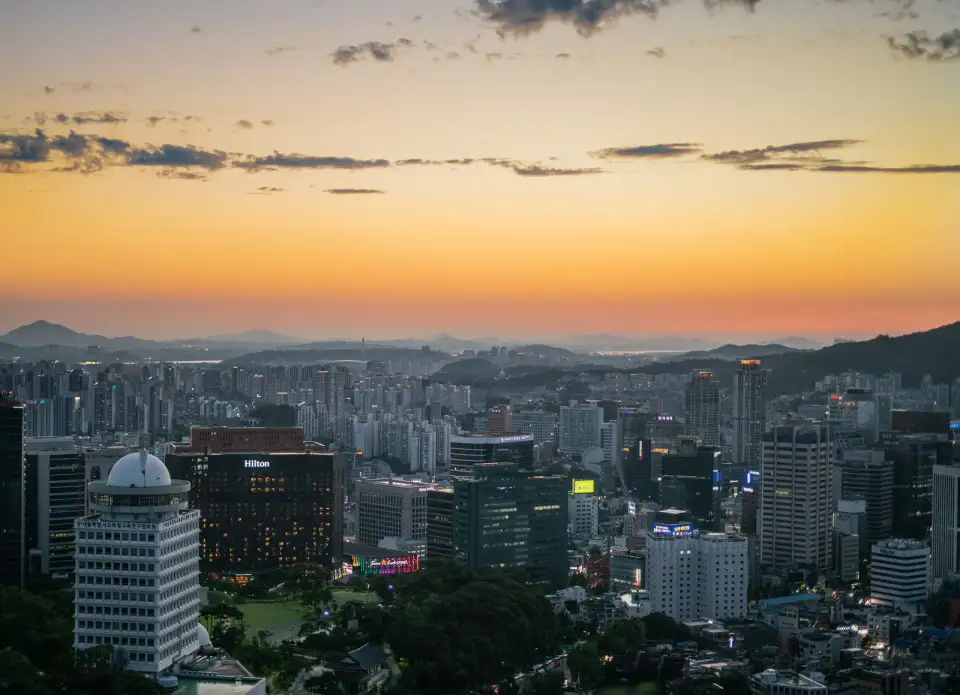
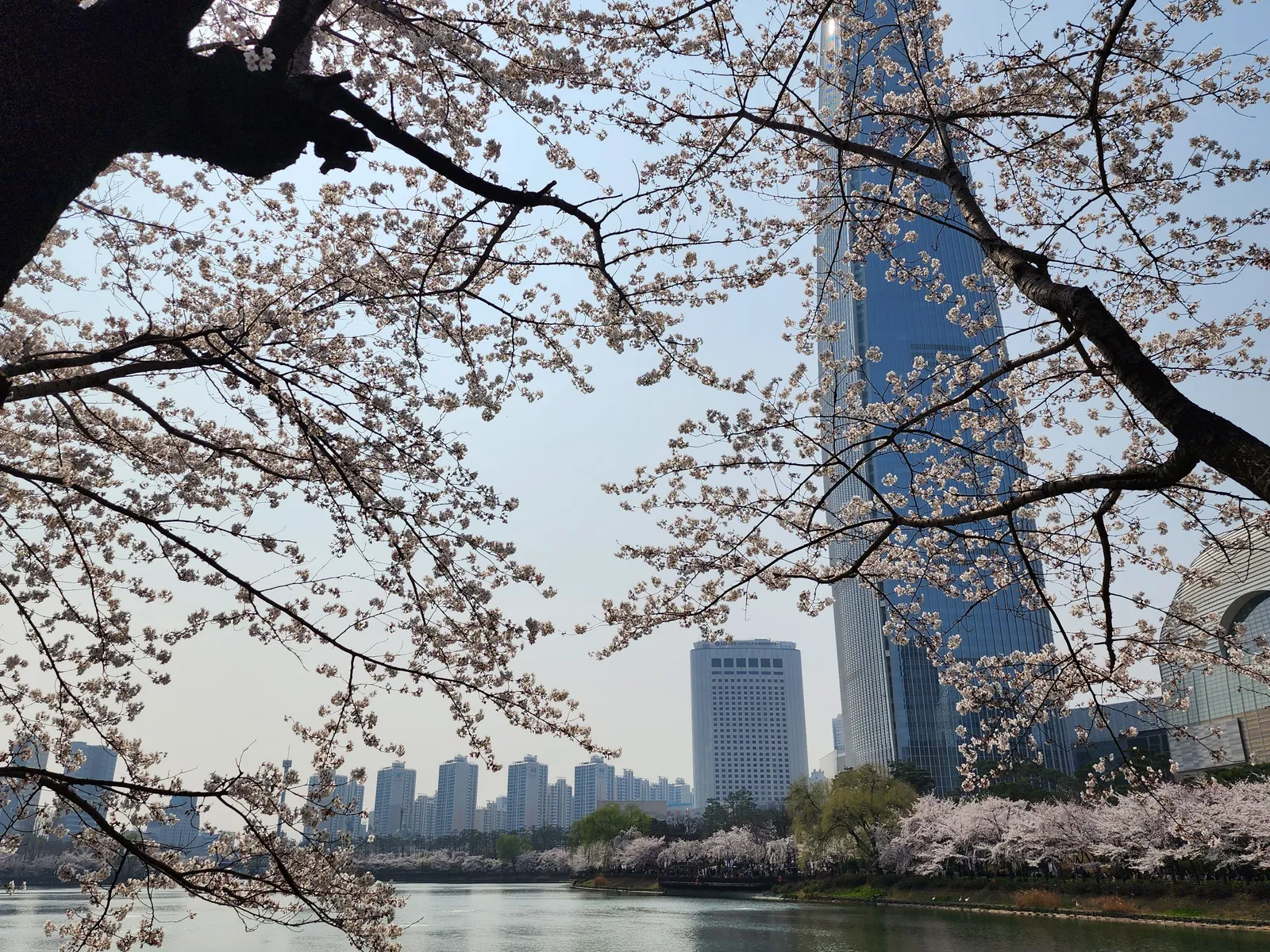
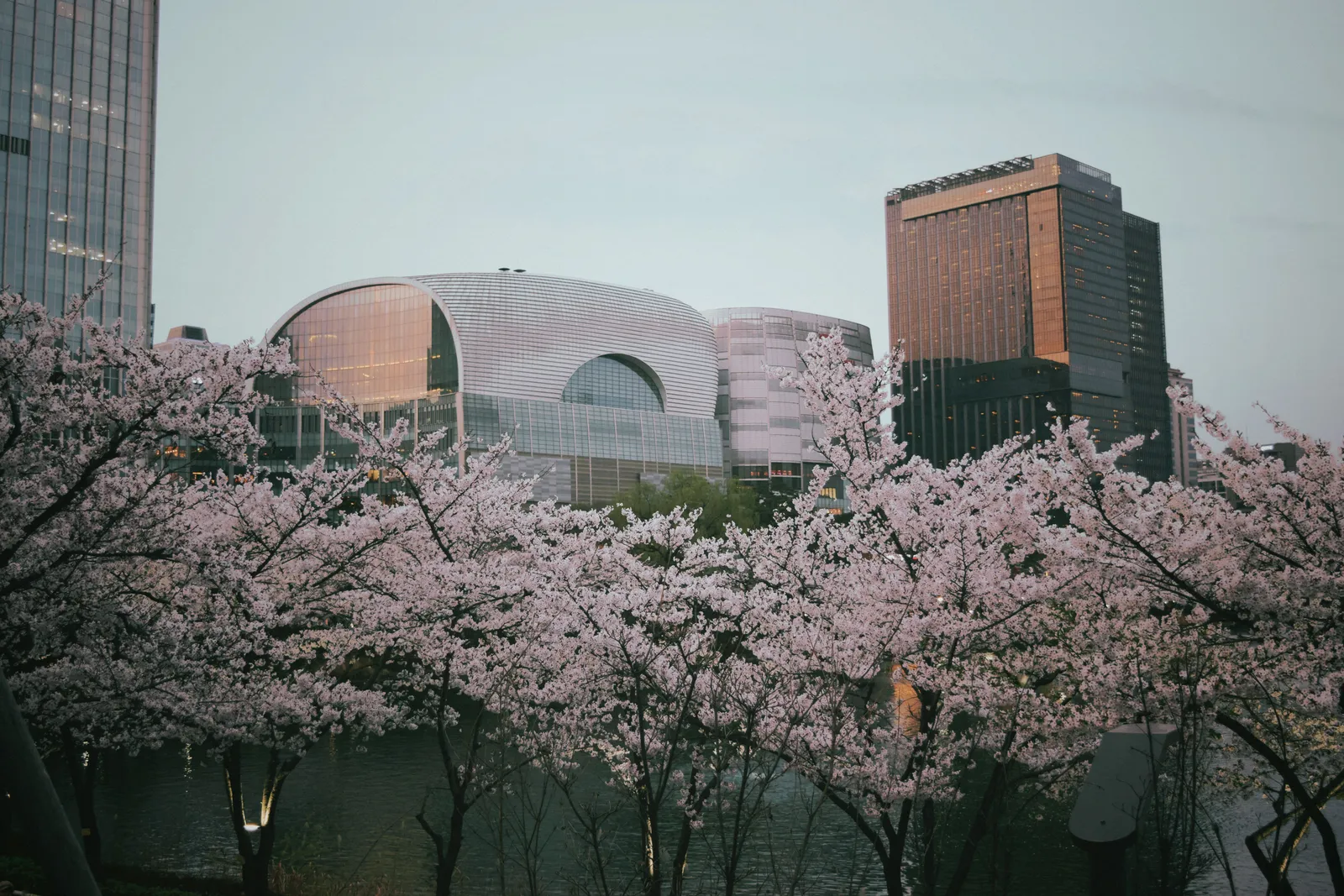
Seoul: the Yeouido riverside, Seokchon lake below the tower, and the palace grounds.
Jeju, for blossom and canola fields together, which is the best combination in the country.
Any ordinary Korean street, because the trees were planted everywhere.
University campuses, which are open, full of trees and largely visitor free.
Practical notes
Weekdays and early mornings at the famous spots; weekends are shoulder to shoulder.
Accommodation in festival towns books out and prices rise; reserve early and refundable.
Rain and wind end the peak abruptly, which is worth knowing before you rebook flights.
Trains and buses to festival towns fill; book seats in advance.
Night illumination at several of the big sites, which is worth staying for.
Layers, because early April in Korea swings between cold and warm within a day.
Other spring flowers
Forsythia, yellow, slightly before or with the cherry.
Azalea, pink, on hillsides, immediately after.
Magnolia, earlier, in the cities.
Canola, on Jeju, at the same time as the blossom there.
Green tea terraces in the far south, greening up in late spring.
Late spring azalea festivals, which extend the flower season by weeks.
Where this fits in a Korea trip
The whole trip, if you come in this fortnight, because the timing dictates the route.
For the full year and what each season delivers here, our guide to the best time to visit Korea covers the comparison.
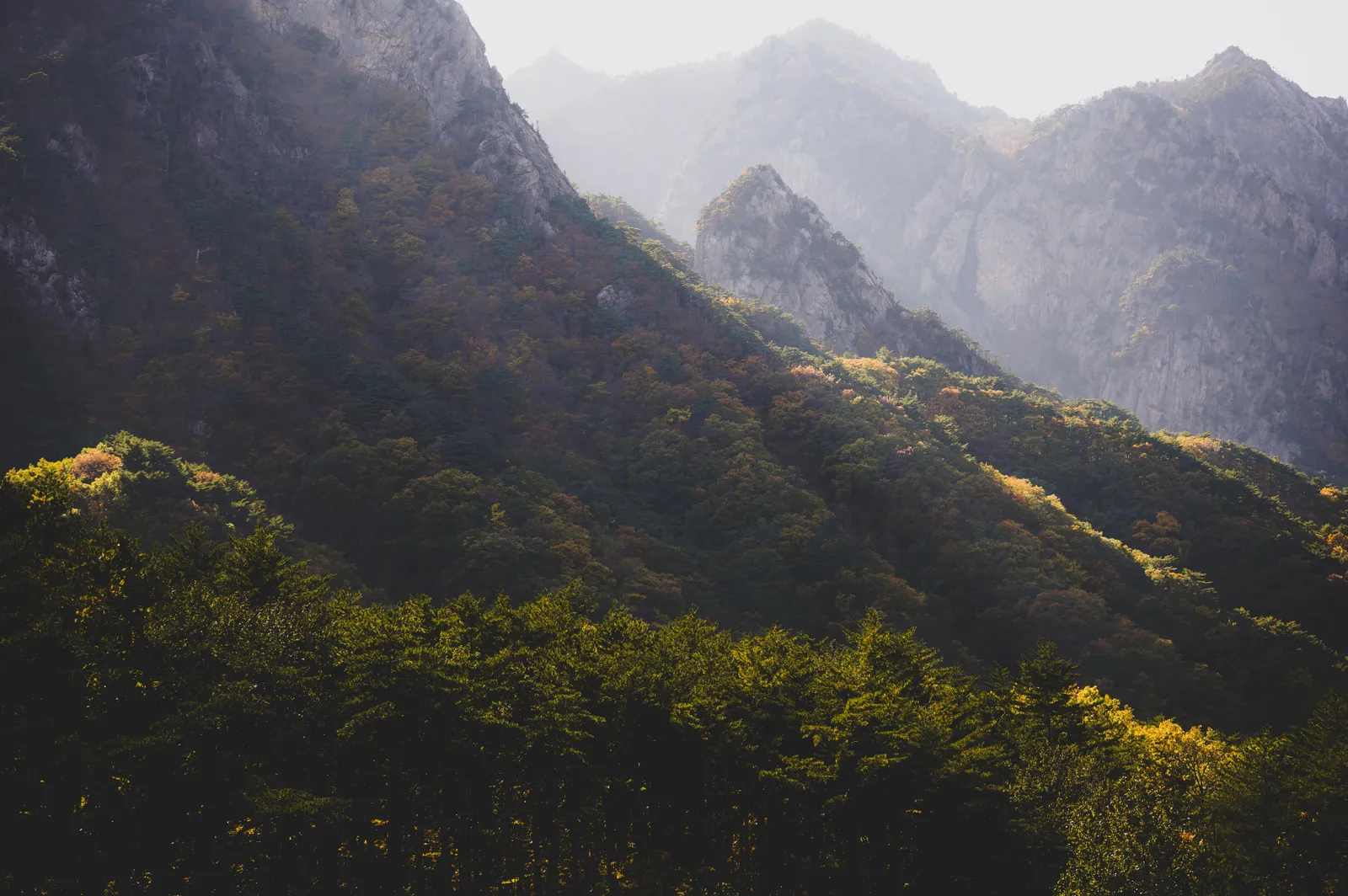
For the other great Korean colour season, which works the opposite way round, our guide to Seoraksan in autumn covers October.
And for the historic town where the blossom is at its best, our guide to Gyeongju by bike covers the route.
The short version
Watch the published bloom forecast rather than last year’s dates, and book refundable accommodation until the forecast firms up. Then travel south to north, starting in Jinhae or Jeju and finishing in Seoul, which catches the front twice and is the normal direction anyway. Go to the famous spots on a weekday morning and to ordinary streets and campuses the rest of the time. Expect a few days of peak, not a fortnight, and expect rain to end it early.