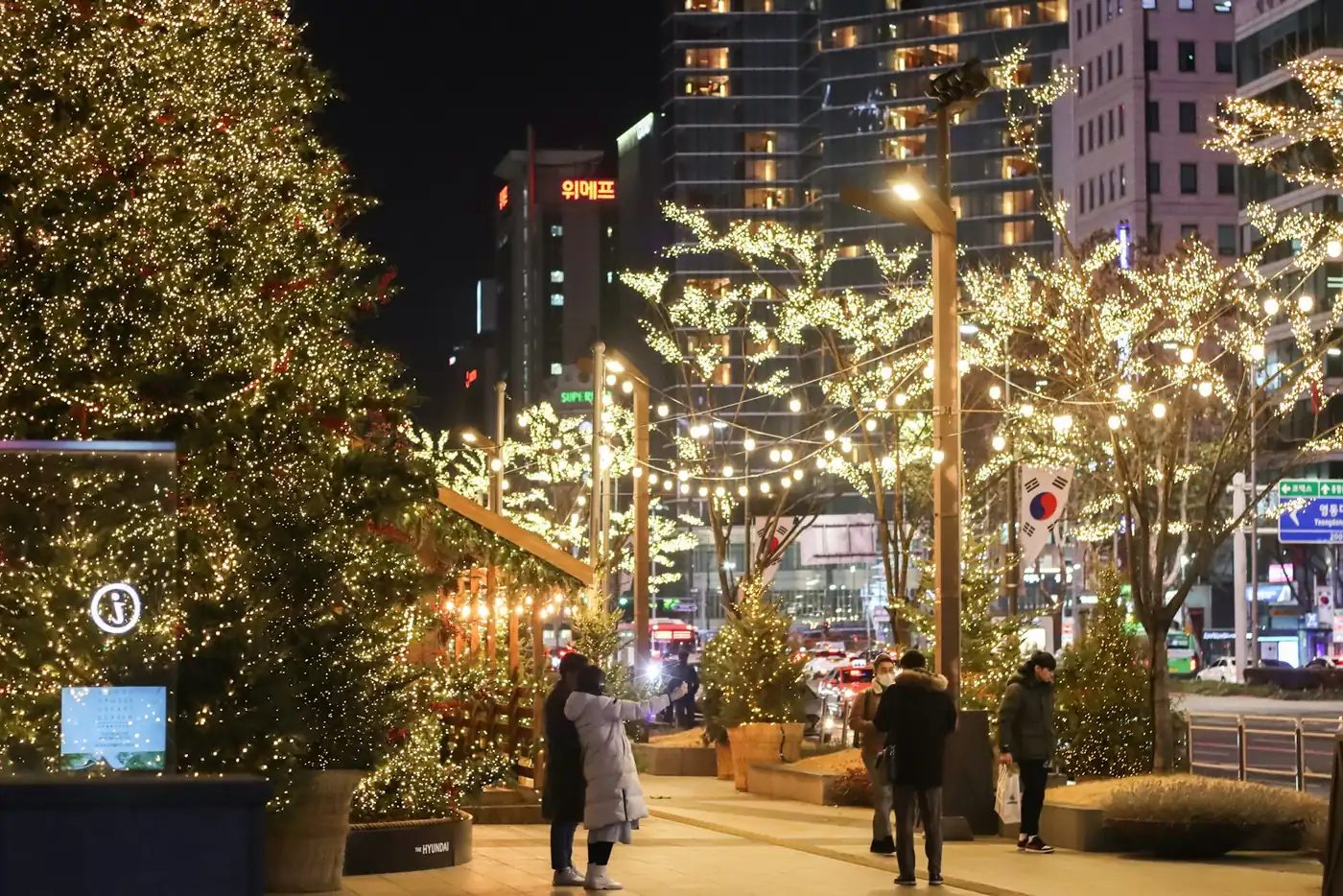
December in Seoul does not look like the version of Christmas most visitors grew up with, and that is part of what makes it worth experiencing. The date is a public holiday, shops sell decorations and the main shopping streets go all in on lights, but the shape of the day is different: no extended family lunch, more couples in matching coats walking under fairy lights, and a build-up that runs through most of December rather than peaking on one evening.
None of this makes the season low-key. Seoul commits fully to the lights, the shopping windows and the seasonal drinks menus, it just channels the spending and the mood into a slightly different occasion than a European or American Christmas does, closer in spirit to a Western winter festival crossed with Valentine’s Day than to a family gathering around a table.
A public holiday, not a family one
The 25th of December has been an official holiday since the 1940s, sitting alongside Buddha’s birthday as one of the small number of religious holidays with public status, while the two big family occasions on the Korean calendar remain Lunar New Year and Chuseok in autumn. That split matters for a visitor: unlike those two holidays, when much of the country travels home and many businesses close, Christmas in Seoul runs at full commercial speed, with restaurants, cafes and shops open, often busier than usual, and geared heavily toward couples rather than a family meal.
Where the lights actually are
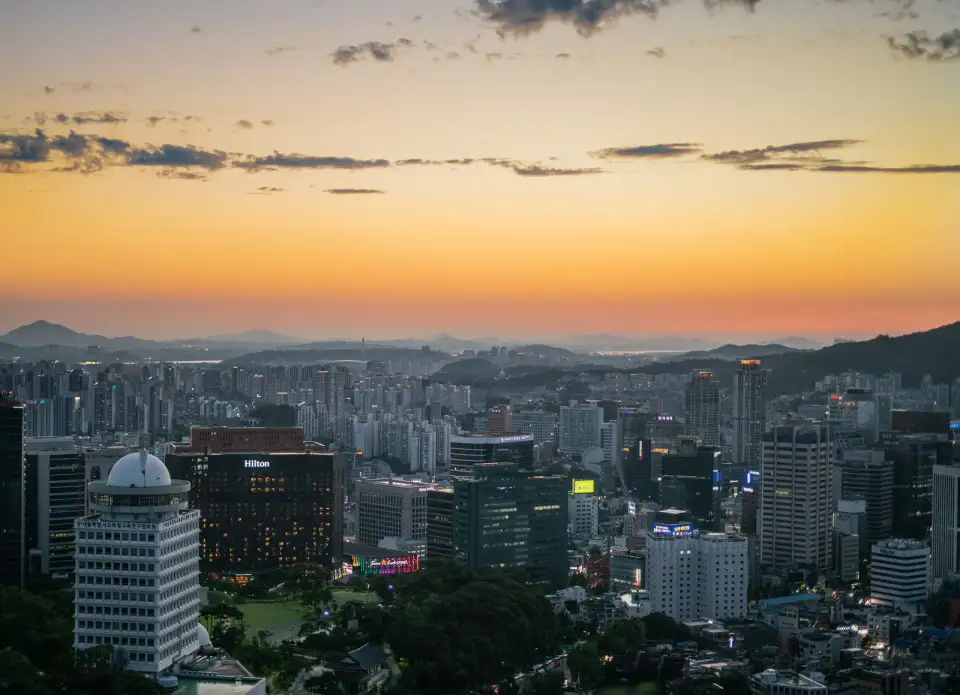
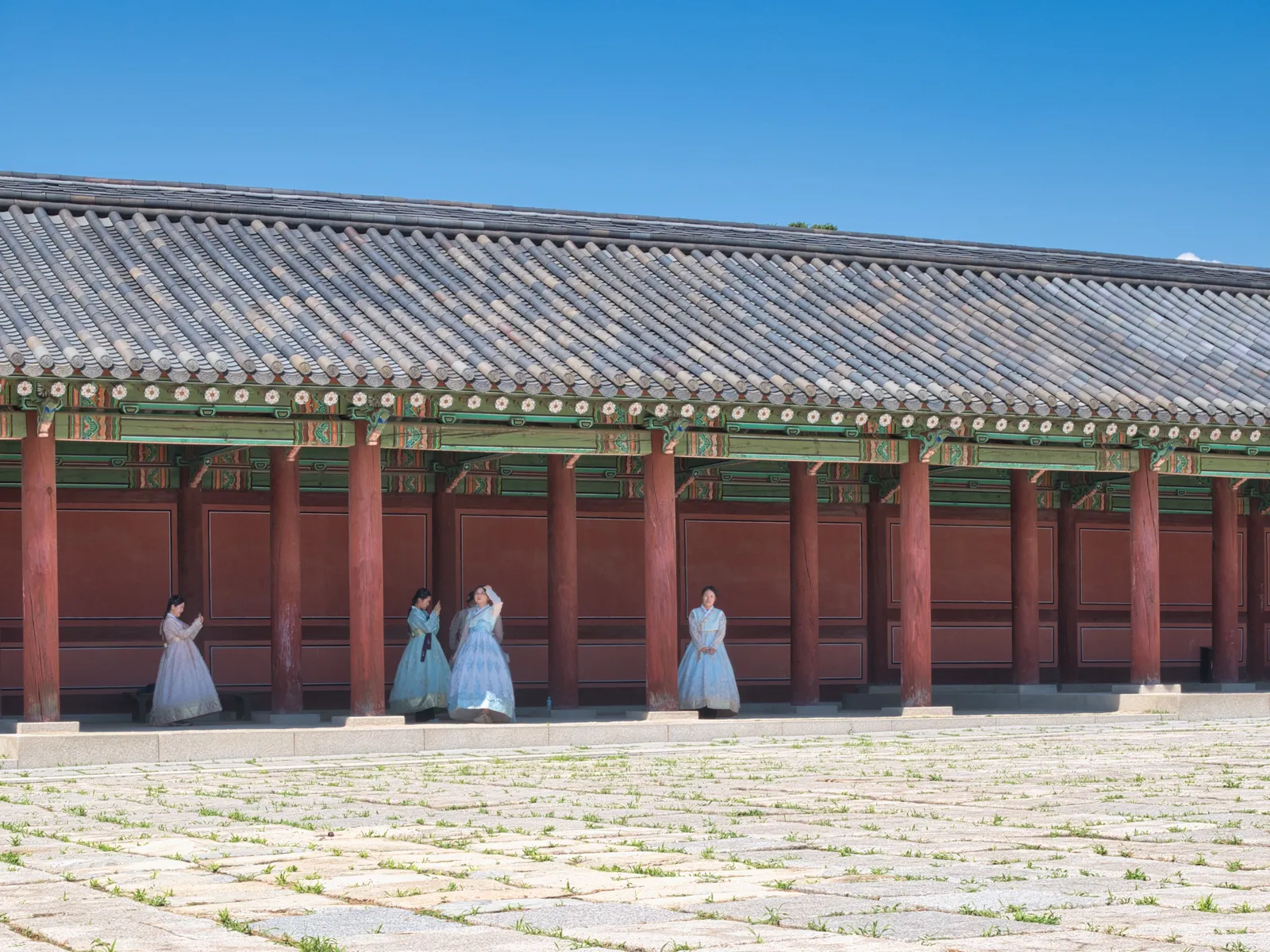
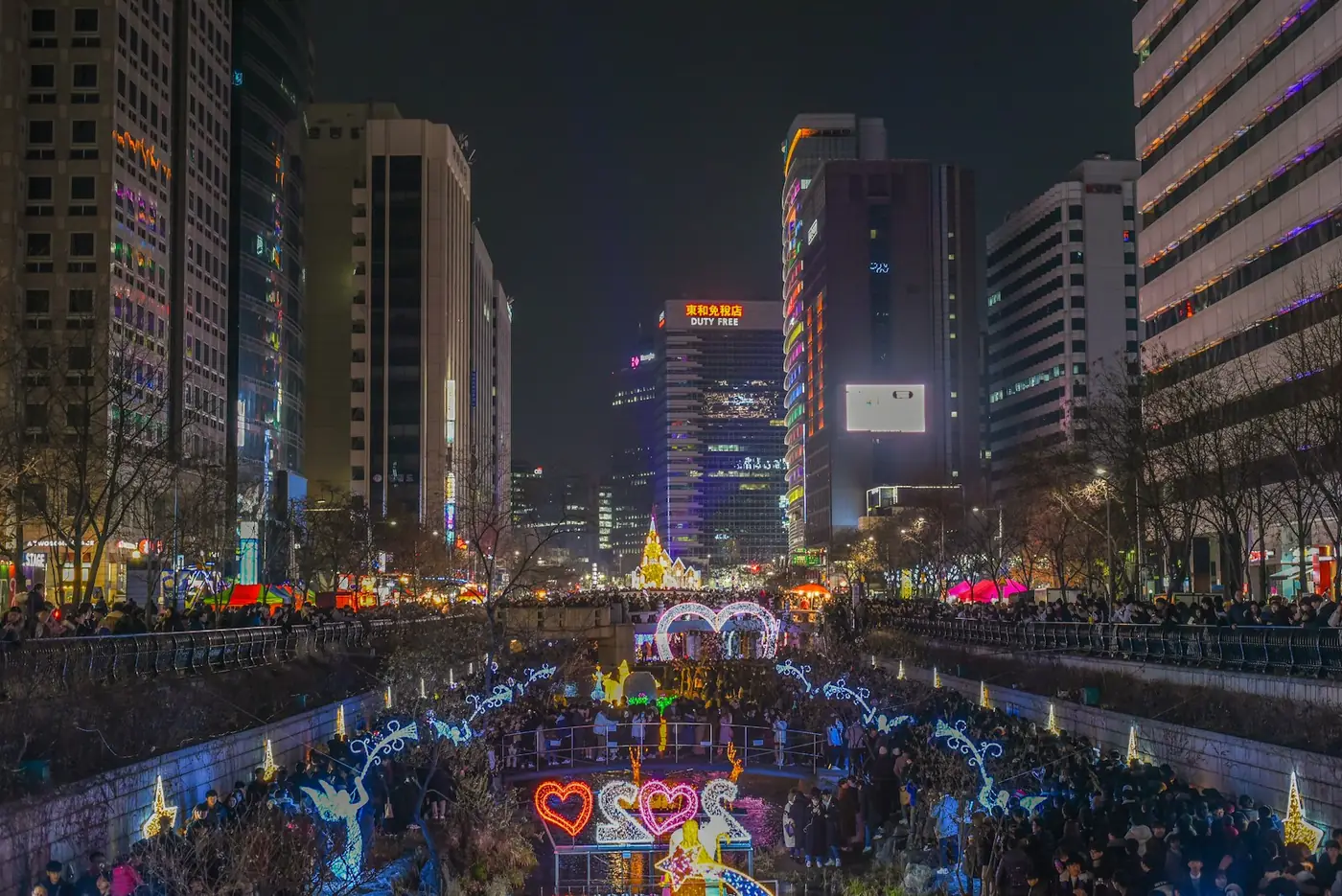
The lights cluster in a handful of well-known districts rather than spreading evenly across the city. Myeongdong, already Seoul’s busiest shopping street, adds strings of lights above the crowds and window displays that lean hard into the season. The stretch around Gwanghwamun Square and Cheonggyecheon stream, the restored waterway running through the centre of the city, is usually the most photographed, with lit installations along the water at night. Department stores in Myeongdong and around City Hall put up their own large external displays, and several palaces run evening opening hours in December that let you see a lit courtyard after dark rather than only in daylight.
| District | What to expect | Nearest station |
|---|---|---|
| Myeongdong | Shopping street lights, department store windows | Myeongdong |
| Cheonggyecheon stream | Lit installations along the water | City Hall or Gwanghwamun |
| Gwanghwamun Square | A large tree and open-air seating | Gwanghwamun |
| Palace evening openings | A lit courtyard after dark, seasonal hours | Anguk or Gyeongbokgung |
Winter street food and drinks
Roasted chestnuts and sweet potatoes sold from a metal drum on a street corner are as much a marker of the season as any light display, along with hotteok, a fried, syrup-filled pancake sold from street carts across the city that is worth queueing for even in the cold. Bungeoppang, fish-shaped pastries filled with sweet red bean or, increasingly, custard, appear on corners as the weather turns and disappear again by spring, a small and reliable sign that winter has properly arrived.
Cafes lean into the season too, with mulled wine, cinnamon-spiced ades and a run of limited winter menus that change from year to year, so trying whatever a particular chain is currently promoting tends to be more useful than hunting for a specific drink remembered from a previous December.
The pop-up winter markets
A number of temporary winter markets and festivals appear across the city through December, generally combining food stalls, small craft and gift vendors, and a stage for performances, closer in feel to a Korean night market wrapped in string lights than to a European wooden-hut Christmas market. The venues and exact dates shift from year to year, so it is worth checking current listings for that particular winter rather than assuming a market from a previous trip will reappear in the same square. Whichever one is running, going for the food and the atmosphere rather than a specific stall works better than chasing a name from an old blog post.
Central rooms make the light displays walkableStay near Myeongdong or Gwanghwamun and most of the lights are a short walk rather than a taxiStaying warm between the light displays
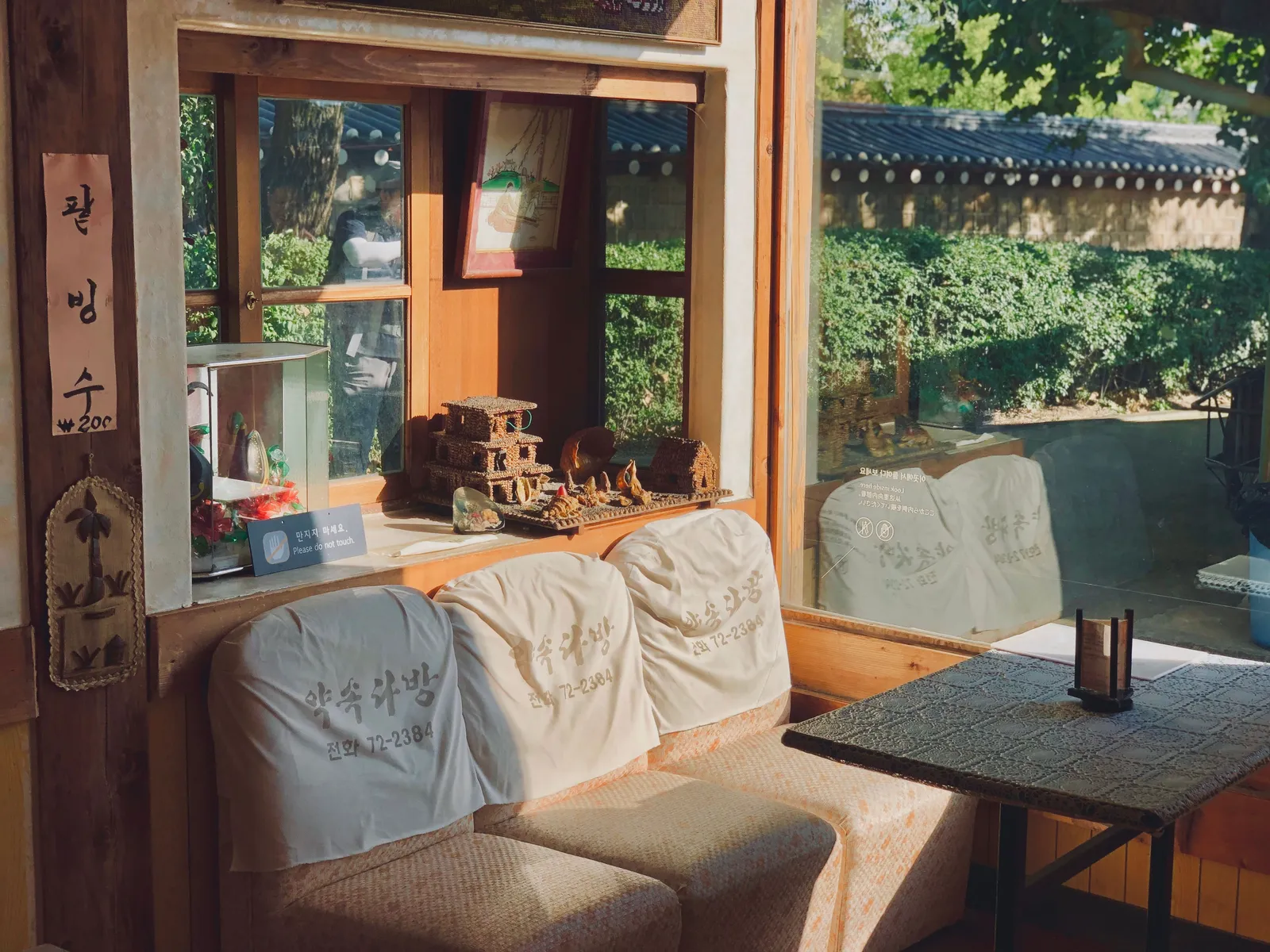
Seoul winters are genuinely cold, dry and often windy rather than the damp cold of much of Western Europe, and the practical answer most locals reach for is the same one that works for a visitor: keep the outdoor stretches short and use the extraordinary density of cafes to warm back up in between. Our guide to Seoul cafe culture covers why the city is built for exactly this, long stays, hot drinks and a warm room that nobody rushes you out of. A jjimjilbang, the Korean bathhouse and sauna, is the other classic winter answer, a full evening of heat, hot pools and often a simple meal, and one of the more memorable ways to spend a bitterly cold night.
Ice rinks and other things to do outdoors
A handful of temporary outdoor ice rinks appear each winter in central plazas, generally rented by the session rather than needing advance booking, and they are as much a people-watching activity as a skating one. A clear, cold evening at a Han River park is another option many locals reach for over the holidays, with the skyline and the lit bridges doing most of the work; wrap up properly, since the wind off the water cuts through a coat far faster than the same temperature does on a city street. If snow has settled, the palace grounds and the hillside parks around the city take on a completely different character worth a slower morning walk.
New Year’s Eve, Bosingak and the countdown
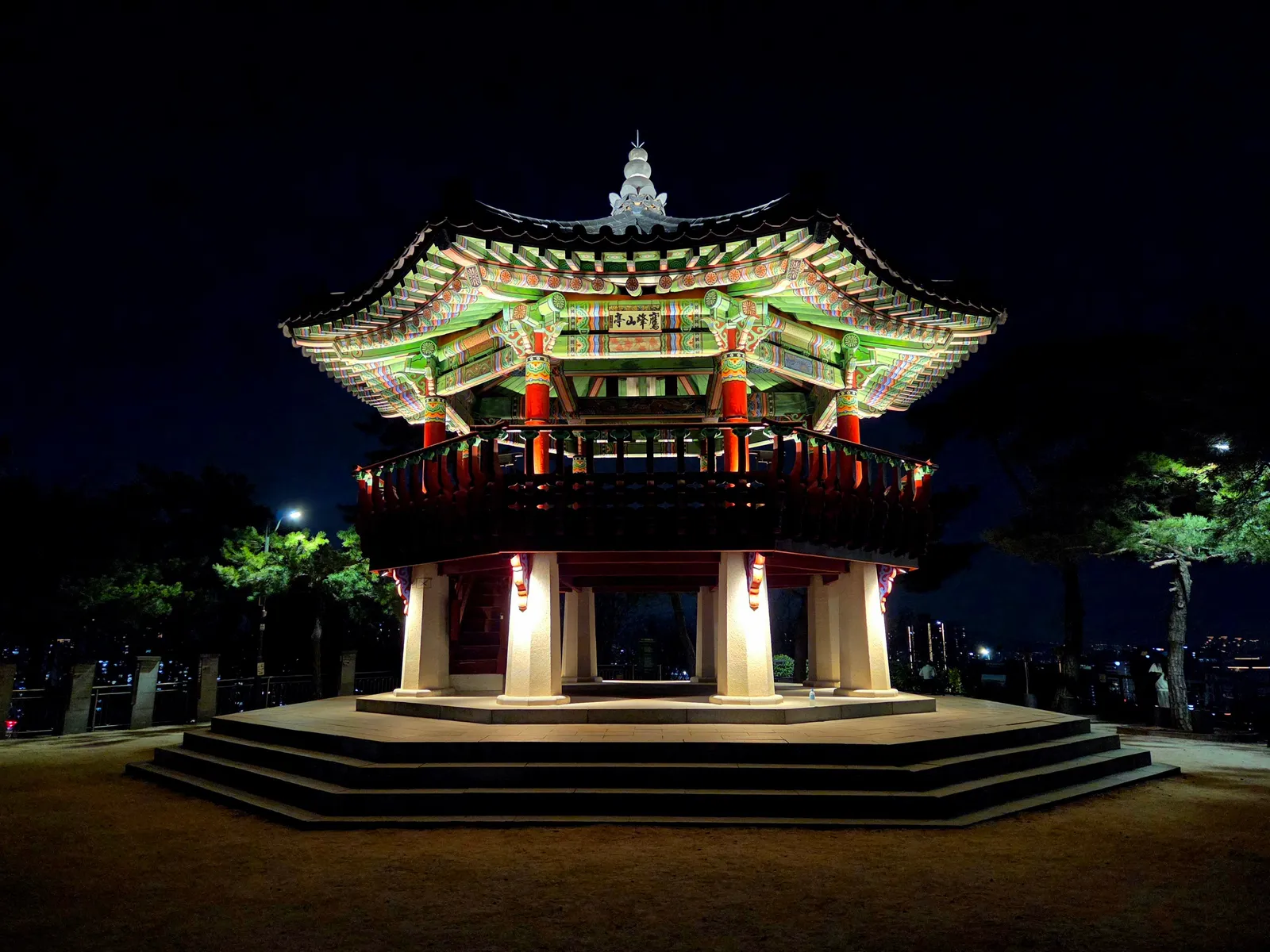
The best-known public New Year’s Eve event in Seoul is the bell-ringing ceremony at Bosingak, a historic bell pavilion in the centre of the old city, where a large crowd gathers to count down and watch officials strike the bell at midnight, a tradition with roots going back centuries even though the surrounding crowd and broadcast cameras are thoroughly modern. Firework displays run at a few other points around the city on the same night. Expect the area around Bosingak itself to be genuinely packed well before midnight, so arrive early if the ceremony is the point, or watch from a nearby street or a Han River park if a dense crowd is not what you are after.
The short version
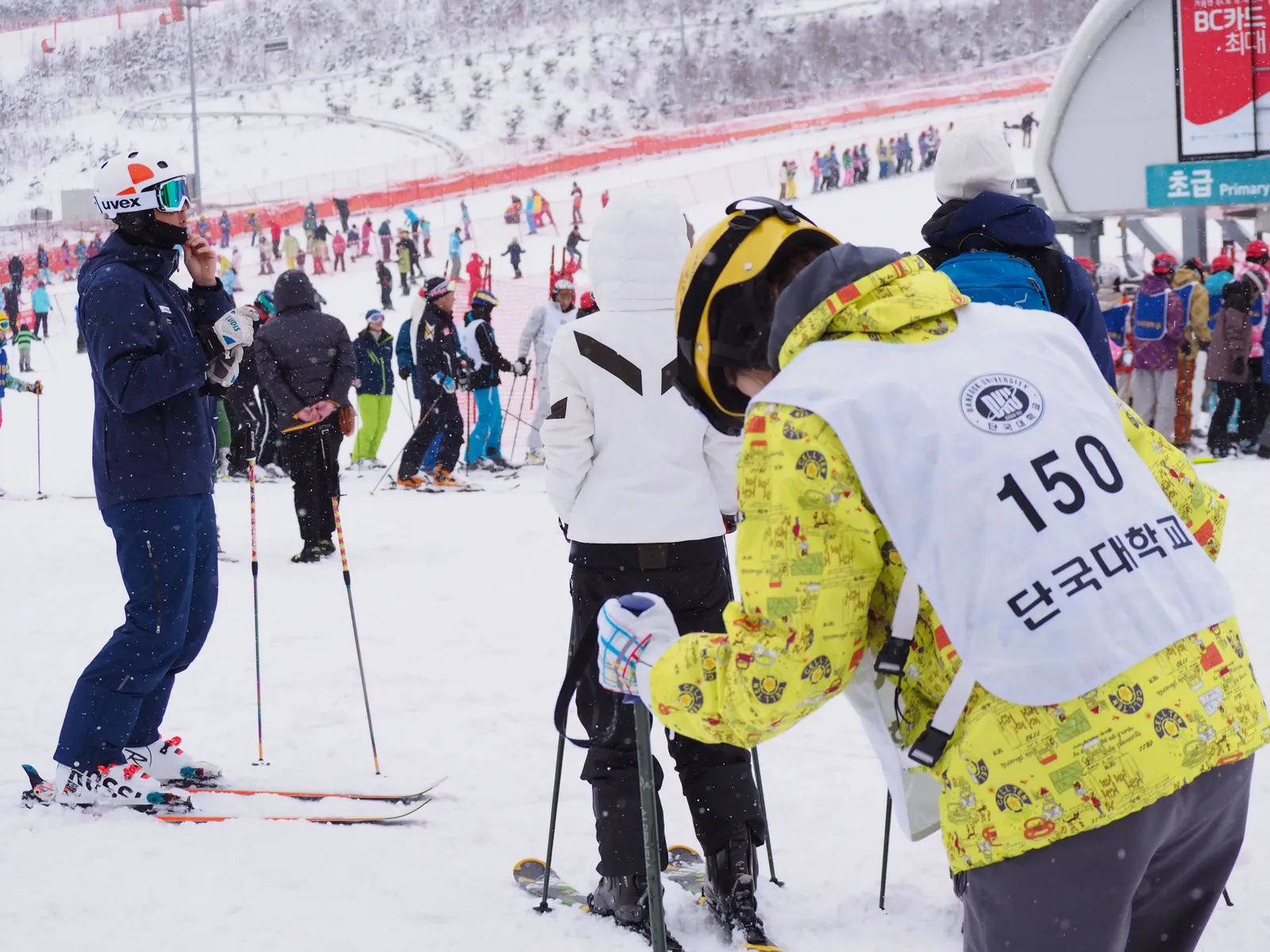
Christmas in Seoul is a public holiday built around couples and lights rather than a family meal, running through most of December in Myeongdong, along Cheonggyecheon and around Gwanghwamun. Pop-up winter markets and evening palace openings add to the season, and cafes and jjimjilbangs are the standard answer to the cold in between. New Year’s Eve centres on the bell-ringing at Bosingak, packed but genuinely worth seeing once. If the cold sounds like the appeal rather than the obstacle, our guide to skiing in Korea covers the mountains a few hours outside the city, and our guide to Seoul covers the rest of the city beyond the winter season.