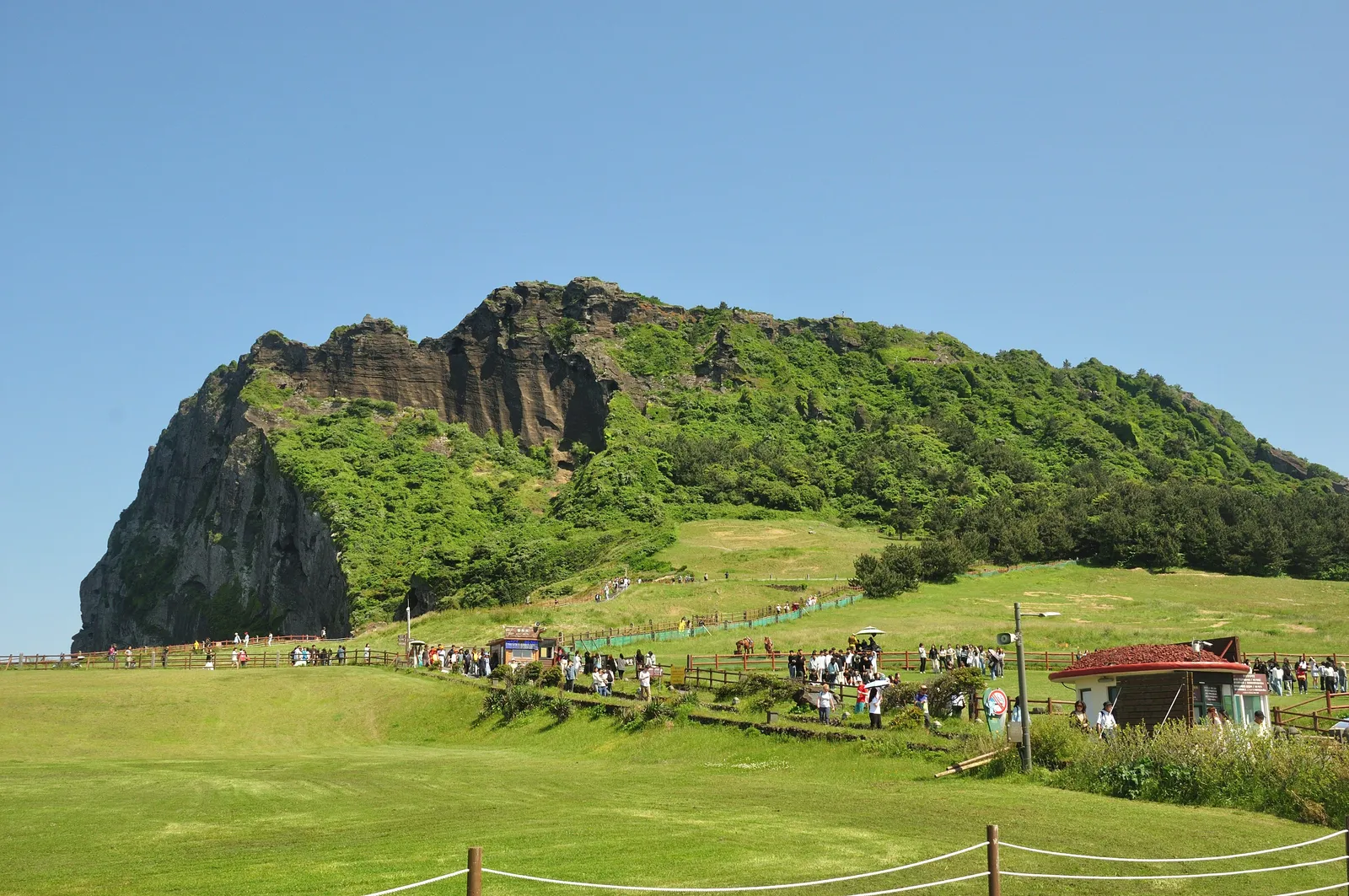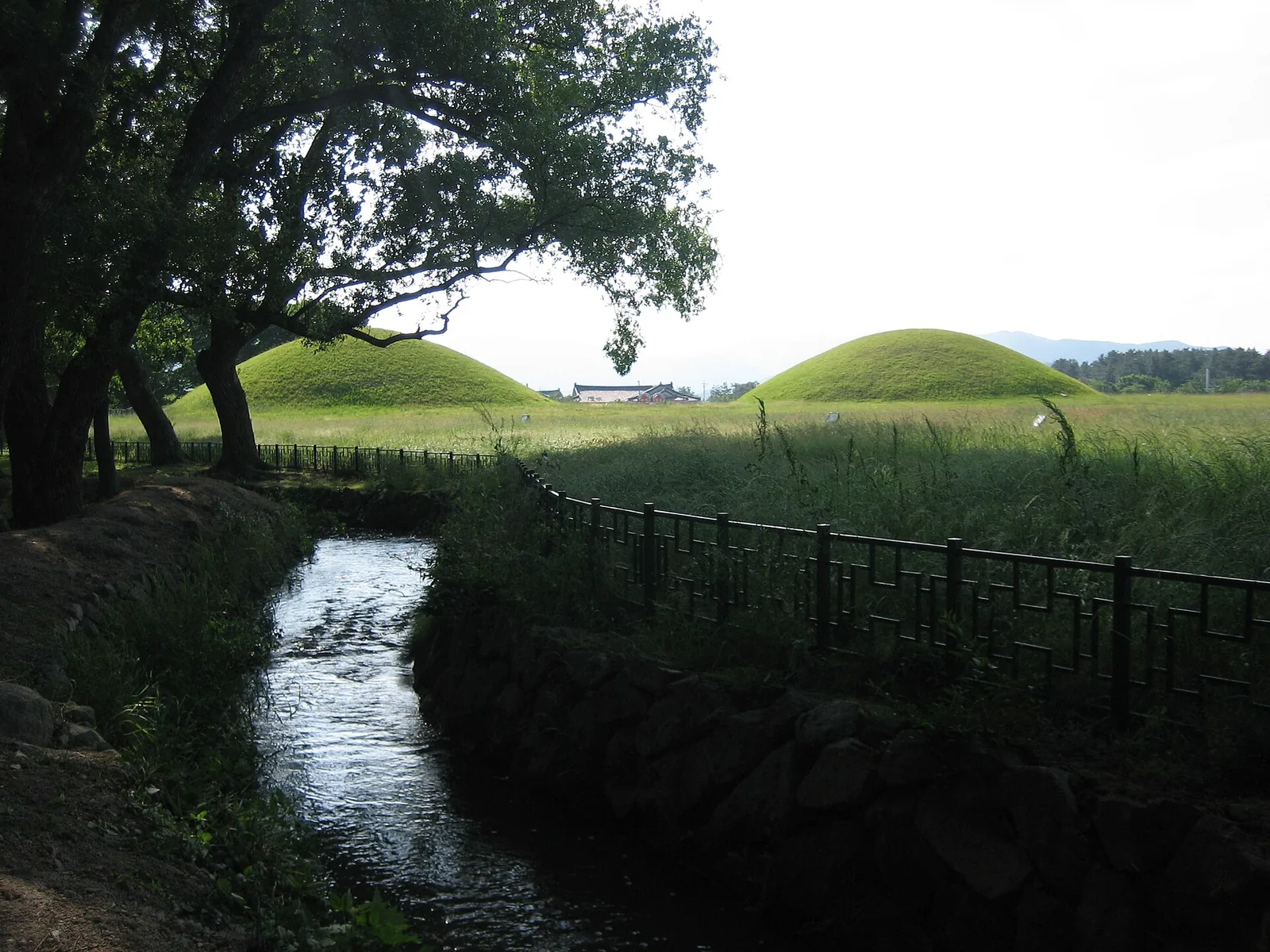
Gyeongju was the capital of a kingdom for something close to a thousand years, and what makes it unusual is that nobody built over it properly. The royal burial mounds are in parks in the middle of the modern town, grass covered and the size of small hills. There is a stone observatory from the seventh century in a field. There is a palace pond, a museum full of gold crowns, and a UNESCO listed temple in the hills outside. The whole central area is flat, and the sensible way to see it is on a bicycle.
The central sites
The royal burial mounds, in parks, grass covered, some of them enormous.
Cheomseongdae, a small stone observatory from the seventh century standing alone in a field.
Donggung and Wolji, the palace site and its pond, which is the best thing here after dark.
The national museum, with the Silla gold, which is genuinely world class.
Hwangnidan-gil, a street of converted houses with cafes, which is where the town eats.
Woljeonggyo, a reconstructed covered bridge, lit in the evening.
Out in the hills
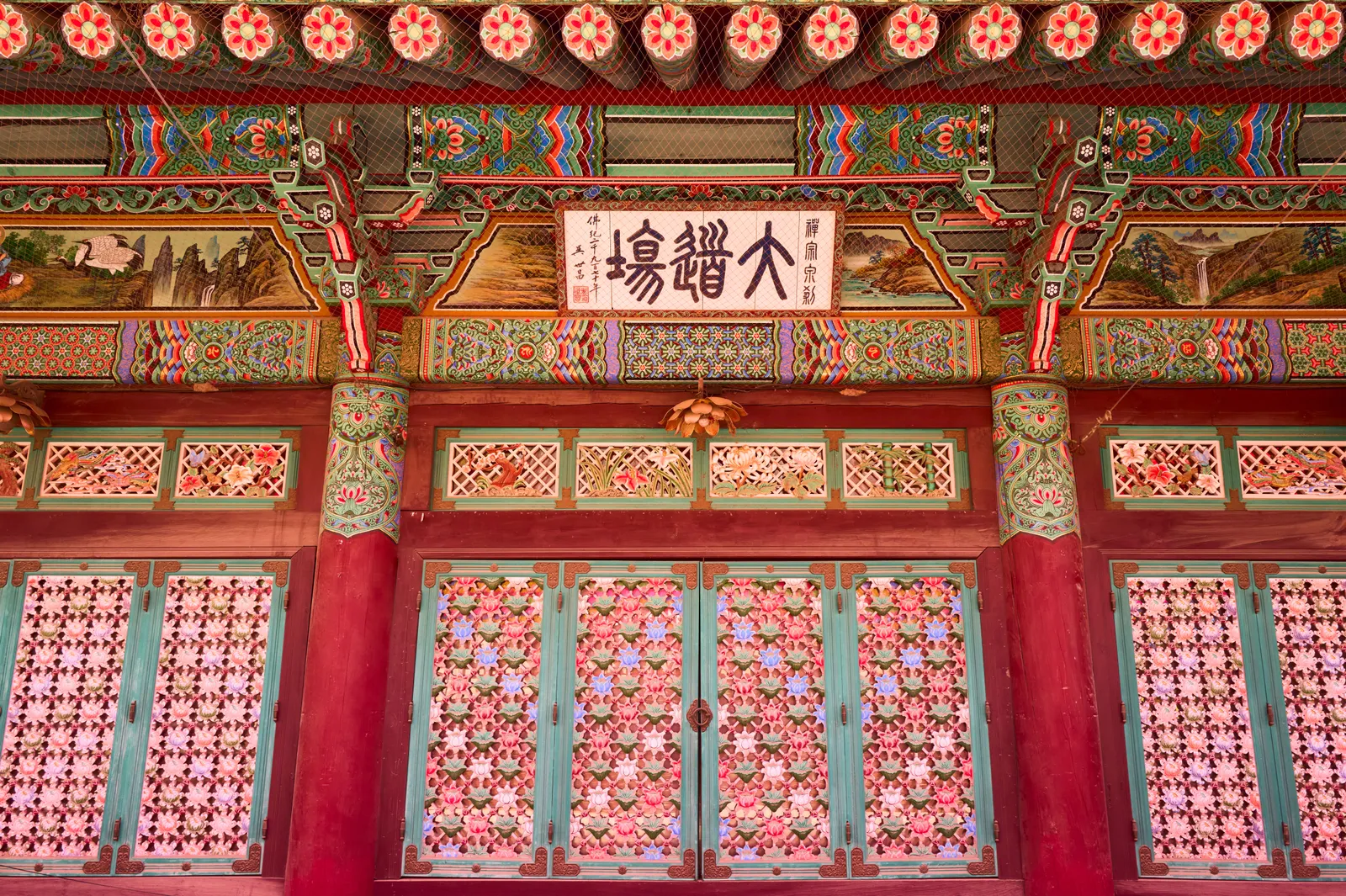
Bulguksa, the UNESCO listed temple complex, several kilometres out and reached by bus.
Seokguram, the grotto with its stone Buddha, higher up above Bulguksa.
Namsan, the mountain south of town, covered in carvings and small sites, for walkers.
A local bus for all of these, frequently and cheaply, rather than a bicycle.
Half a day for the temple and the grotto together.
Renting a bicycle
Shops near the station and around the main sites, hired by the hour or the day.
Ordinary town bikes rather than anything technical, which is all you need.
Dedicated paths in the central area, and quiet roads elsewhere.
A day rate is the sensible choice, because you will use it more than you expect.
Helmets are available; the roads are calm but not empty.
Return times matter, so check before you commit to the pond after dark.
Practical notes
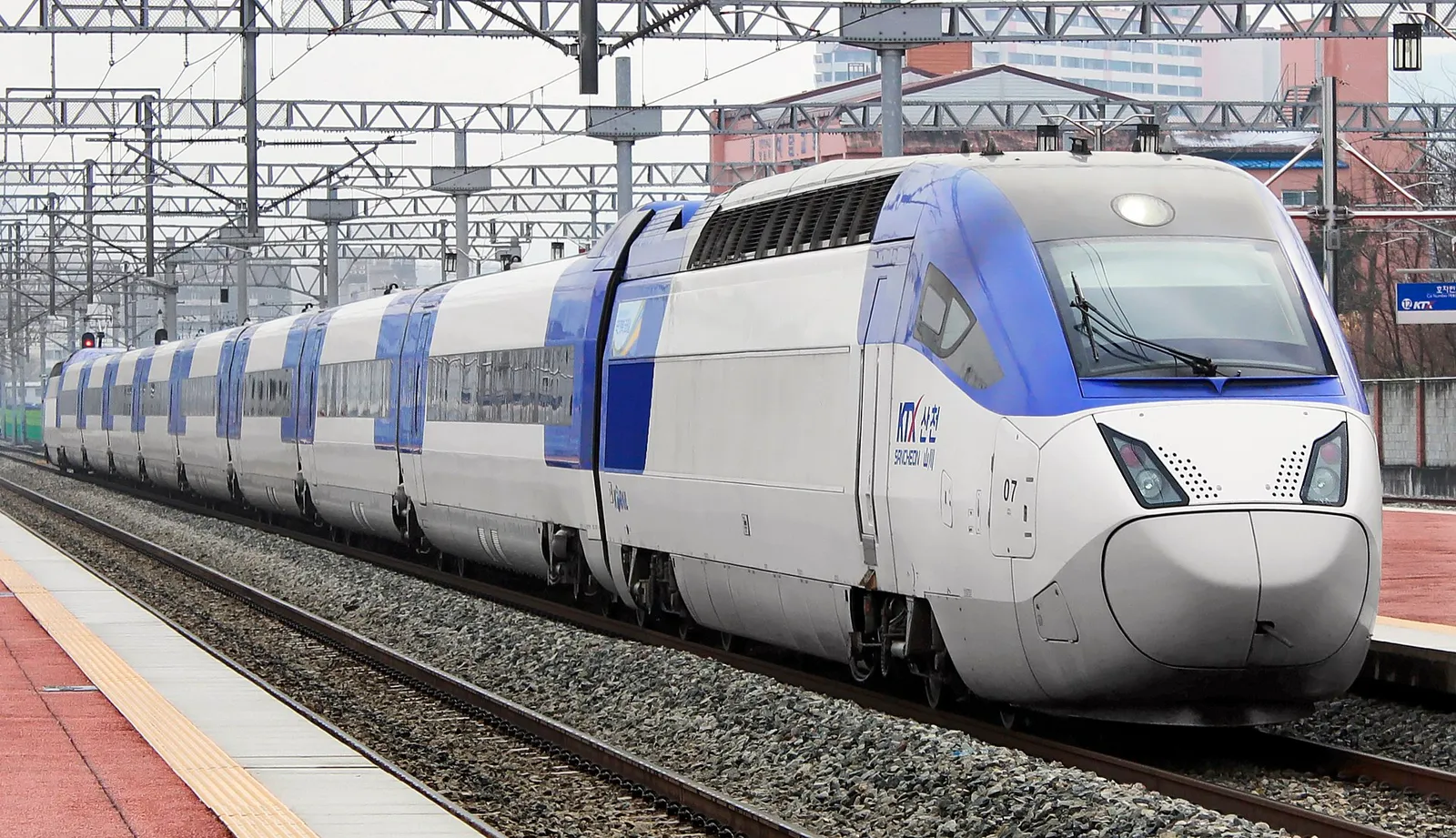
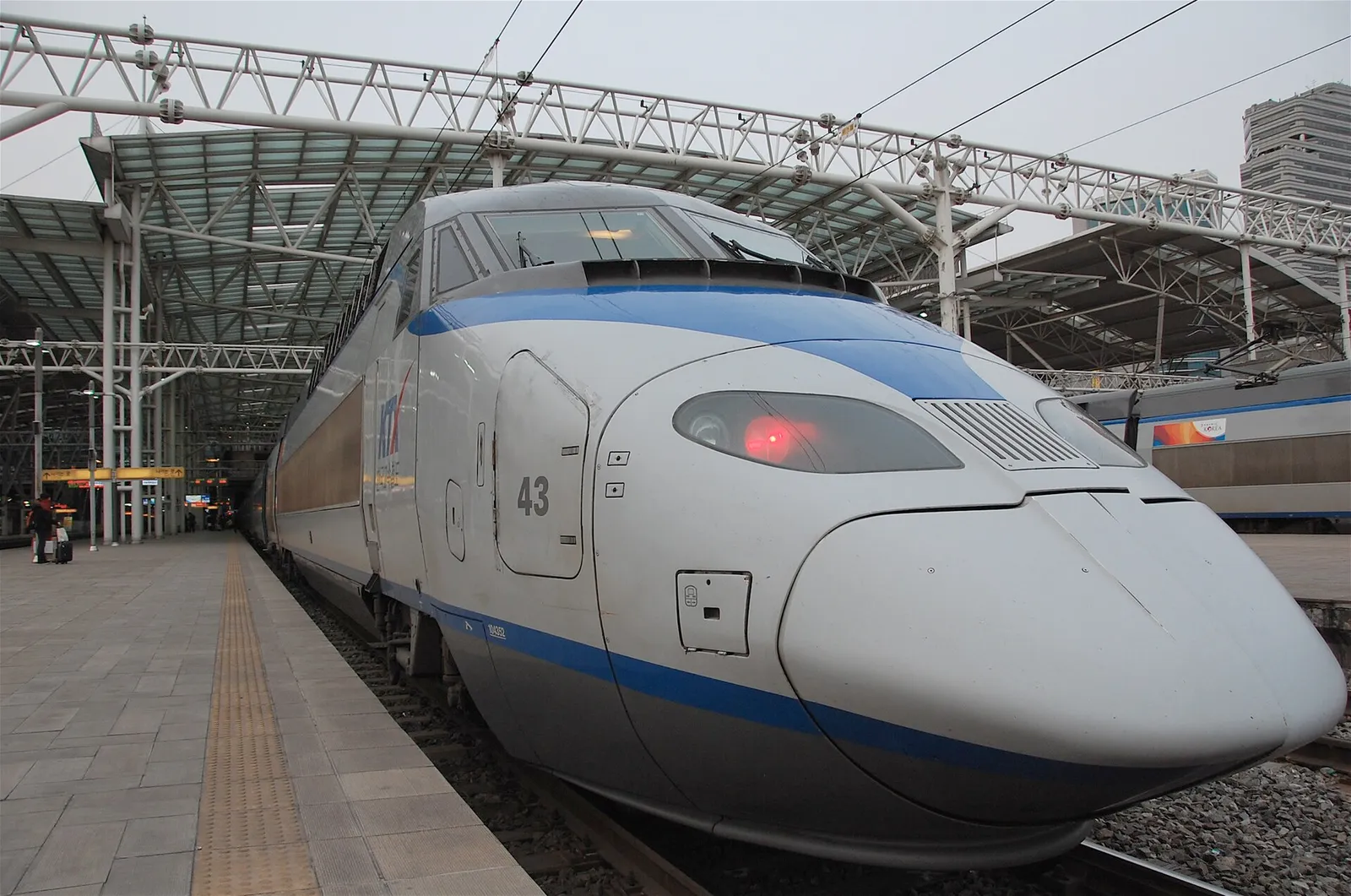
High speed trains arrive outside town with a connecting bus; coaches arrive centrally.
A transport card works on the local buses.
Cards everywhere; cash is barely needed.
Cherry blossom in spring is exceptional here and brings the crowds with it.
Summer is hot and humid and hard work on a bicycle.
English signage at the major sites is good.
Where this fits in a Korea trip
Two nights between Seoul and Busan, or a night out of Busan.
For getting around the country and what the transport options actually cost, our guide to Korean transport covers the ground.
For the train that gets you here and how to book it, our guide to KTX trains covers the network.
And for the other historic town inland, quieter and stranger, our guide to Andong covers that trip.
The short version
Stay two nights rather than day tripping, because a day trip loses the temple or the dusk. Hire a bicycle for a full day and loop the burial mounds, the observatory, the pond, the museum and the cafe street, all of which are flat and close together. Take the local bus rather than the bike up to Bulguksa and Seokguram. Go back to the palace pond and the covered bridge after dark, when they are lit and empty. And come in spring or autumn rather than August.