Jeju is one large volcano that came out of the sea, and nowhere on the island makes that as obvious as the eastern quarter. Within half an hour of each other sit two of the most striking volcanic sites in South Korea: a crater that rises straight out of the water like a fortress, and a lava tube large enough to walk through. Both fall inside the island’s World Heritage listing, and both fit comfortably into a single day with a beach stop and lunch in between. The order matters more than anything else.
The shape of the eastern day
Sunrise or early morning at Seongsan Ilchulbong, before the coaches.
Late morning underground at Manjanggul, when the crater is filling up.
Afternoon on the coast, which is where the day slows down.
Half an hour of driving between the two main stops.
Put the crater first and the day works. Put it second and you arrive at a full car park in flat midday light, which is the single most common way to spoil an otherwise easy itinerary. If you are building a longer stay around this, the guide to Jeju covers how the island divides up.
Seongsan Ilchulbong, the sunrise crater
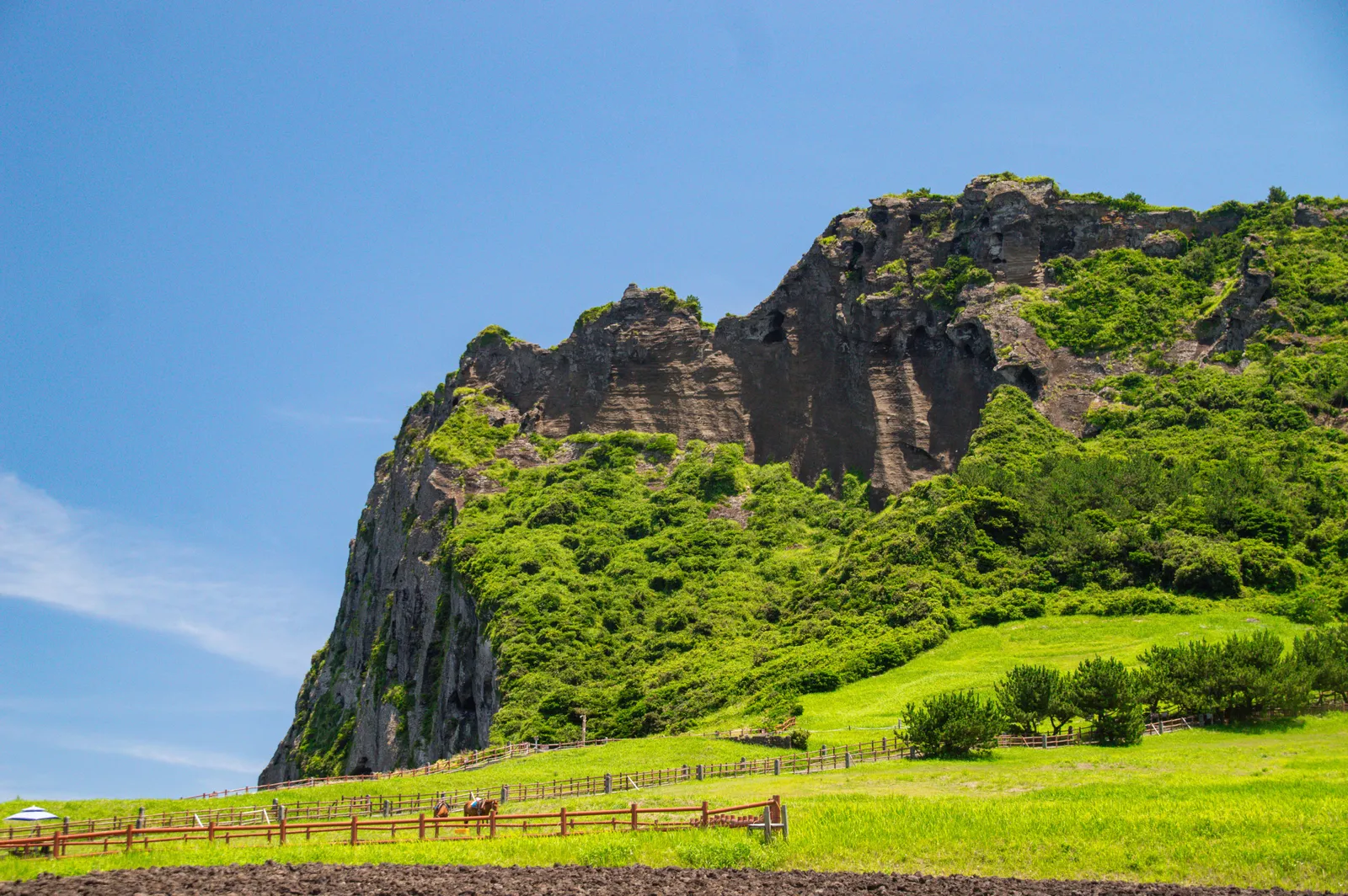
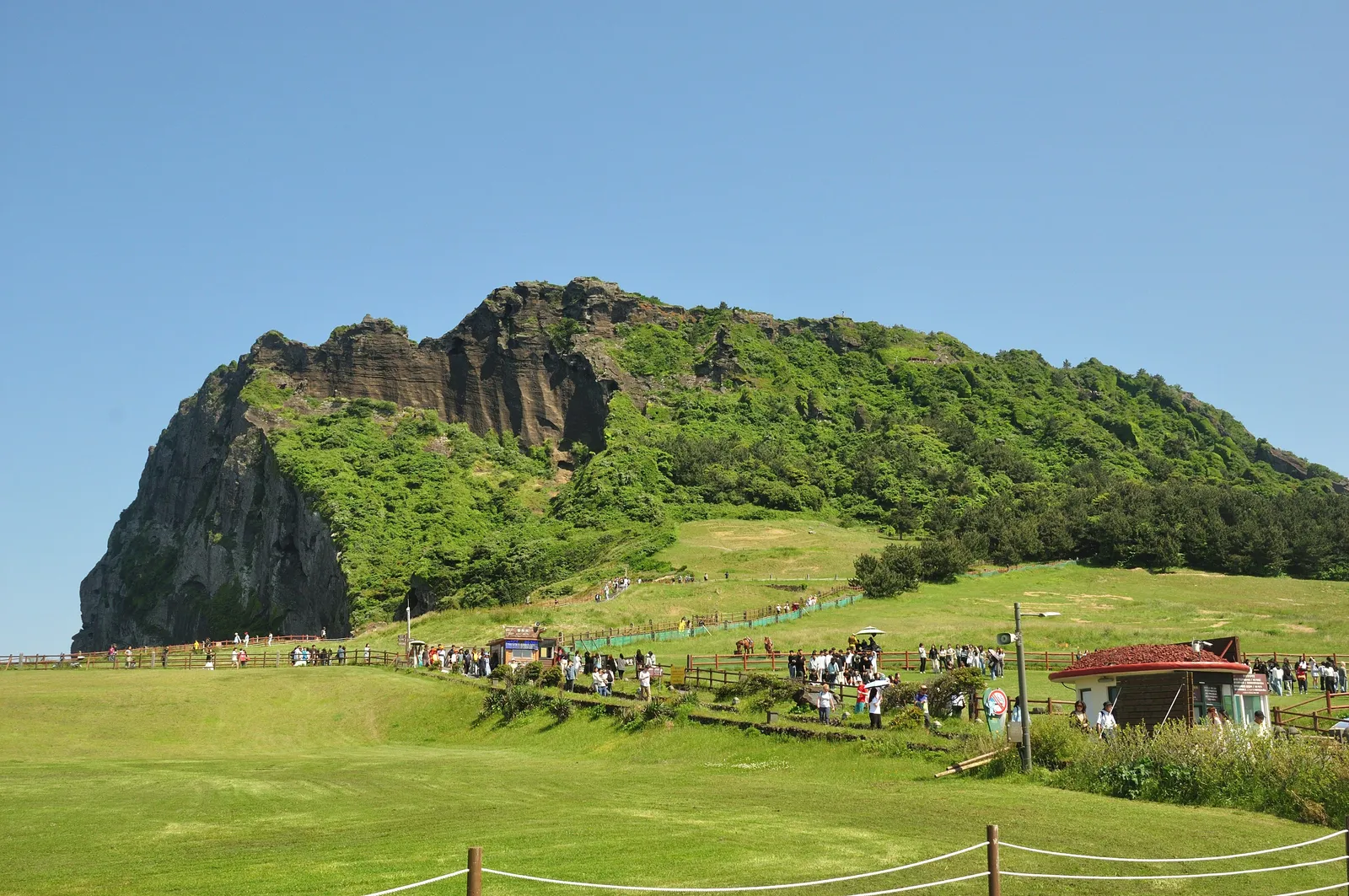
The name means sunrise peak, and it is not decoration. The cone was formed by an eruption into shallow water, which is why it has the steep, layered walls that make it look built rather than grown, and the eastern rim faces open sea. Climbing it for the sunrise is a genuine local tradition rather than a tourist invention.
The walk up is a made staircase with rest points, twenty five to thirty minutes at a gentle pace, and the reward is a viewpoint over a near perfect bowl with the sea on three sides. Coming down is quicker. An hour and a half to two hours covers the whole visit without rushing.
If sunrise is too much, before nine is the next best thing. The light is still good, the staircase is quiet and parking is simple, and by mid morning none of those three is true.
Manjanggul, walking inside a lava tube
A lava tube forms when the surface of a lava flow cools and hardens while molten rock keeps running underneath, and eventually drains away and leaves the shell. Manjanggul is one of the largest anywhere, and a section of it is open to walk through.
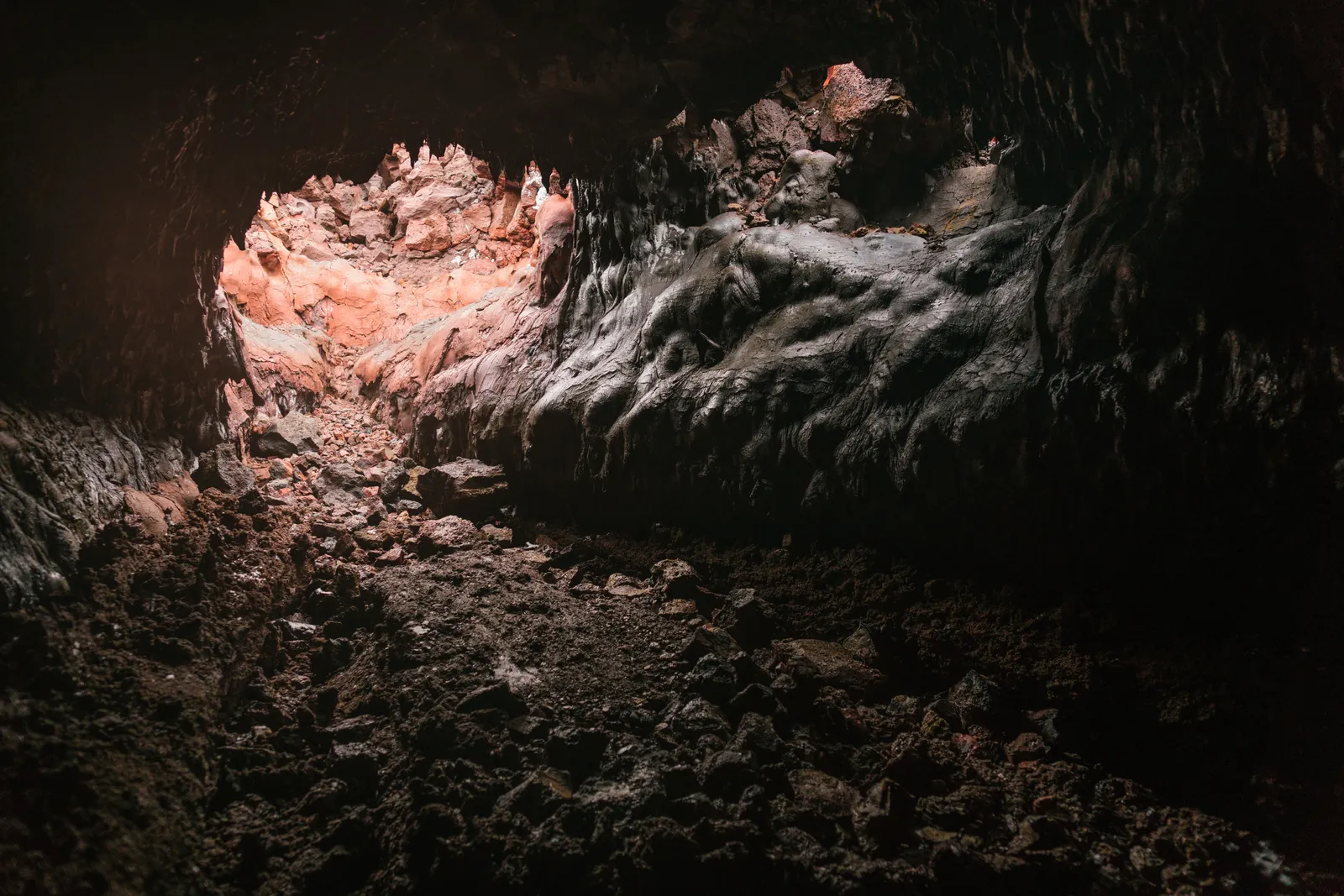
What surprises most people is the temperature. It holds at roughly eleven to thirteen degrees all year, so on an August afternoon you go from humid heat into something close to a cold cellar. The floor is wet, uneven lava rock. Closed shoes with grip and a warm layer are not optional, and the open stretch runs around a kilometre in each direction, lit the whole way.
Access to caves of this kind is managed and sections have been restricted at times for conservation. Check the current position before you drive out, because a closed cave is a long detour.
The coast, the divers and lunch
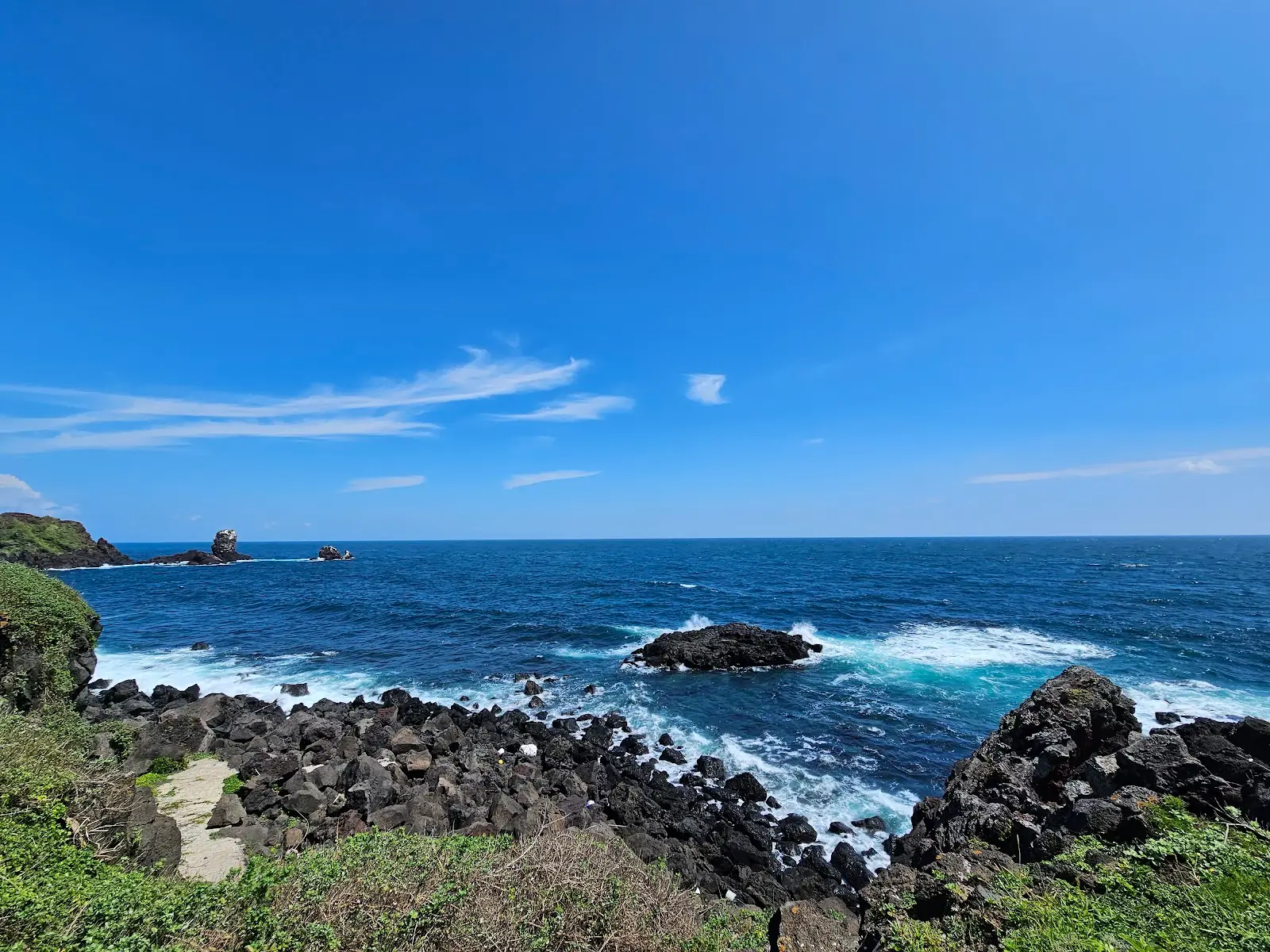
The stretch between the two sites is where the day stops being a checklist. This is haenyeo country: the women divers of Jeju, who free dive for shellfish without air tanks and have done so for generations. Their work is recognised as intangible cultural heritage, and demonstrations and small museums along this coast are the reliable way to understand it rather than hoping to spot someone working.
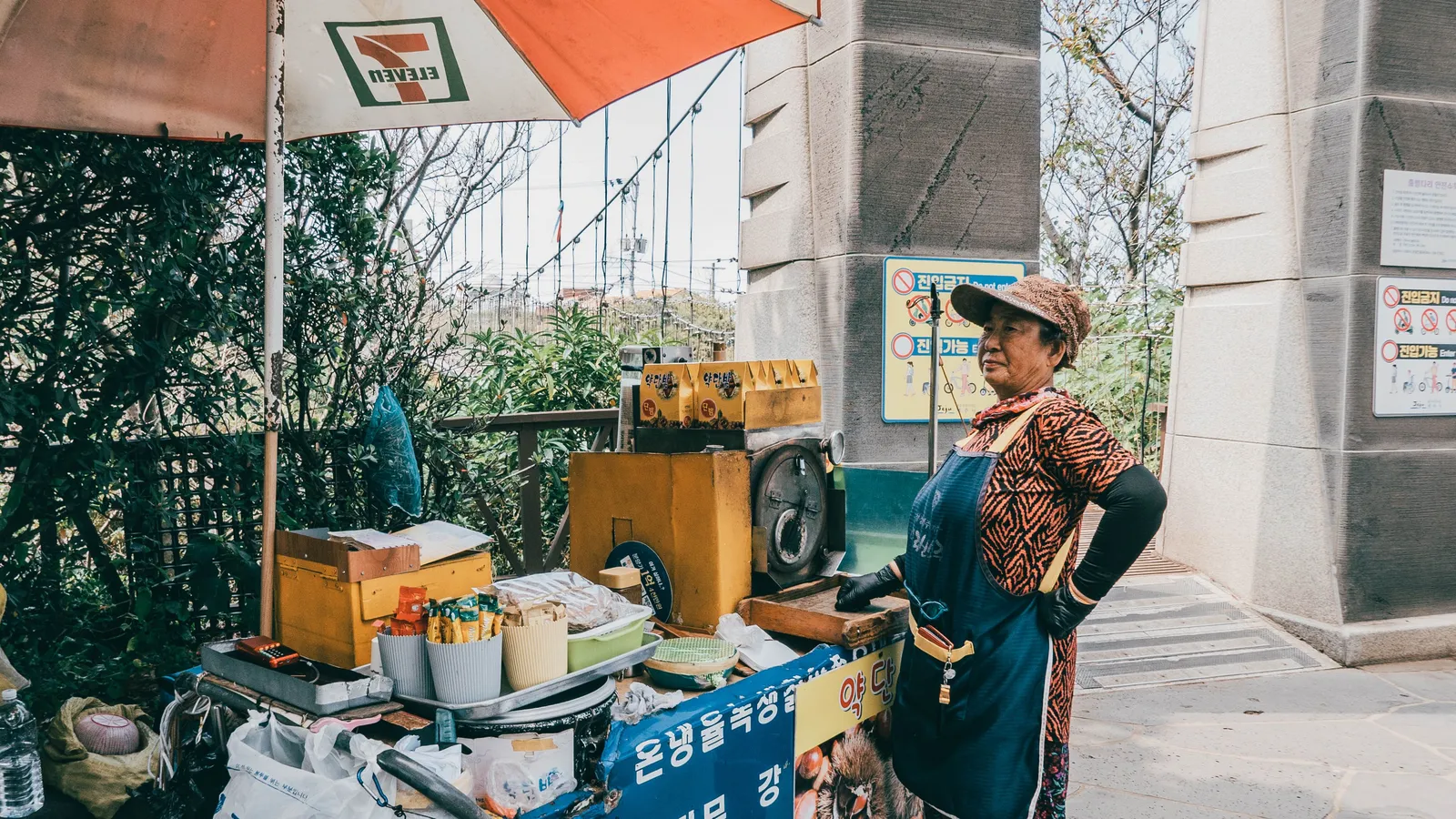
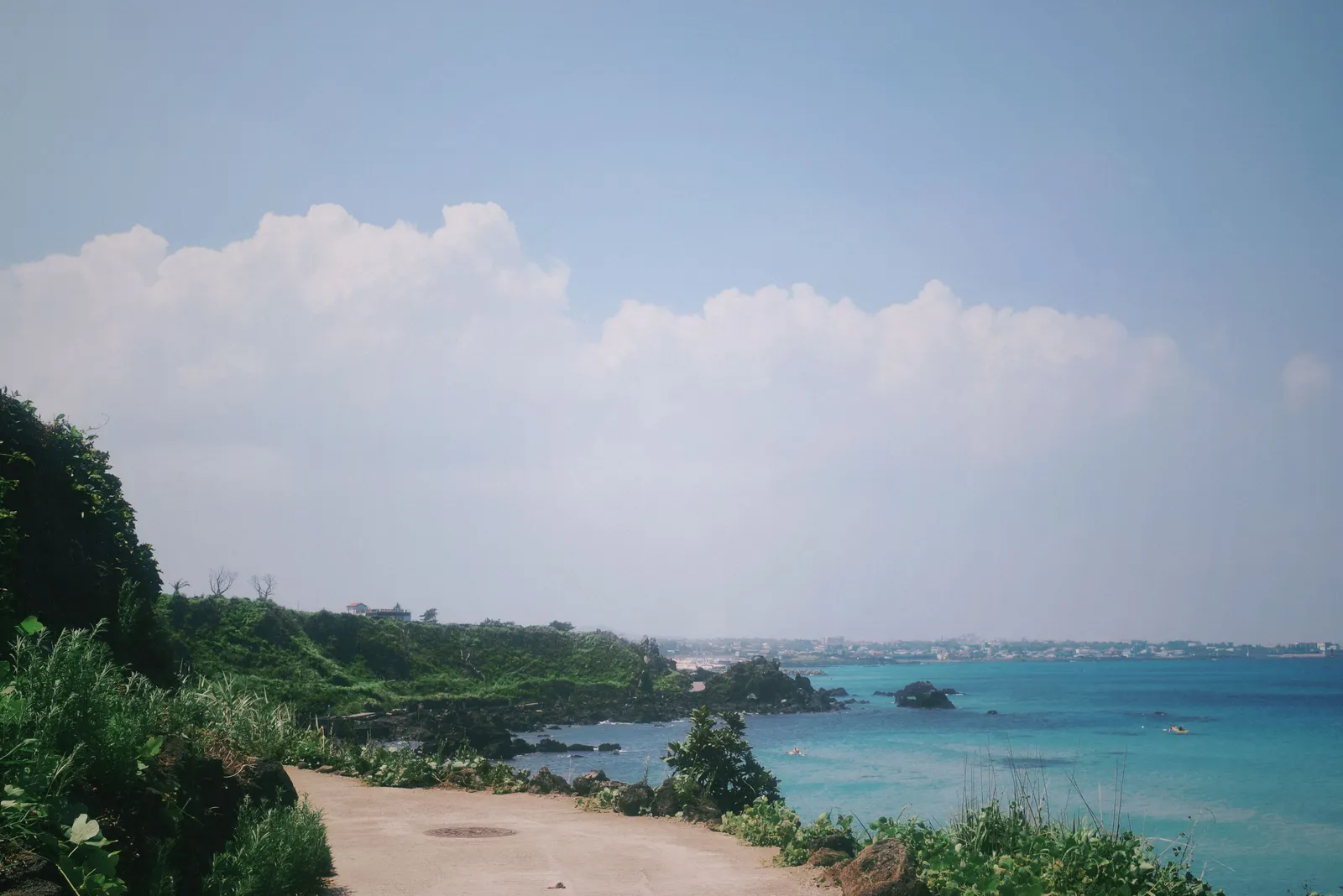
Lunch out here is roadside stalls and small harbour restaurants rather than anything formal, and the beaches on this side are the pale sand ones that photograph better than the volcanic coast in the south. If walking is what you came for, this coastline is also threaded by the Olle trail, and you can pick up a numbered section for an hour without committing to a full route.
Getting between the two without losing the day
A hire car is the straightforward answer. Costs on Jeju have generally run somewhere in the region of 55,000 to 90,000 won a day depending on season and vehicle, and prices move, so compare rather than assume. Parking at both sites is provided.
Public buses do reach both, and the honest description is that they work but they cost you time: moderate frequency, a change between the two, and a timetable that decides your day rather than the other way round. Taxis fill short gaps at reasonable cost.
The third route is an organised day tour that covers both sites with transport included, which suits anyone who would rather not drive on an unfamiliar island for the first time.
What to check before you go
Opening hours, ticket prices and any access restrictions all change, and the caves in particular have been subject to closures. Treat any figure you read, including the ones here, as an indication rather than a promise, and confirm against the official source for your dates.
Weather on the eastern side is its own factor. Jeju gets wind off the sea in a way the interior does not, and the crater rim is exposed. Sunrise in cloud is still a nice walk but it is not the view you came for, so if you have flexibility, keep the crater for the clearest morning of your stay. Anyone planning to add the island’s high point should read the Hallasan hike guide first, because that one needs a whole day of its own.
The eastern day is the one that explains Jeju. An island that looks green and gentle from the road turns out to be a volcano with its plumbing still visible, and you can stand on the rim of one eruption in the morning and walk through the inside of another before lunch.