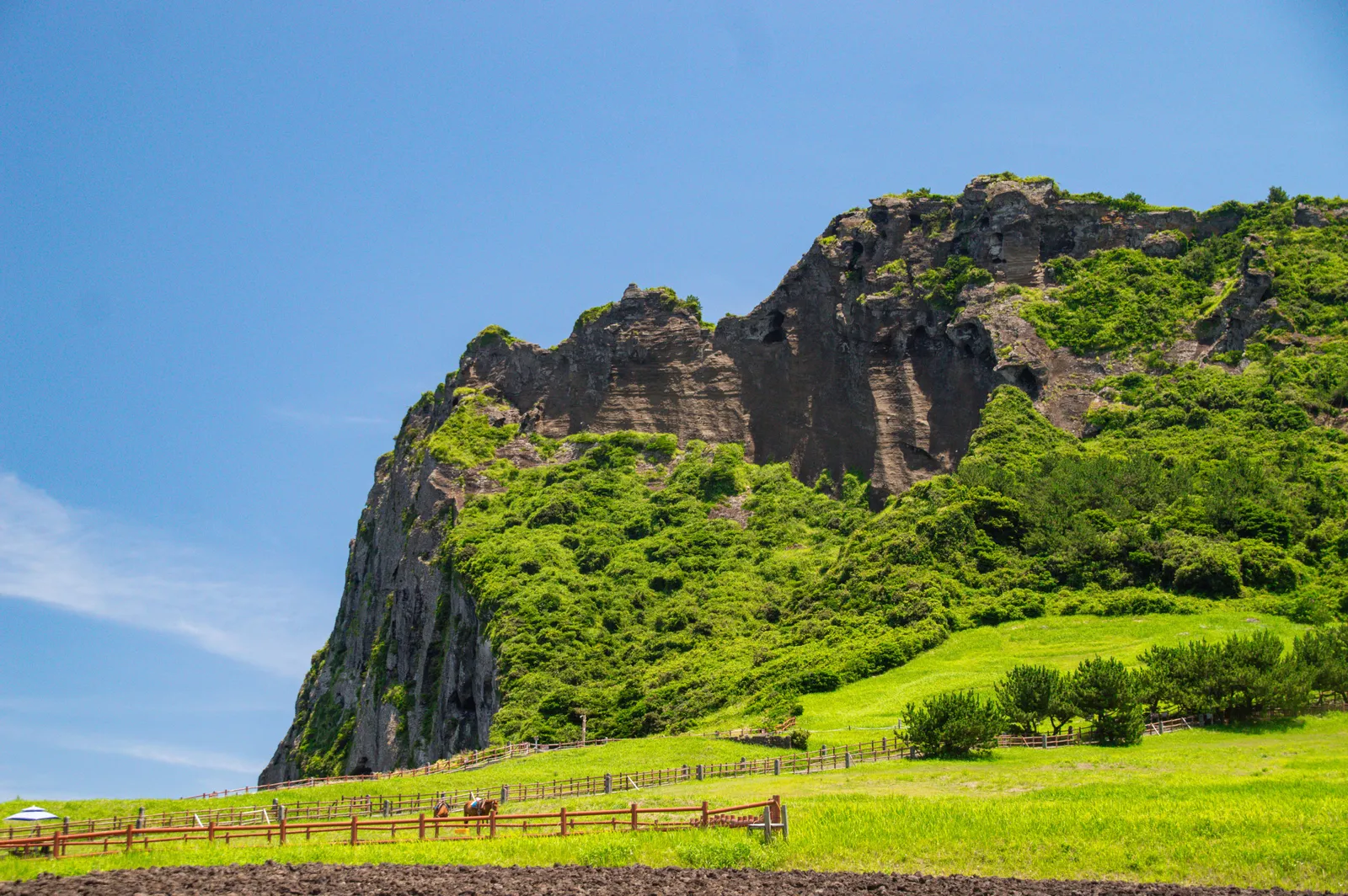
Jeju is where Korea goes to exhale. A volcanic island floating off the southern coast, it is the country’s honeymoon capital, its favourite holiday escape, and a UNESCO-listed geological wonder all at once. The rhythm here is different from the mainland: black lava-rock walls dividing tangerine groves, a coastline of hidden beaches and sea cliffs, waterfalls tumbling into the surf, and above it all the dormant volcano of Hallasan, South Korea’s highest peak. Reached by a short flight from Seoul or Busan, it is the perfect slow counterpoint to the cities.
Getting there and getting around
There is no rail or road link to Jeju, so you fly. The Seoul to Jeju route is among the busiest air corridors on the planet, with departures every few minutes, so flights are short, frequent and usually inexpensive. Book domestic tickets in advance if your dates are fixed, especially in peak season.
Once you land, the single best decision is to rent a car, provided you have sorted the paperwork. Korea requires foreign drivers to carry an International Driving Permit with their own licence and passport, and you must obtain it at home before you travel, because it is not available once you have arrived. With that in the glovebox, Jeju is a joy to drive: it is large, its highlights ring the coast and fill the interior, and the buses, while cheap, are slow for sightseeing. If you do not drive, base yourself in Jeju City in the north or Seogwipo in the south and combine buses, taxis and a guided tour or two to reach the far corners.
The volcano and the lava
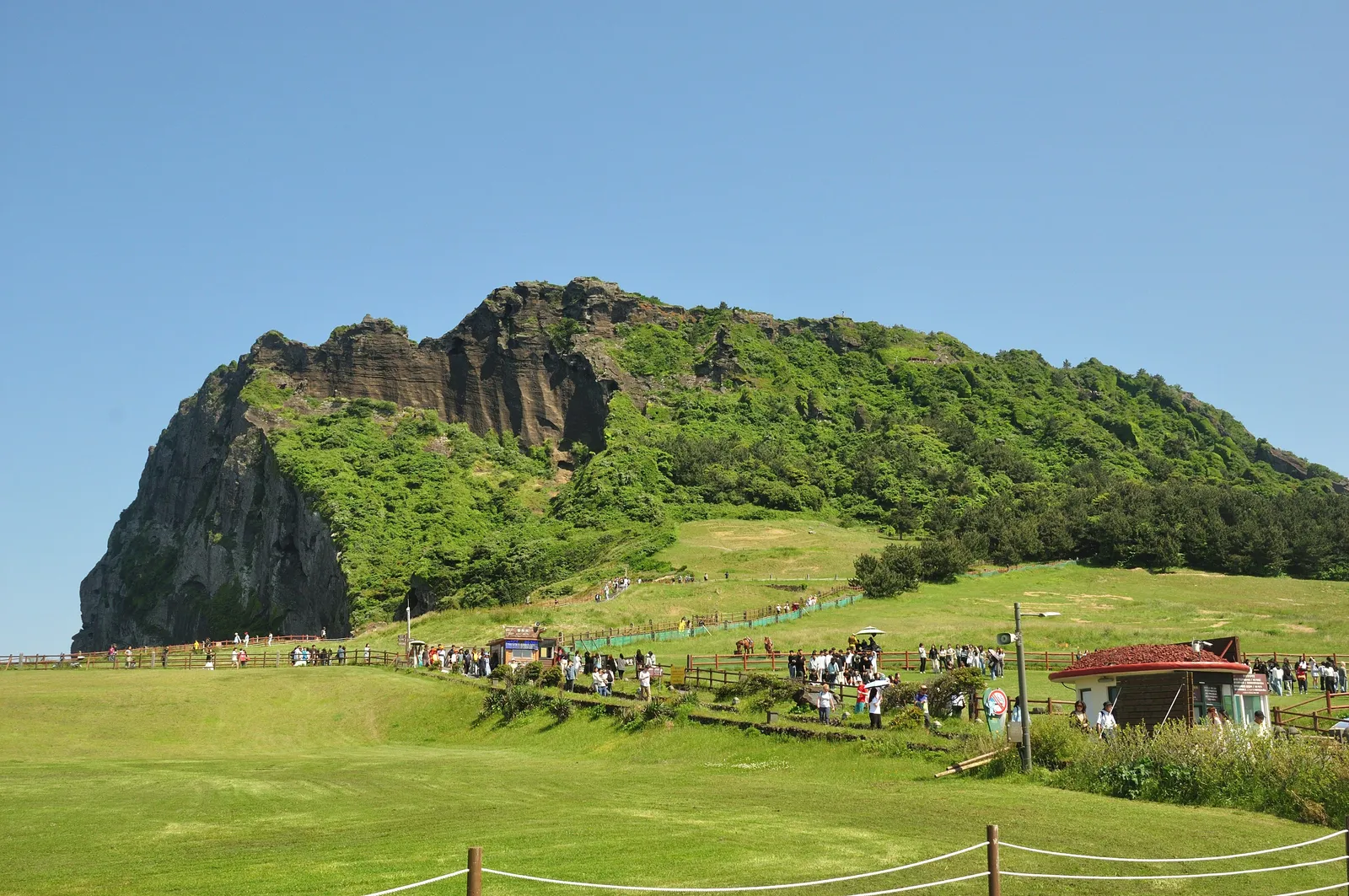
Jeju was born of fire, and its volcanic landscape is the headline. Rising from the sea on the east coast is Seongsan Ilchulbong, the “Sunrise Peak,” a dramatic tuff crater you can climb in under an hour for one of the great views in Korea, best at dawn. Beneath the island run some of the world’s finest lava tubes, and the vast Manjanggul tube is open to walk through, a cool, dark, otherworldly tunnel of frozen stone.
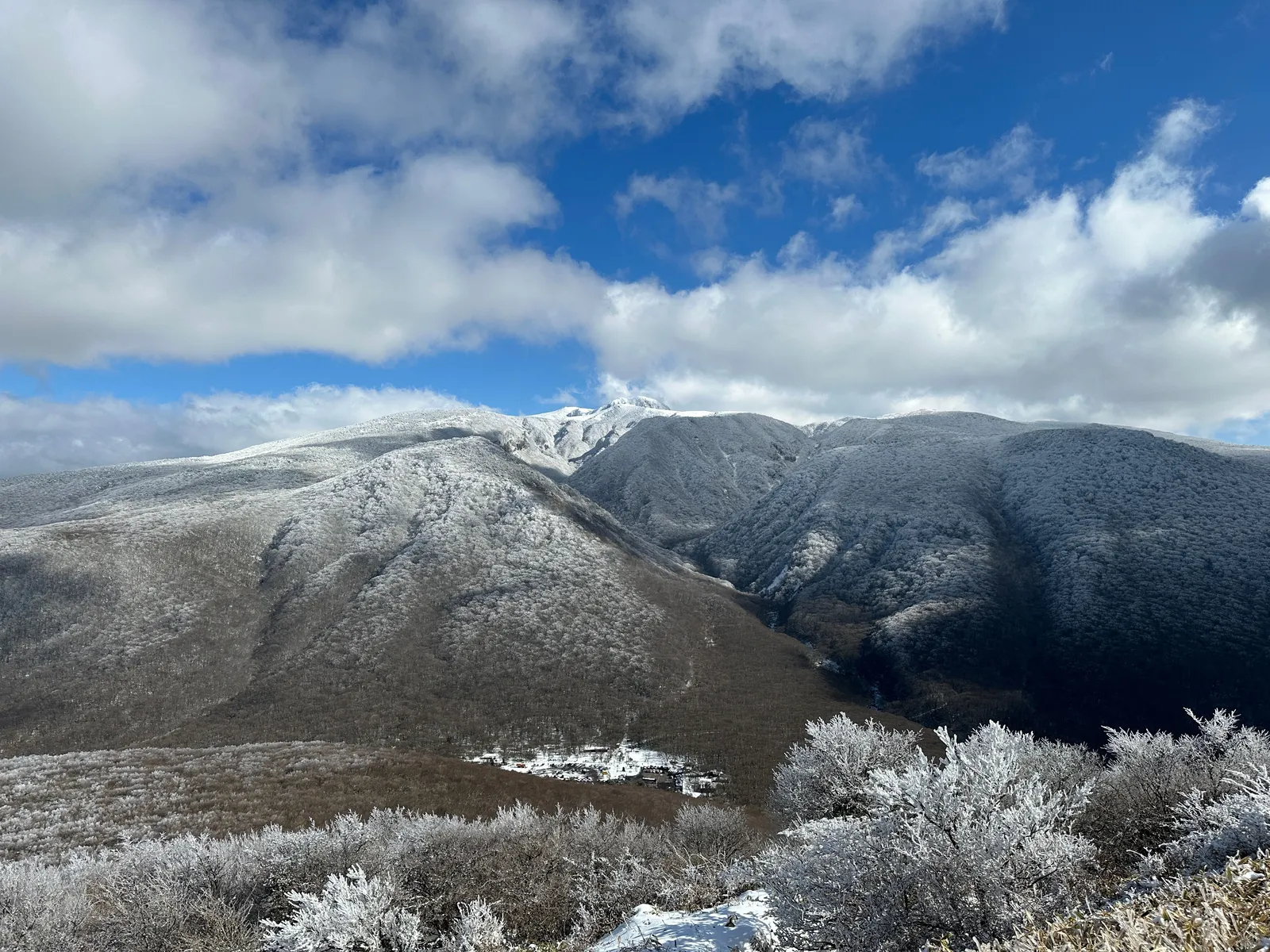
At the centre stands Hallasan, a dormant volcano and the highest mountain in South Korea. Serious hikers can summit it in a long day for a look into its crater lake; gentler trails circle its flanks through forest and, in season, azaleas. Even a short walk on its lower slopes shows you why Koreans hold this mountain sacred.
If the summit is the plan rather than a maybe, it needs organising in advance: the trails that reach the top run on a reservation system with turn-back cut-off times partway up, and arriving at ten in the morning without a booking will not get you there. The climb itself is a long day on stone steps rather than a technical ascent, and the trails run to cut-off times that turn back anyone who starts late.
Beaches, waterfalls and the coast
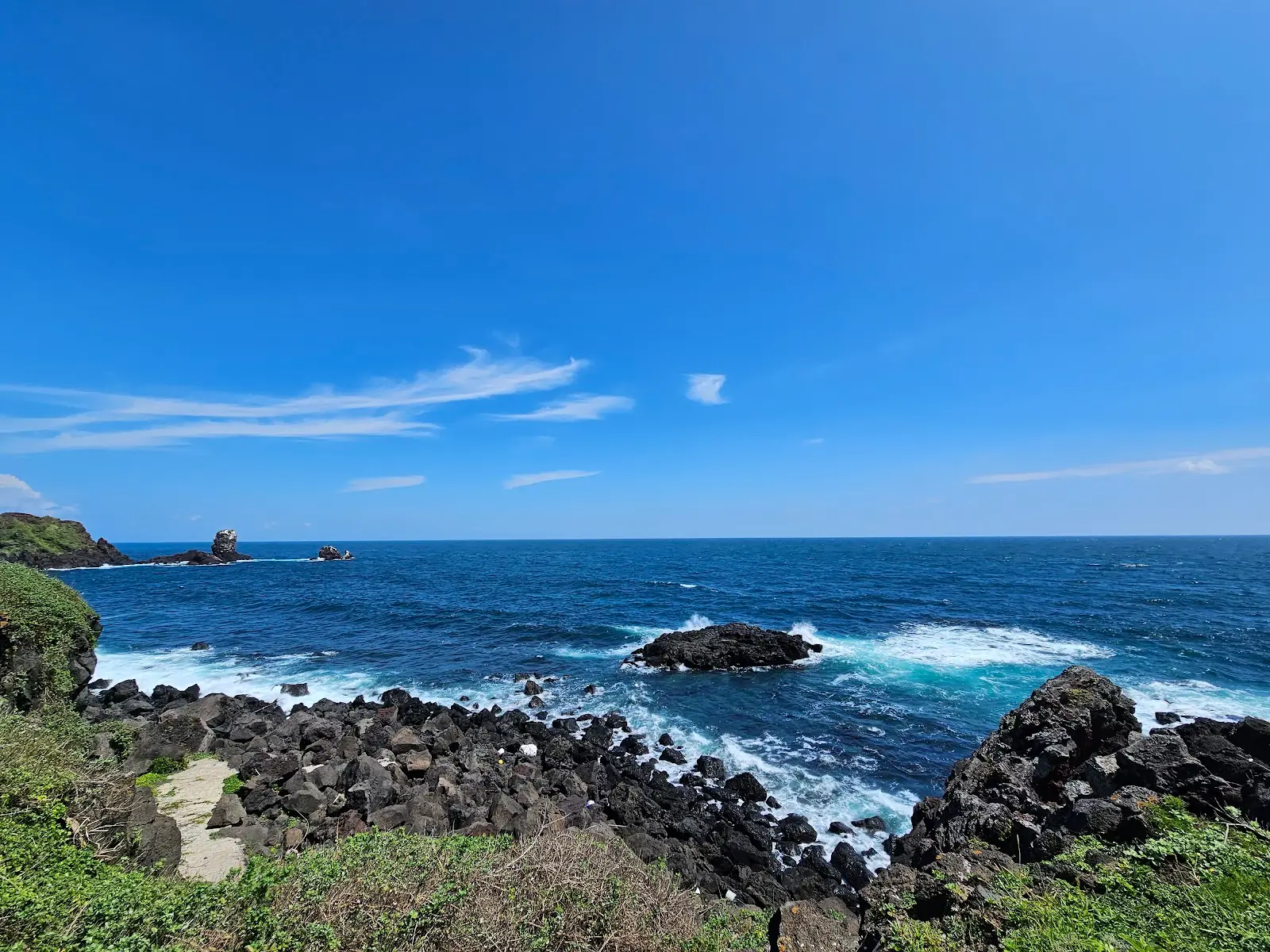
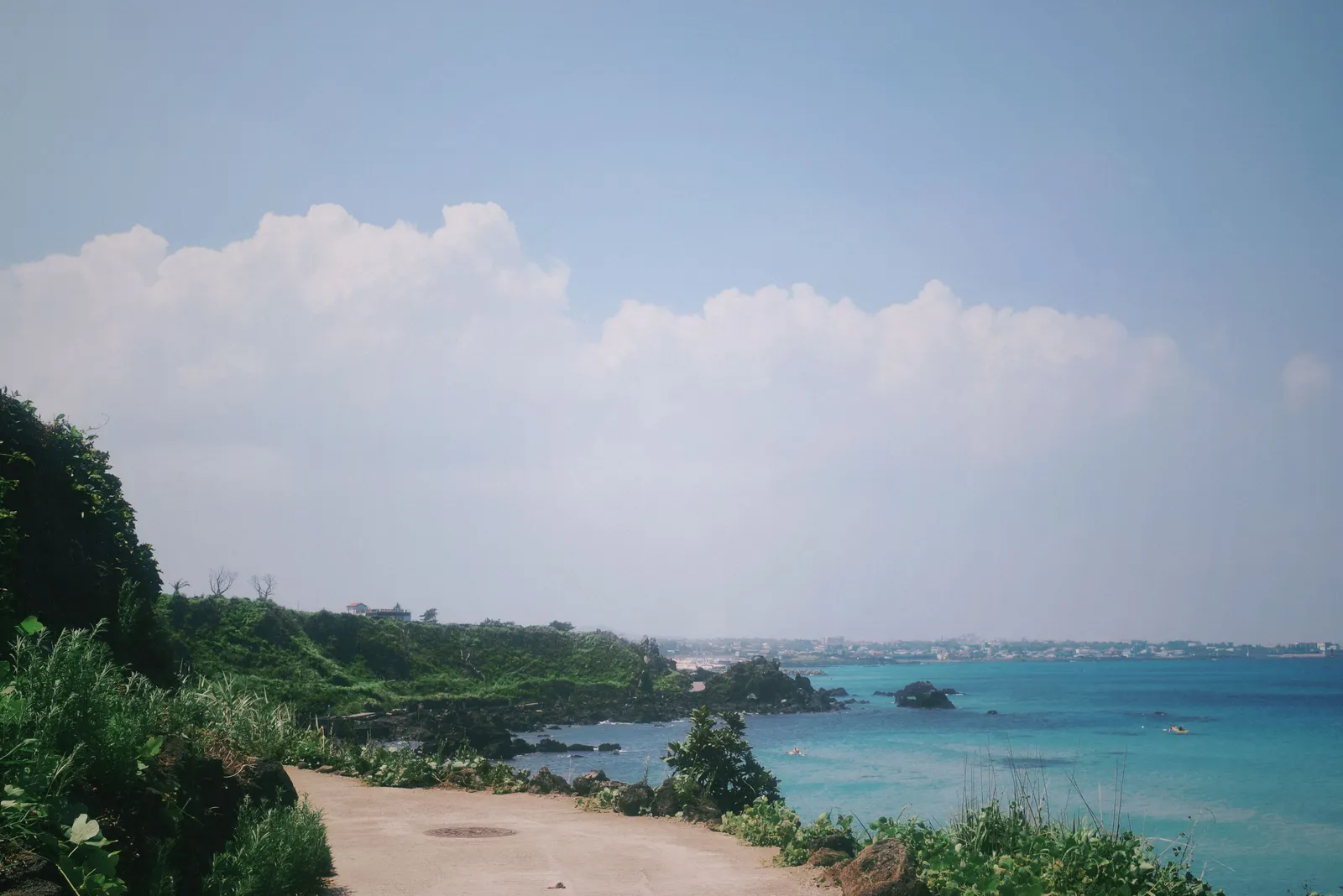
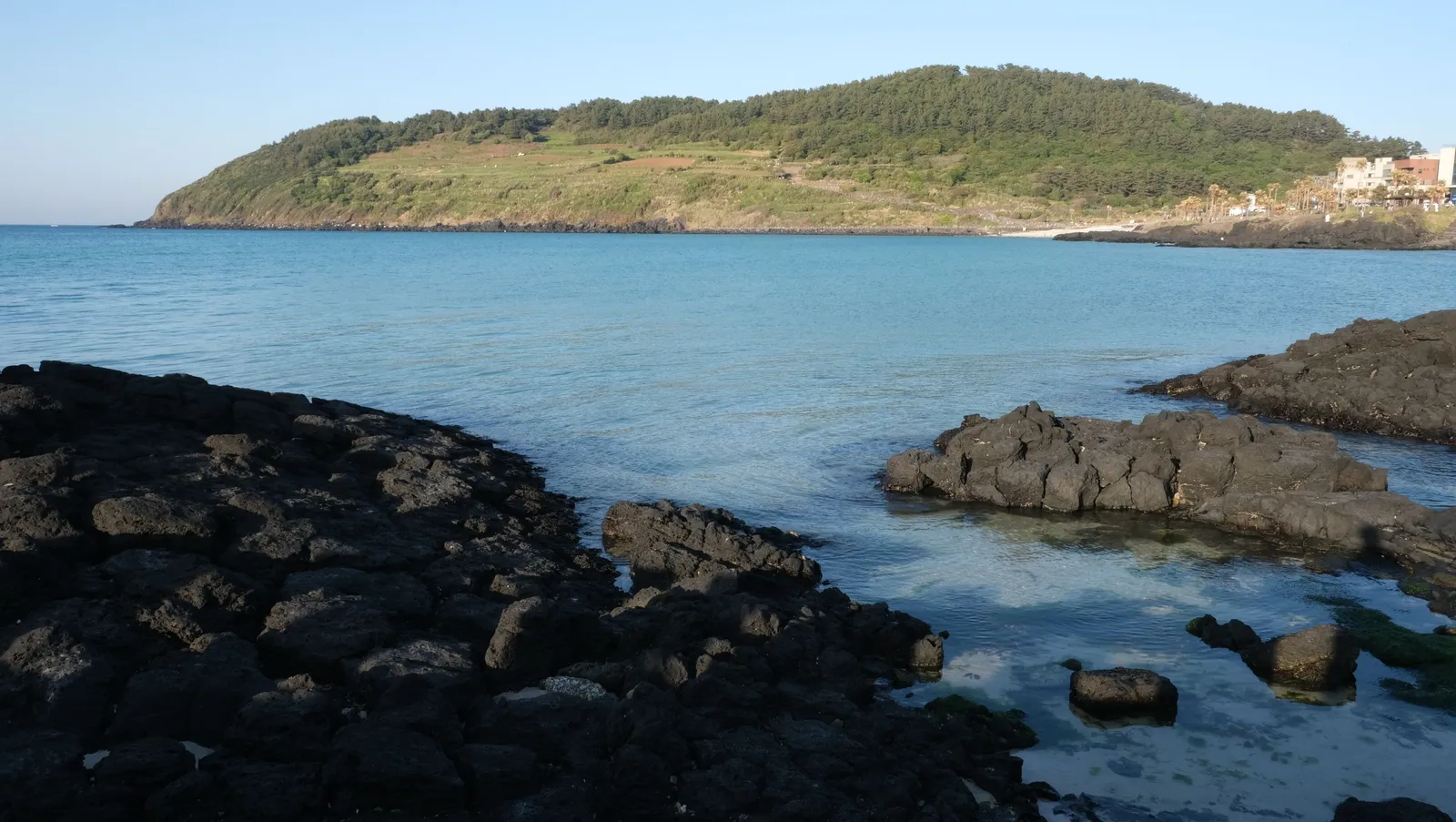
Jeju’s coastline is a string of surprises. In the northwest, Hyeopjae and Geumneung beaches pair white sand with turquoise water and a view of a small offshore island. In the east, Woljeongri is a cafe-lined arc of pale sand that has become the island’s fashionable beach hangout.
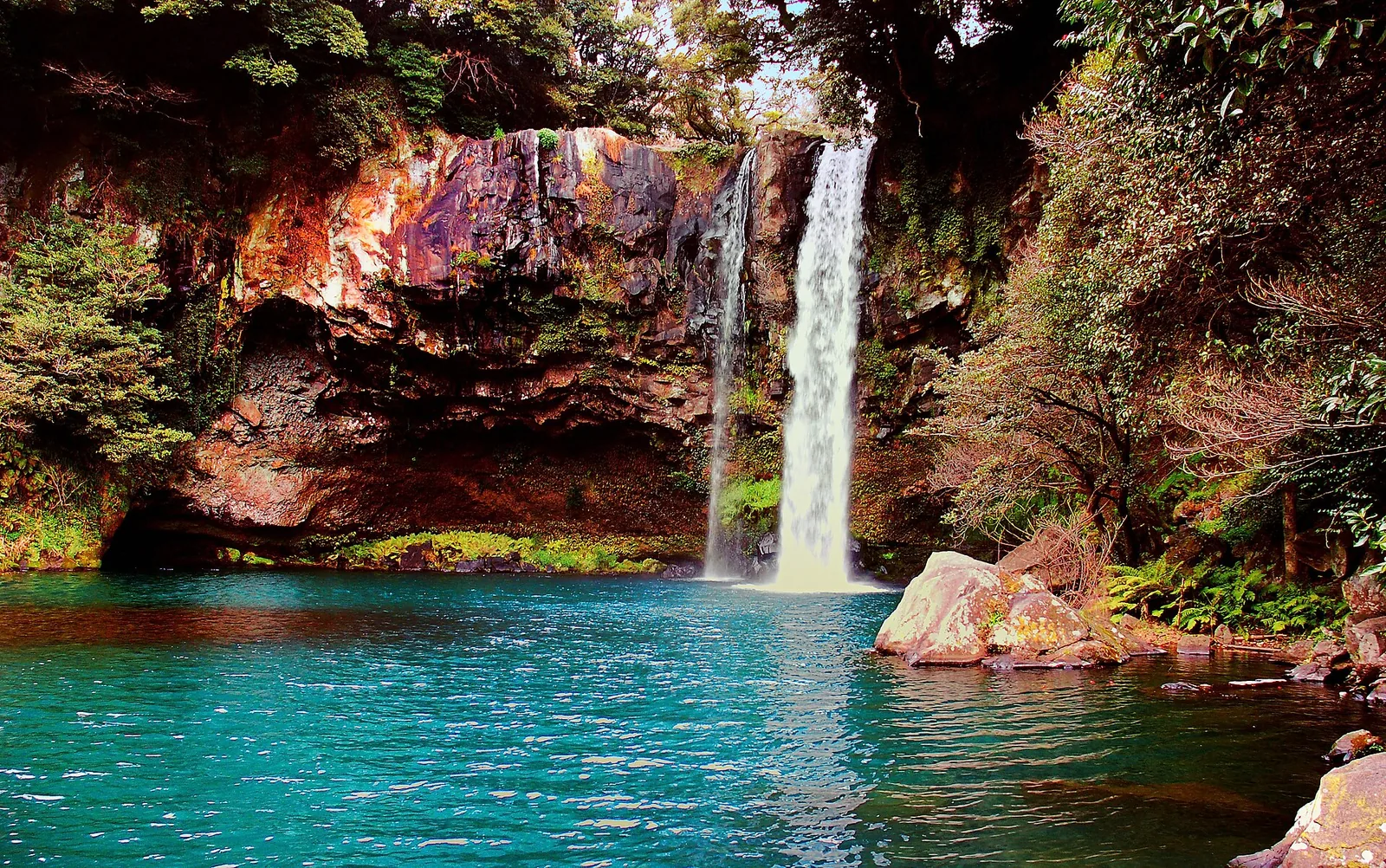
The south coast is waterfall country. Cheonjiyeon and Cheonjeyeon tumble through lush ravines, while Jeongbang has the rare distinction of falling straight into the sea. Along the coast you may spot the haenyeo, Jeju’s famous free-diving women, some now in their seventies, who harvest shellfish from the seabed without air tanks, a living tradition UNESCO has recognized.
Reach the coast and craters with easeA guided tour or boat trip covers the far-flung sights that are slow to reach without a carWind, stone and women
Jeju calls itself the island of three abundances: wind, stones and women. All three are visible everywhere once you know to look. The wind explains the low stone walls dividing every field, built dry from volcanic rock so the gales blow through rather than knock them down. The stones are the black basalt that the whole island is made of, carved into the dolhareubang, the wide-eyed grandfather statues that stand at gateways and have become Jeju’s emblem.
And the women are the haenyeo, the free-diving harvesters who worked the seabed while men fished offshore, and whose earnings supported whole villages. Most of those still diving are now elderly and the tradition is fading, which is why UNESCO recognised it. Seeing them surface, or eating what they have just brought up, is the most Jeju thing that can happen to you.
The island also has its own language, distinct enough from mainland Korean to be mutually difficult and now seriously endangered. You will not need it, but it is a useful reminder that Jeju thinks of itself as a place apart rather than a province.
Walking the Olle trails
One of the best ways to feel Jeju is on foot, along the Olle Trails, a network of waymarked coastal walking routes that circle the entire island in numbered sections. Each stretch links beaches, headlands, fishing villages, oreum (small parasitic volcanic cones) and viewpoints, and you can walk as little as an hour or as much as a full day. Pick a coastal section near your base, follow the blue-and-orange ribbons, and you will see the island the way locals do: slowly, at sea level, with the wind and the waves for company.
Where to eat
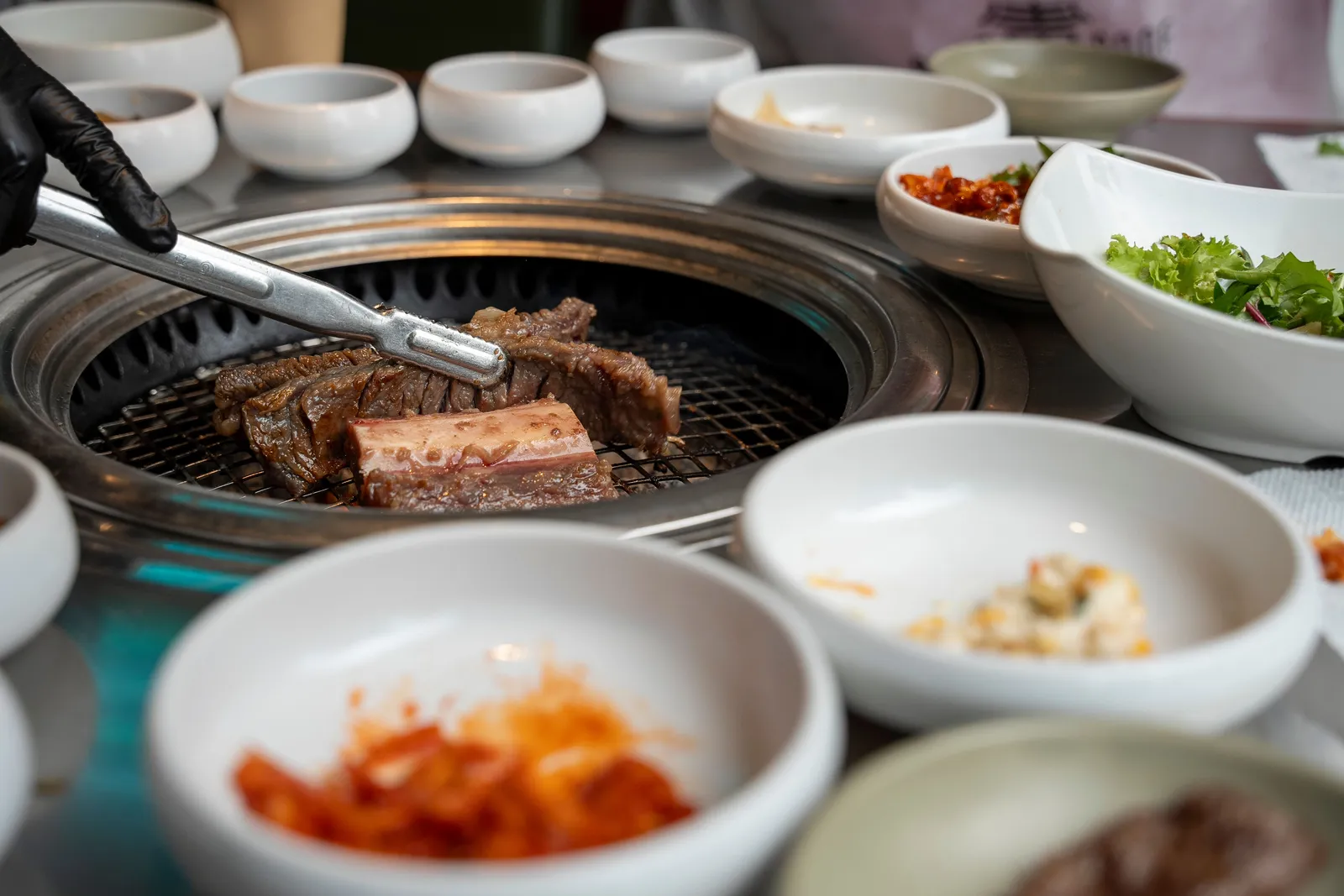
Jeju’s food is proudly its own. The signature dish is heukdwaeji, the island’s prized black pork, grilled at the table and rich and nutty. From the sea come fresh abalone, served in porridge or grilled, and galchi, silvery hairtail fish, in a spicy stew. The island grows Korea’s tangerines, so hallabong citrus and its juice, chocolates and teas are everywhere.
Do not leave without trying the seafood pulled from the water by the haenyeo divers, often sold and eaten right at the shore. And save room for a cafe stop: Jeju has a booming scene of design-led coffee shops with sea views, a lovely way to punctuate a day of driving.
If the mainland dishes are still unfamiliar, our Korean food guide covers the wider repertoire, the free side dishes and how a Korean table works, all of which applies here too, with the island’s black pork simply taking the place of the usual barbecue cuts.
Where to base yourself
Jeju divides neatly in two and where you sleep decides how much driving you do. Jeju City in the north has the airport, the transport links, the ferries and the widest choice of accommodation and restaurants, which suits short stays and anyone without a car. Seogwipo in the south is smaller, warmer, prettier and closer to the waterfalls, the best beaches on that coast and the Olle trails, and it is where most people wish they had stayed.
The obvious answer for three or four nights is to split them, or to pick the south and accept the drive from the airport. What each town and coastal area puts within reach matters more here than the hotel itself, because the island is larger than it looks and the driving is the real cost.
For the area by area version of this decision, including the quieter coasts either side of the two towns, our guide to where to stay on Jeju goes through them.
When to go
Spring is the island at its prettiest, with fields of yellow canola flowers, cherry blossom and comfortable hiking weather. Autumn is clear, dry and arguably the best all-rounder, with the trails at their finest. Summer is the beach and diving season and also the busiest, hottest and most humid, and it overlaps with the typhoon window from roughly July to September, when a storm can ground flights for a day.
Winter is mild by mainland standards, quiet and inexpensive, with camellias flowering and the sea too cold to swim. It is a good time for the food, the cafes and the lower trails, and a poor one for the beach.
Three or four days, and how to spend them
Jeju rewards dividing the island rather than looping it daily, since the coastal ring is long and the interior slow.
The east: Sunrise Peak at dawn, the Manjanggul lava tube, the beach at Woljeongri, and the ferry across to Udo if the day is clear.
The south: the waterfalls around Seogwipo, a stretch of Olle trail along the cliffs, a boat trip, and the island’s best dinner.
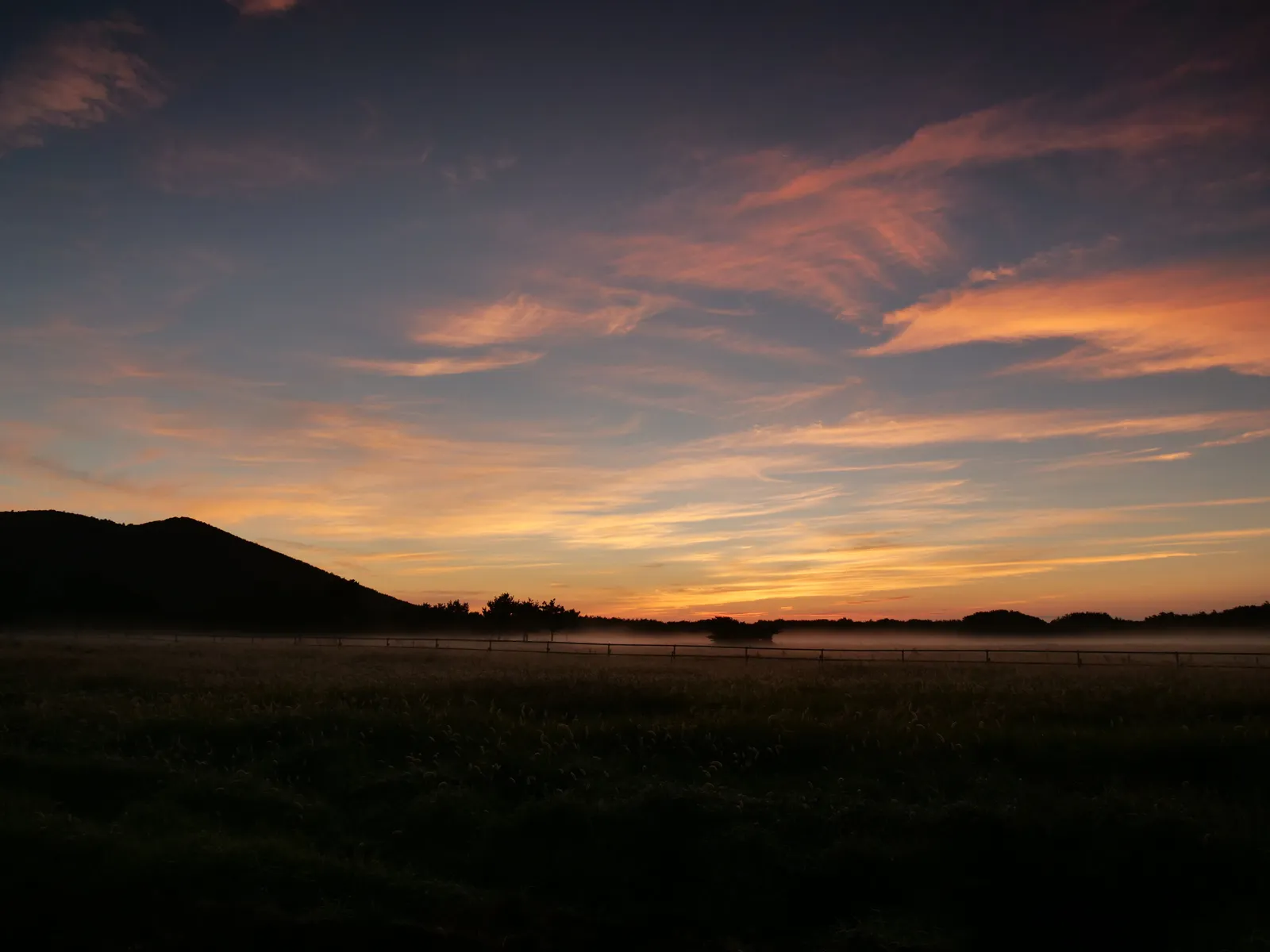
The west: the white-sand beaches at Hyeopjae and Geumneung, the sunset from the northwest coast, and the cafes that have colonised that shoreline.
The middle: Hallasan, whether that is the booked summit day or a gentler forest trail, plus the oreum, the small parasitic cones scattered across the interior that give you a big view for twenty minutes of climbing.
Practicalities worth knowing
Driving here is easy by Korean standards, with quiet roads and a coastal ring route, but two things catch visitors out: the International Driving Permit must be arranged at home and cannot be obtained on arrival, and the island’s weather changes fast enough that a clear morning is not a promise. Many of the headline sights charge a modest entrance fee, so keep a card and a little cash handy.
The wind is a constant rather than an event, so bring a layer even in summer, and expect the coast to be noticeably breezier than the interior. Phone coverage is good almost everywhere, cards are accepted nearly universally, and a T-money card works on the buses if you are not driving.
The short version
Fly over from Seoul or Busan, rent a car if you possibly can, and give Jeju three or four unhurried days. Climb Sunrise Peak at dawn, walk through a lava tube, pick a couple of beaches and a waterfall or two, and spend at least a half-day on an Olle coastal trail. Eat the black pork and the fresh abalone, and slow your whole trip down to the island’s pace. Jeju is not a place to tick off. It is a place to let go, and it does the rest.
Most Jeju trips are bolted onto a Seoul one, which makes two decisions on the mainland side worth getting right first. Where you sleep in Seoul shapes how easily you reach the domestic airport as well as everything else; our guide to where to stay in Seoul breaks the districts down. And the run in from Incheon is the first hour of the trip and the easiest one to plan badly; our guide to Incheon Airport transfers compares the trains, the buses and the taxis.