Korea is an easy country to travel in and a surprisingly easy one to be slightly rude in without noticing. The rules are not complicated, but they are specific, and several of them differ from Japan or China in ways that catch out visitors who assume the region shares one etiquette. The good news is that Koreans are famously forgiving of foreigners and genuinely pleased when you try. Get a handful of habits right and doors open, literally and otherwise. Here is the short course.
The one habit worth adopting on day one
If you learn nothing else, learn two hands.
Give and receive with both hands, or with your right hand while your left touches your forearm or wrist. It applies to money, a card, a bag being handed to you, a business card, a gift, and above all a drink. The gesture says that the exchange, and the person, deserve your full attention rather than a casual flick.
You will notice it everywhere once you know to look: the cashier returning your change, the guesthouse owner handing over a key, the person passing you a cup. Copy it, and you will be read as someone paying attention rather than as a tourist going through the motions.
The paired habit is a small nod when greeting, thanking or leaving. Not a deep formal bow, which belongs to specific relationships and occasions and looks odd from a visitor, just a brief dip of the head. Together these two gestures cover ninety per cent of the interactions you will have all trip.
Shoes, floors and the invisible line
Korean buildings draw a hard line between outside and inside, and shoes stop at it.
The cue is architectural rather than posted: if the floor steps up, if there is a rack, if there are slippers waiting, your shoes come off. That covers traditional restaurants where you sit on the floor, guesthouses and hanok stays, temple halls, homes, some clinics and fitting rooms, and plenty of places a Western visitor would never expect it.
Two practical consequences. Wear shoes you can slip on and off, because doing this five times a day with laces gets old immediately. And mind your socks, since they are now the public part of the outfit, which is a small thing that Korean friends will absolutely notice.
Where slippers are provided, use them, and note that bathroom slippers are frequently a separate pair that stays in the bathroom. Wearing them back into the room is the classic visitor mistake and is met with amusement rather than offence.
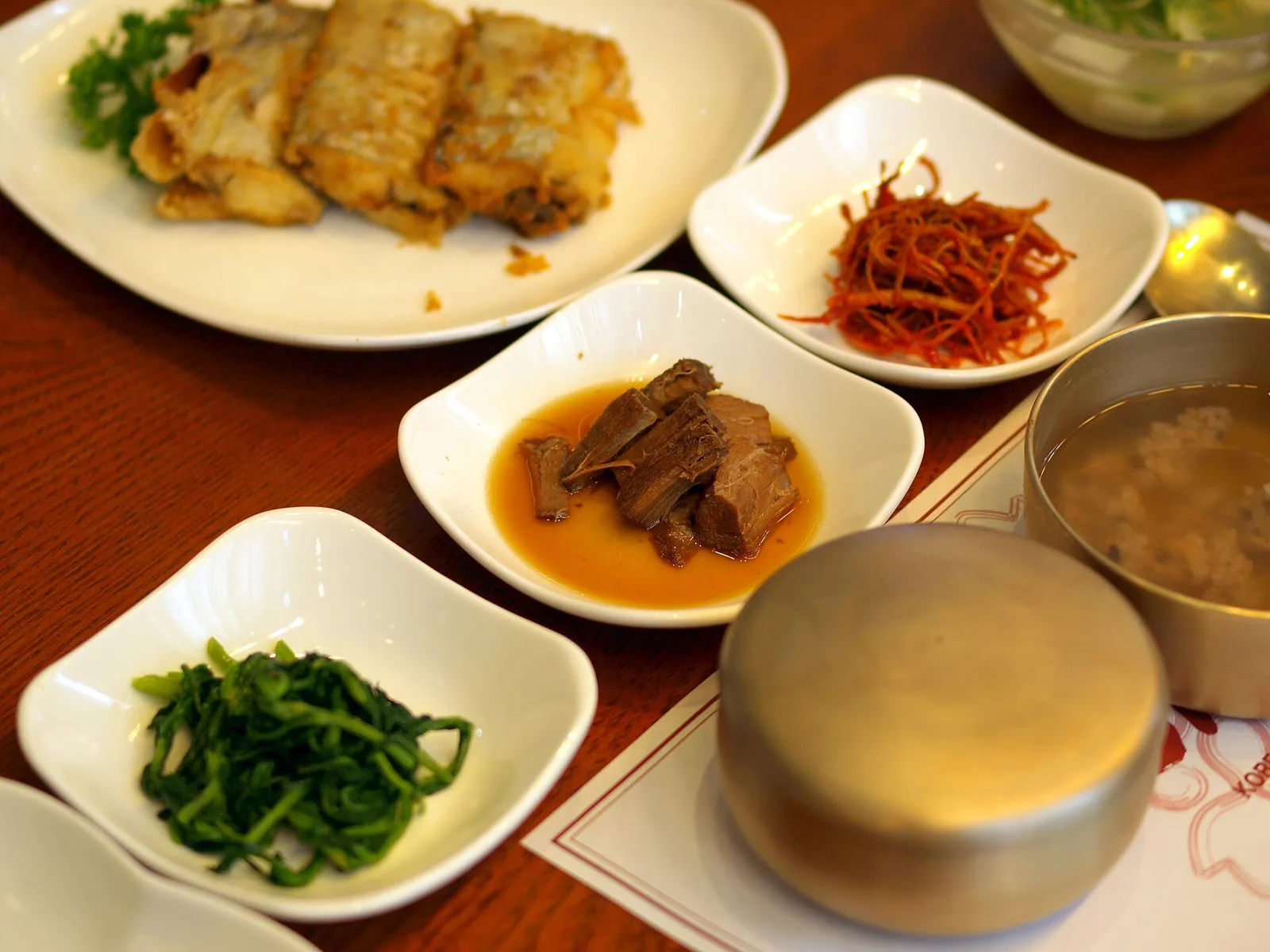
At the table
Korean dining is communal, generous and full of small rules that are easy once you see the logic.
Spoon for rice and soup, chopsticks for everything else. The two are not used simultaneously, and the rice bowl stays on the table rather than being lifted, which is the opposite of Japanese practice and the most common cross-border mistake.
Never stand chopsticks upright in rice, and do not pass food chopstick to chopstick. Both echo funeral rites and land badly.
The banchan are shared and refillable. The little dishes that cover the table are not starters or a set portion; they belong to everyone and are topped up on request, usually for free. Taking a bit at a time onto your own plate is better than colonising a dish.
Wait for the eldest at the table, or simply for your host, before starting. In a group with any age spread, the meal begins when the senior person begins.
Say something. A quiet “jal meokgesseumnida” before eating and “jal meogeosseumnida” afterwards are the Korean equivalents of thanking the cook, and even a mangled attempt earns a smile.
Drinking, which has the most rules of all
Drinking in Korea is social rather than casual, and it carries the clearest etiquette of anything you will encounter.
You do not pour your own drink. You pour for others, especially anyone older or more senior, and someone will fill your glass in return. A glass that keeps being topped up before it empties is not an accident; it is the system working.
Pour and receive with two hands, and when drinking with someone notably older, it is customary to turn your head slightly away as you drink.
Do not refill a glass that still has drink in it in a formal setting, and if you would rather not drink much, leave your glass part full rather than empty, which quietly signals that you are fine.
Declining alcohol altogether is perfectly acceptable and increasingly common among Koreans too. Say so early and warmly rather than covering your glass repeatedly through the evening, and nobody will push.
Age, names and why people ask how old you are
Early in a conversation, a Korean person may ask your age. To a Western ear this can sound intrusive. It is not.
Korean has different levels of speech and different forms of address depending on relative age and seniority, so the question is a practical one: your interlocutor is working out how to speak to you. The same logic explains why colleagues use titles rather than first names, and why the pecking order at a work dinner is visible in who pours, who sits where and who starts eating.
As a visitor you sit largely outside this system and nobody expects you to navigate it. What helps is simply knowing that the question is procedural rather than personal, and that using someone’s title or family name plus a title is safer than jumping to a first name, which in Korea is considerably more intimate than it is in English.
In public: quiet, queues and personal space
Korean public behaviour is a study in contrasts, and knowing which is which saves confusion.
Transport is quiet. Keep calls short and low, keep your voice down, take a backpack off in a crowded carriage, and let people off before boarding. Priority seats stay empty even when a train is packed, and sitting in one as a young, able visitor is noticed.
Queues are real and orderly, marked on platforms and respected.
Street and market noise is another matter entirely, and a Korean restaurant at nine in the evening is loud and joyful. The quiet is contextual rather than a national temperament.
Personal space on a busy street or metro is smaller than many Western visitors expect, and being jostled without an apology is not rudeness, it is density. Equally, pushing back is not the answer.
One more that surprises people: pointing with a finger at a person is impolite, and an open hand is used instead.
Temples, palaces and photographs
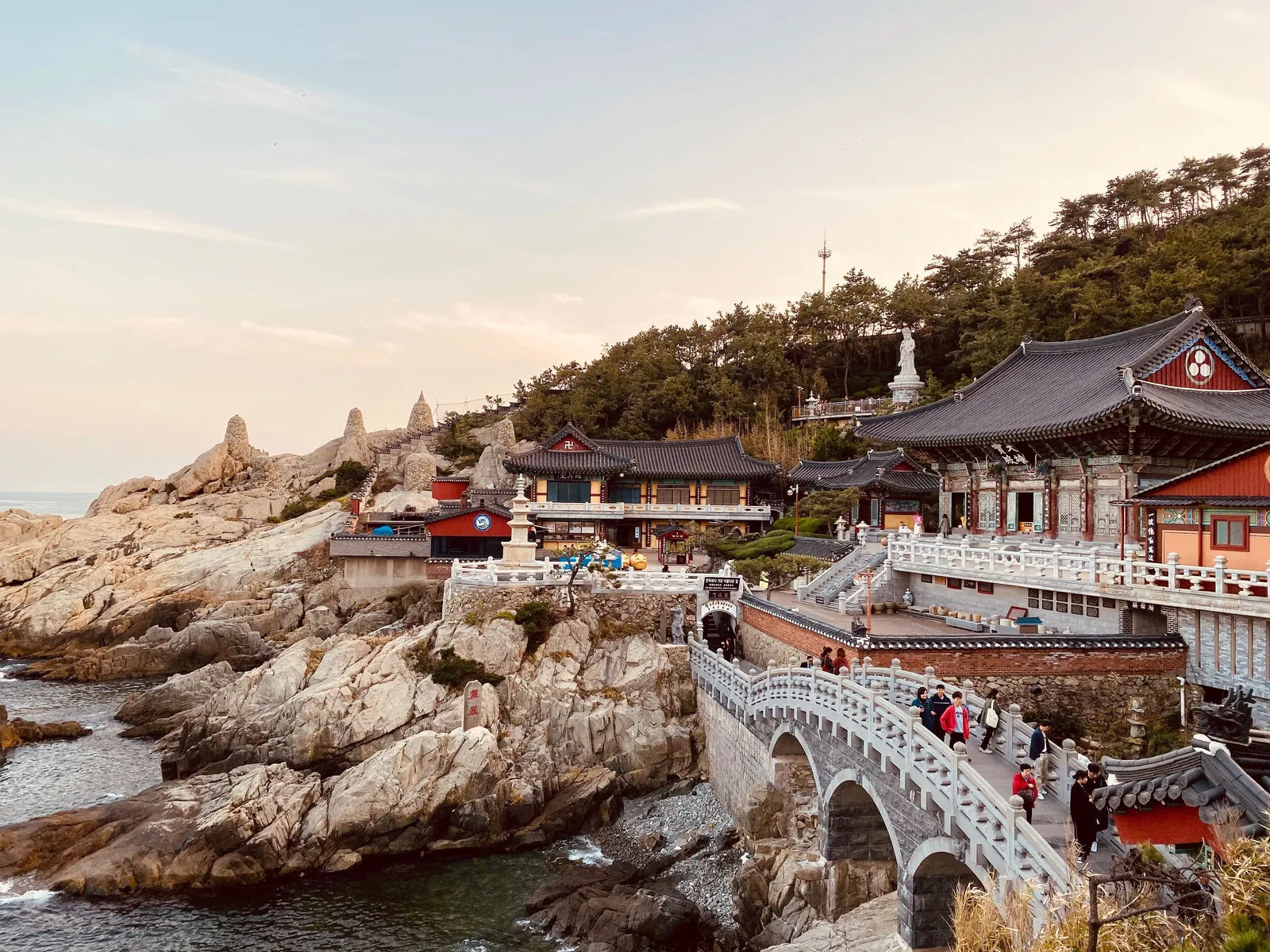
Korea’s temples are working places of worship rather than museums, and a few habits mark you as a respectful visitor.
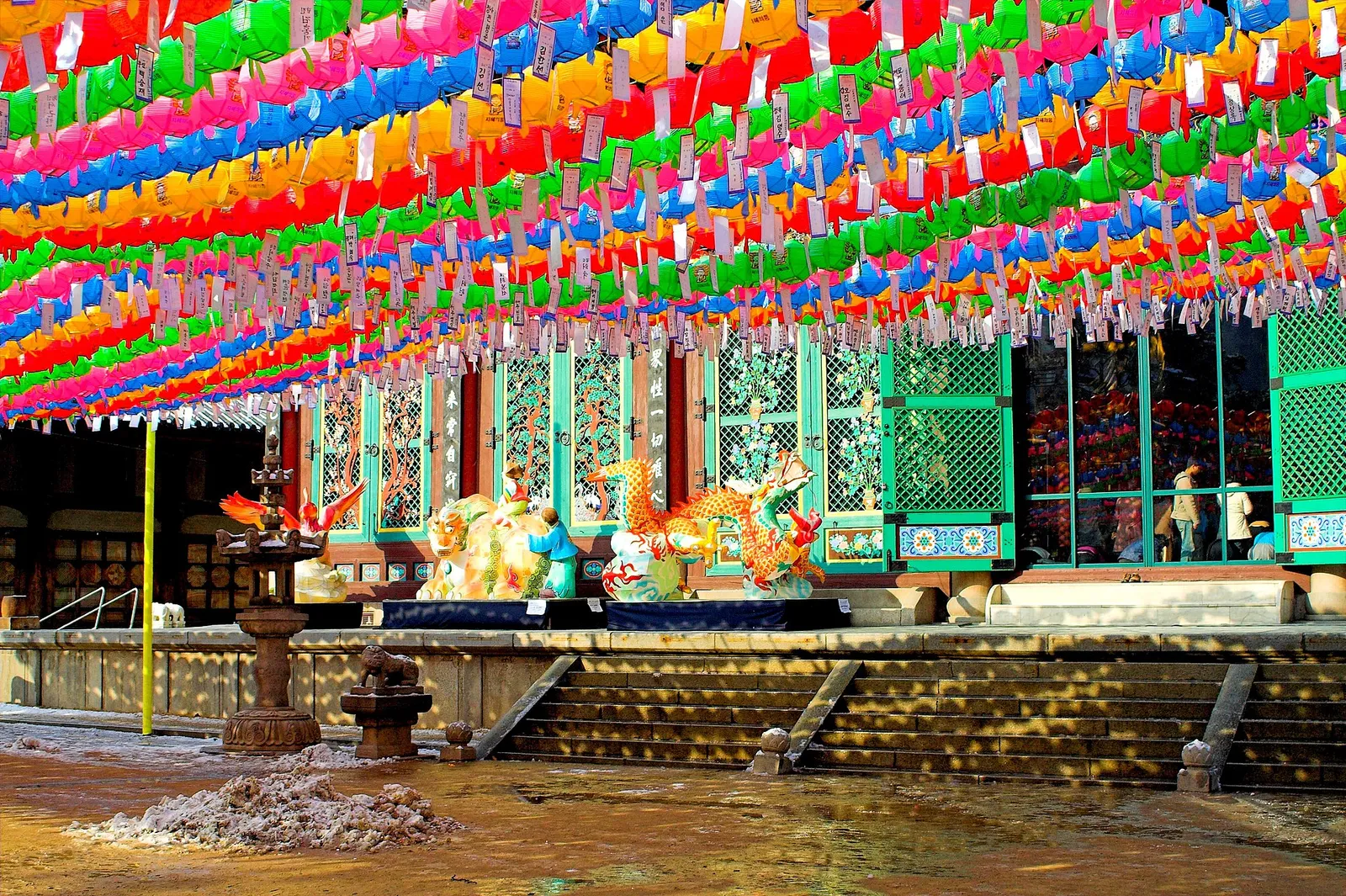
Dress modestly, cover shoulders and knees, and remove shoes before entering a hall. Walk around the edges of a hall rather than through the middle, keep your voice down, and do not photograph people praying. Where photography is prohibited inside a hall, there will be a sign, and it means it.
At palaces, the rules are lighter, and the one thing worth knowing is that renting a hanbok, the traditional dress, is a genuinely popular thing to do and often waives your entry fee. It is not treated as appropriation but as participation, and Koreans do it too.
Photographing people generally deserves asking first, particularly in markets and villages. A gesture at the camera and a raised eyebrow is understood everywhere.
Where the etiquette pays off
Manners here are not an obstacle course, they are the fastest route into the good version of the country.
The clearest place you will feel it is at the table, where knowing the shared-dish rhythm and the drinking customs turns a meal from a transaction into an evening; our Korean food guide covers what to order and how the meals are structured.
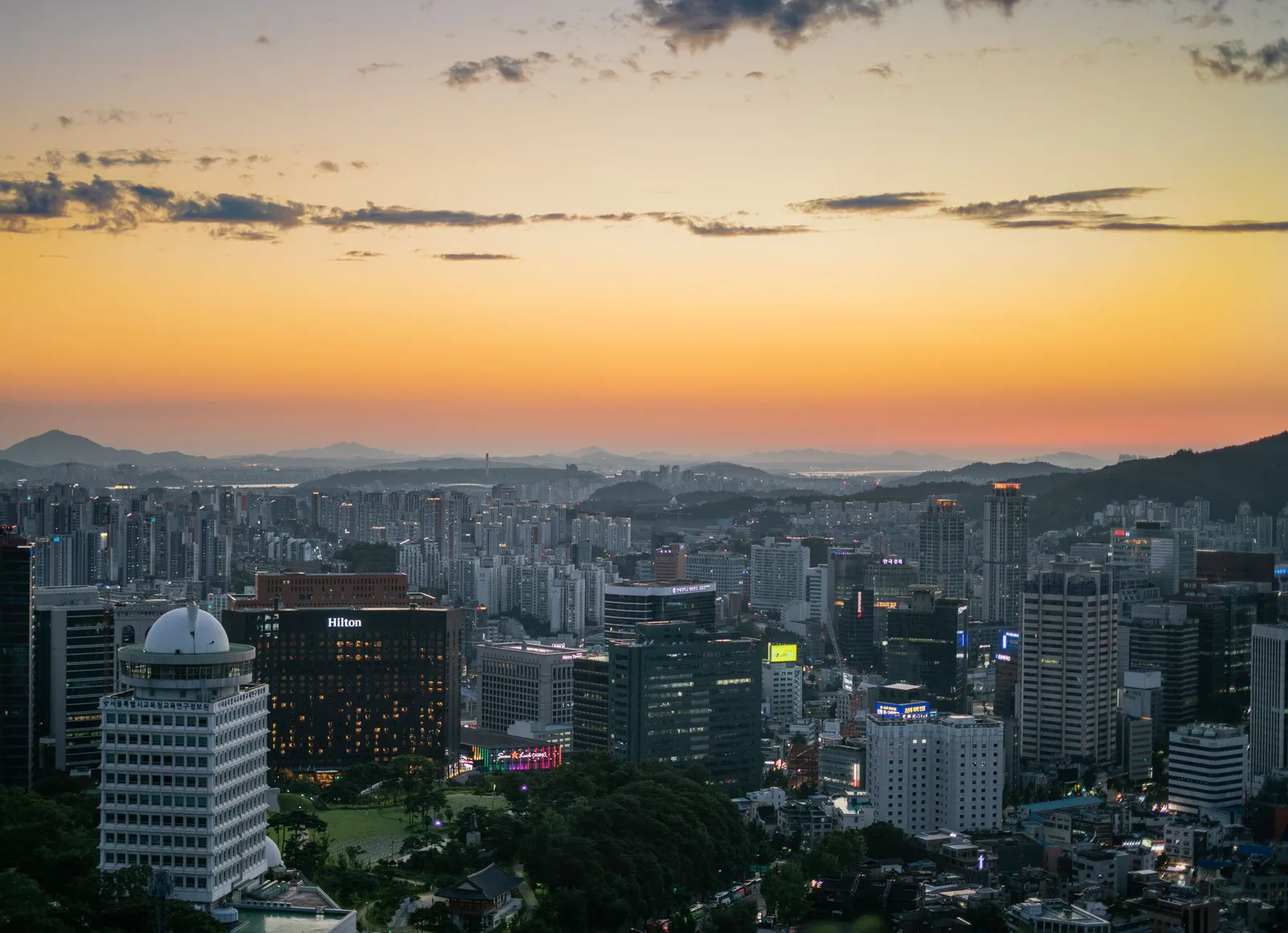
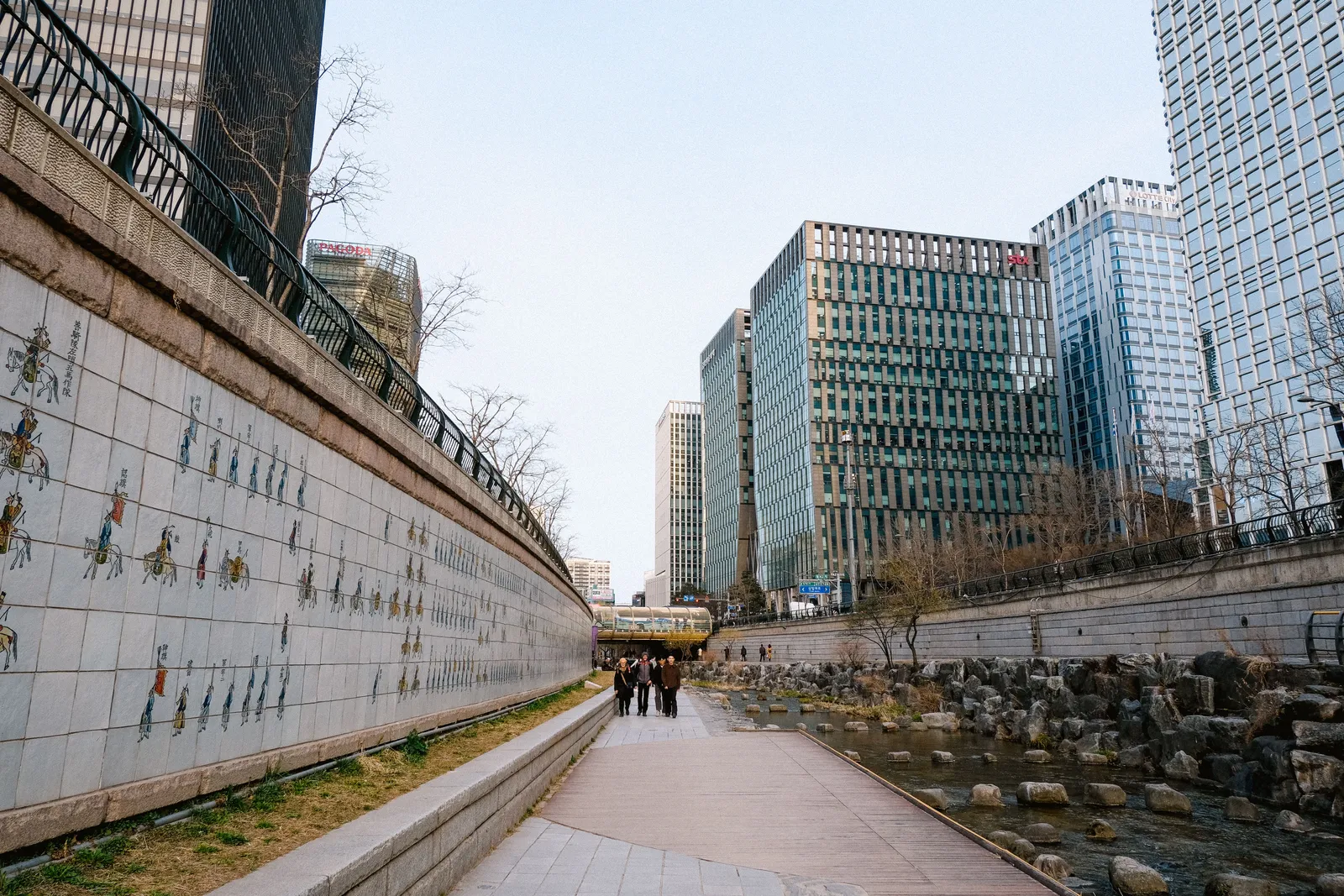
The second is in the city itself, where quiet trains, orderly queues and a habit of watching what everyone else is doing make an enormous capital surprisingly easy to move through; our Seoul guide covers the neighbourhoods where you will be doing most of that.
And if this is a first trip, the etiquette sits alongside a handful of practical decisions that shape the whole visit, which our first-time guide to South Korea sets out.
The short version
Two hands for giving and receiving, a small nod for hello and thank you, and shoes off wherever the floor steps up. Spoon for rice, chopsticks for the rest, never upright in the bowl, and let the eldest start. Pour for others and never for yourself. Keep the train quiet and the market loud. Tip nobody. Do that much and you will be treated less like a tourist and more like a guest, which in Korea is a meaningful difference.
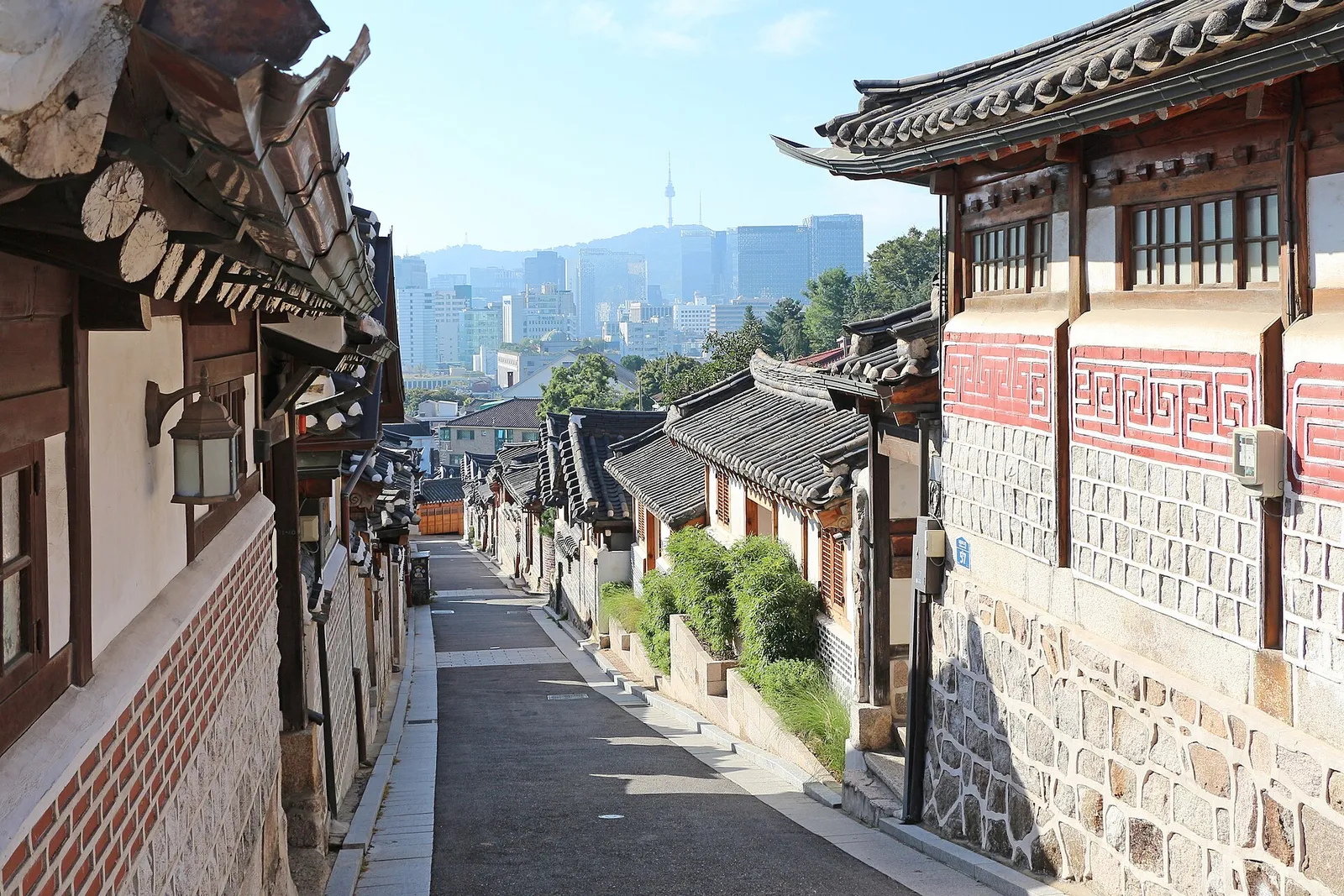
One of these rules has a practical consequence worth planning around: shoes come off wherever the floor steps up, which includes a traditional hanok stay and many guesthouses. Our guide to where to stay in Seoul covers which districts offer that kind of night and what floor bedding actually involves.
The other habit worth carrying is the one behind all of them, which is not creating trouble for the people around you. That extends to the mountains and the slopes, where the polite thing and the sensible thing are the same: be equipped and be covered. Our guide to travel insurance for Korea covers the clauses those activities depend on.