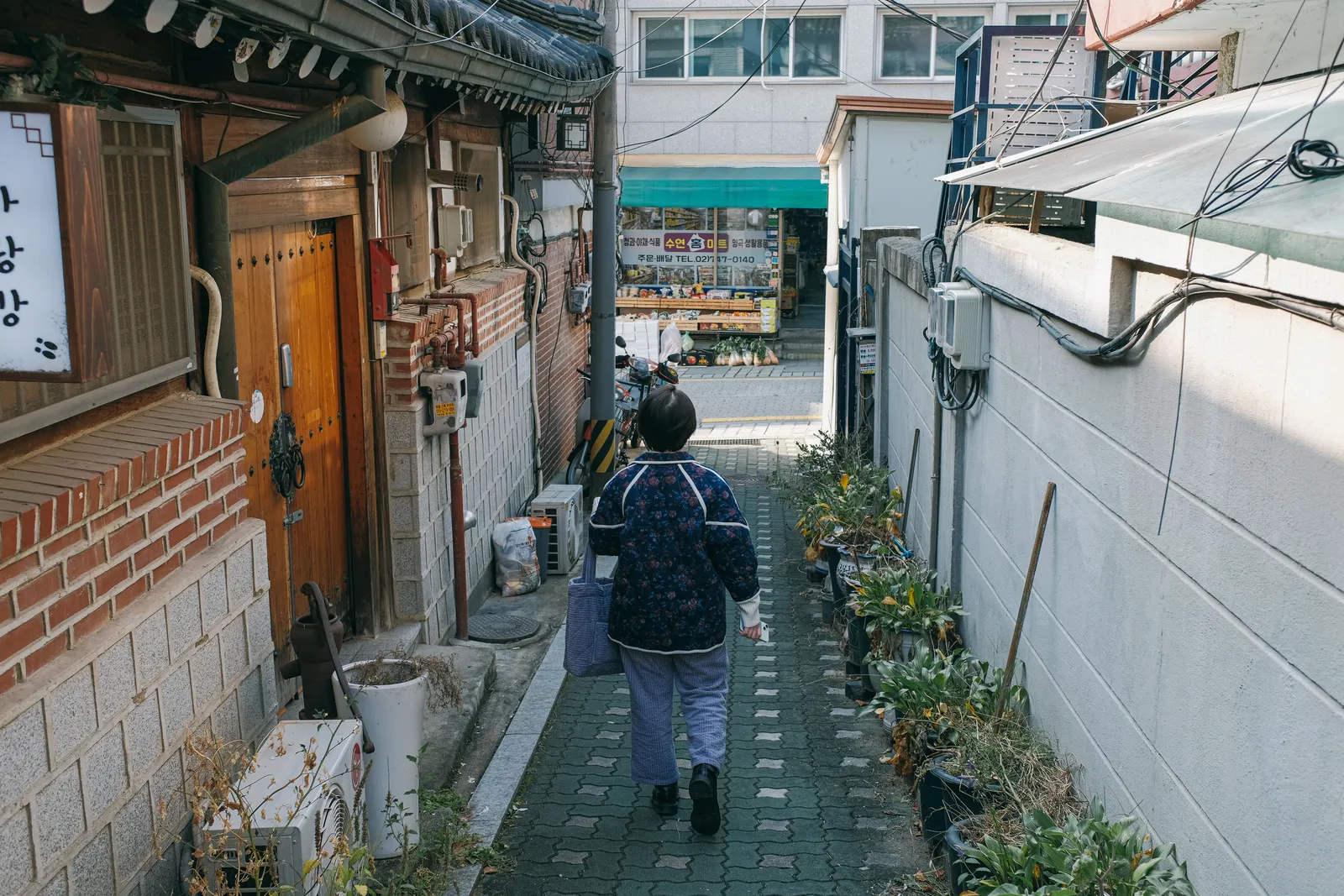
Bukchon is a hillside of several hundred traditional courtyard houses in the middle of Seoul, five minutes uphill from the main palace, and it is the most misunderstood place in the city. Visitors arrive expecting a preserved village and find a residential neighbourhood: cars parked in the lanes, deliveries, a corner shop, an elderly resident going home with shopping past forty people photographing her gate. The houses are beautiful and the streets are genuinely worth an hour. They are also somebody’s address.
What is actually there
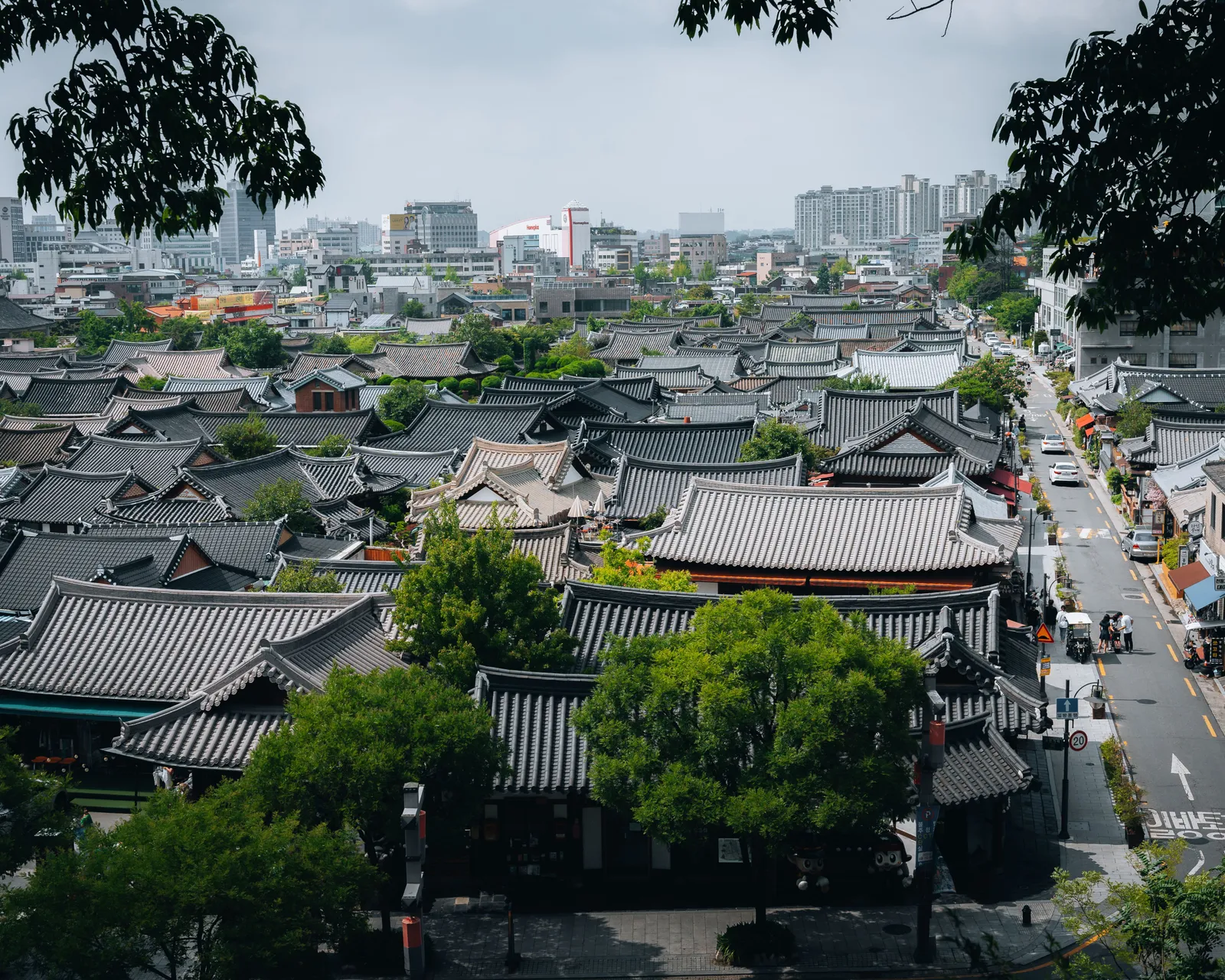
Several hundred hanok, single storey, tiled, arranged around internal courtyards.
The original street pattern, which is why the lanes climb and turn the way they do.
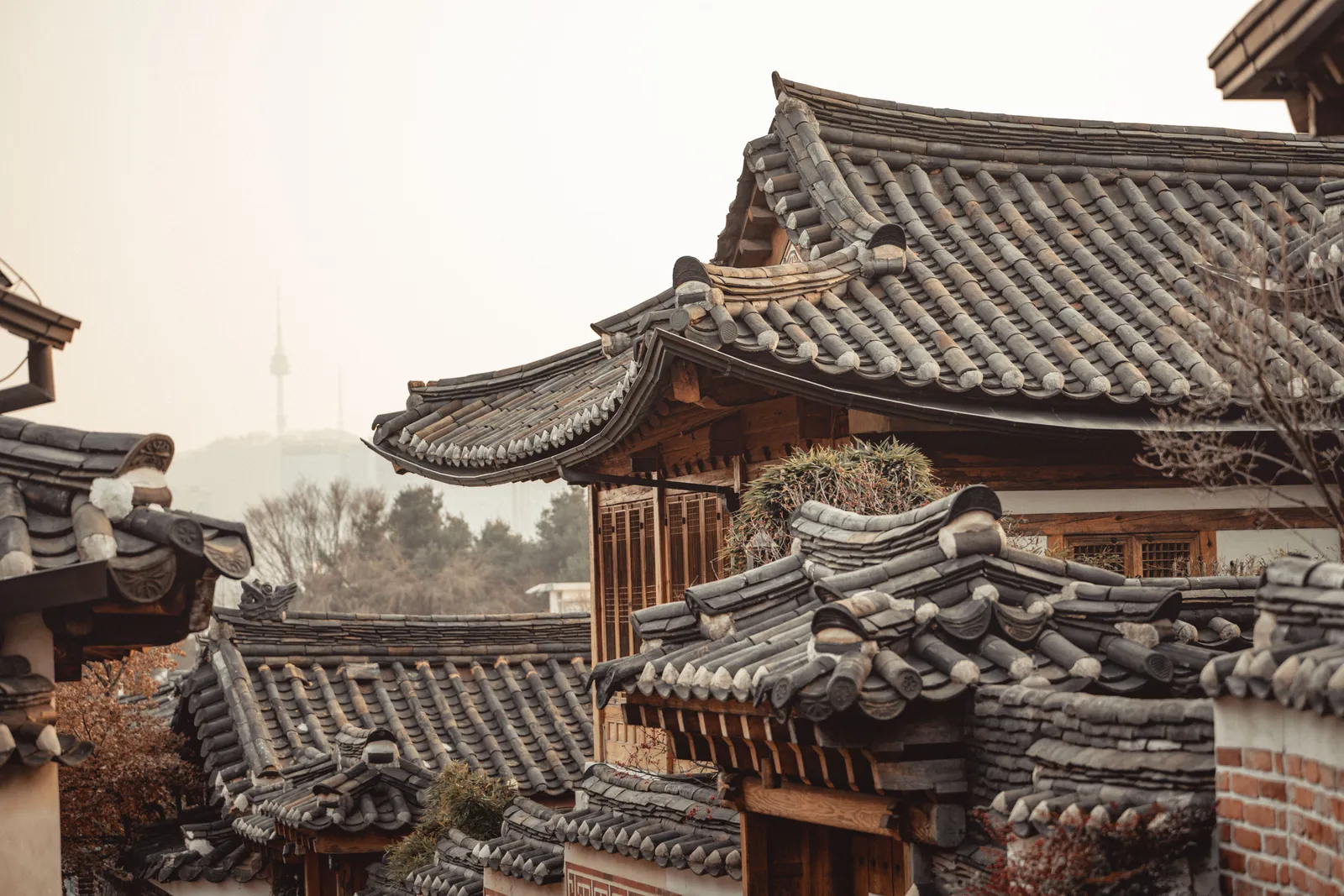
Viewpoints from the upper lanes, looking down over the roofs towards the city towers.
Craft workshops and small museums inside individual houses, some free, some ticketed.
Tea houses and guesthouses, in converted houses, with courtyards.
Residents, in most of the buildings, which is the fact that governs everything else.
How to walk it
Uphill from the palace, entering from the south west, which is the natural approach.
An hour, comfortably, and two if you go into anything.
The upper lanes for the roof views, the lower ones for the shops.
Anticlockwise from the main entry lane, which spreads you out from the crowd.
Then Samcheongdong, immediately west, for cafes and galleries in the same style.
Then Ikseondong, twenty minutes away, for the converted version.
What a hanok actually is
A single storey timber house arranged around a courtyard, with a tiled roof and paper doors.
Ondol underfloor heating, which is the reason Koreans sit and sleep on the floor.
Sliding doors rather than swinging ones, and a raised wooden porch.
Oriented to catch winter sun and summer shade, deliberately.
Small rooms, because heating them was the design constraint.
Expensive to maintain, which is why so many were lost before the district was protected.
Practical notes
Free to walk, with individual houses charging separately.
Shoes off in any interior; there will be a step and a shelf.
Steep lanes and uneven paving; sensible shoes.
The restricted lanes take tourist visits between 10:00 and 17:00 only, signposted at the entrances and enforced with fines.
Toilets are scarce; use the palace or a cafe.
Combine it with the palace below rather than making it a separate trip.
Where this fits in a Seoul trip
An hour, from ten in the morning, on the same day as the palace below it.
For the city and the order to take it in, our guide to Seoul covers the ground.
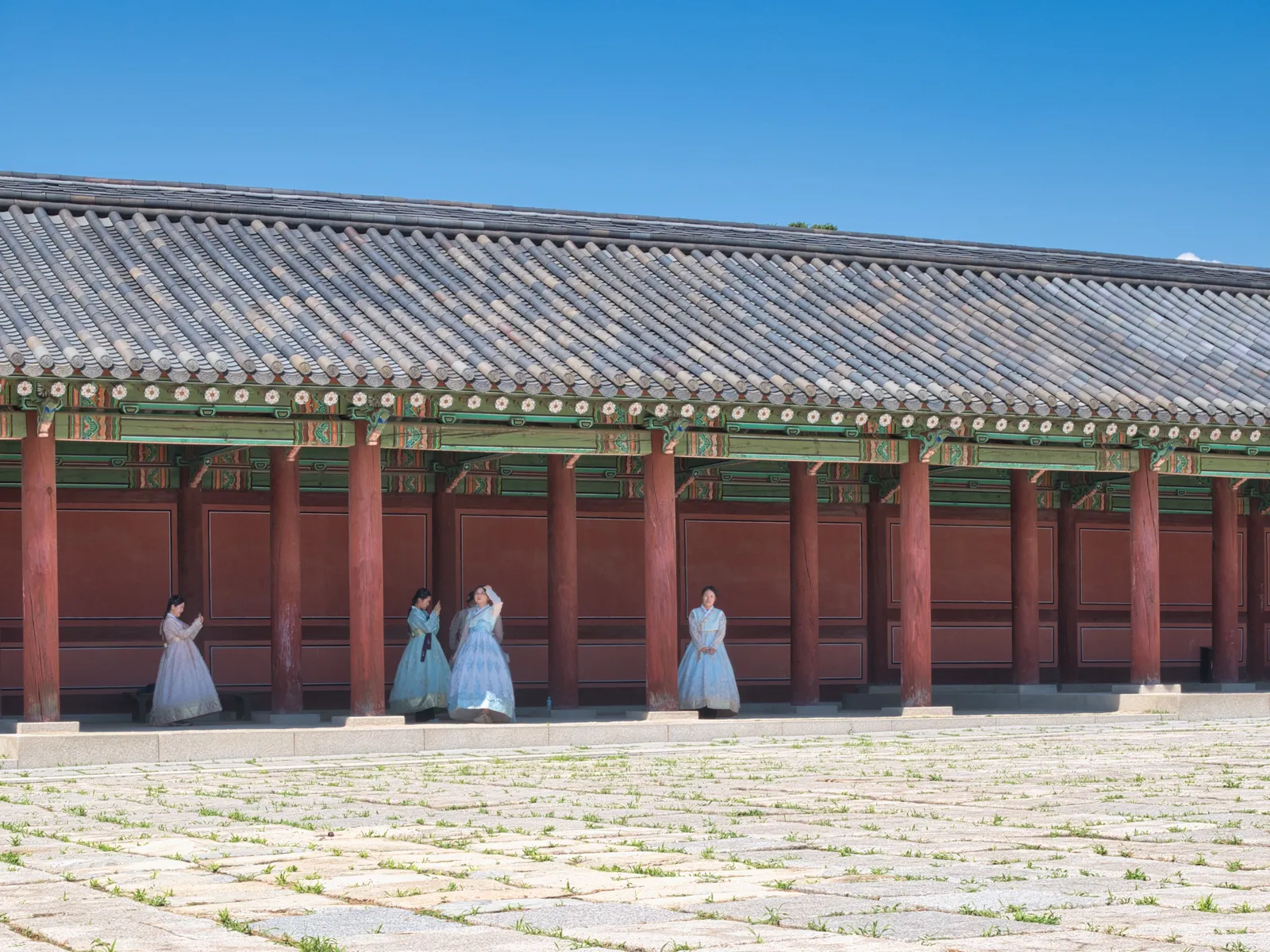
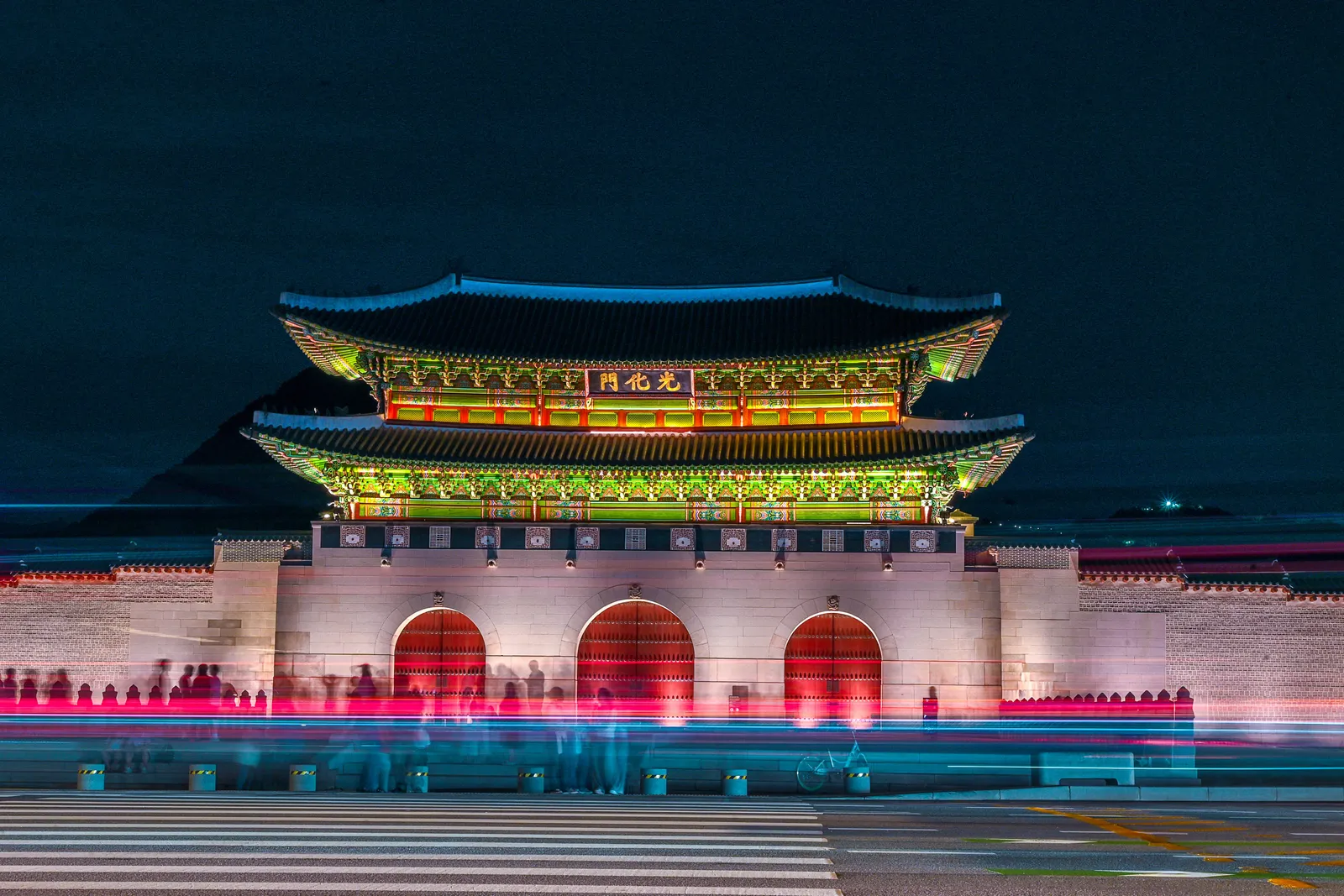
For the palace at the bottom of the hill and the hanbok arrangement, our guide to Gyeongbokgung covers the visit.
And for the larger hanok district outside Seoul where the houses are also a food destination, our guide to Jeonju covers the trip.
The short version
Go at ten, when the restricted lanes open to visitors, walk uphill from the palace, and give it an hour. Take the upper lanes for the roof views and the lower ones for the shops. Read the signs, keep your voice down, stay out of private gates, and remember that people live here. Add Samcheongdong for cafes and Ikseondong for the converted hanok. Stay in a hanok guesthouse for two nights if the idea appeals, and in a hotel for the rest of the week.