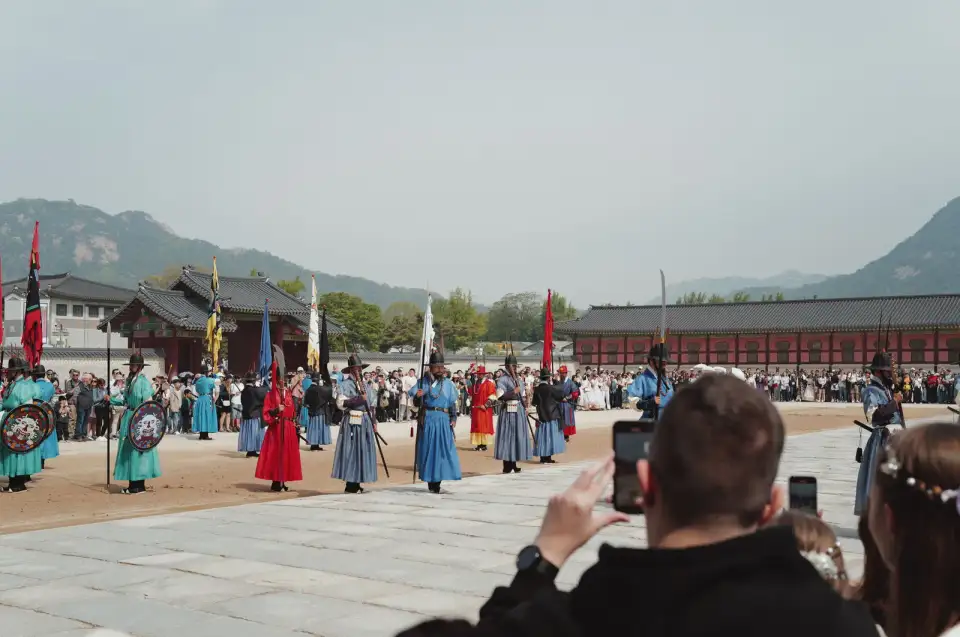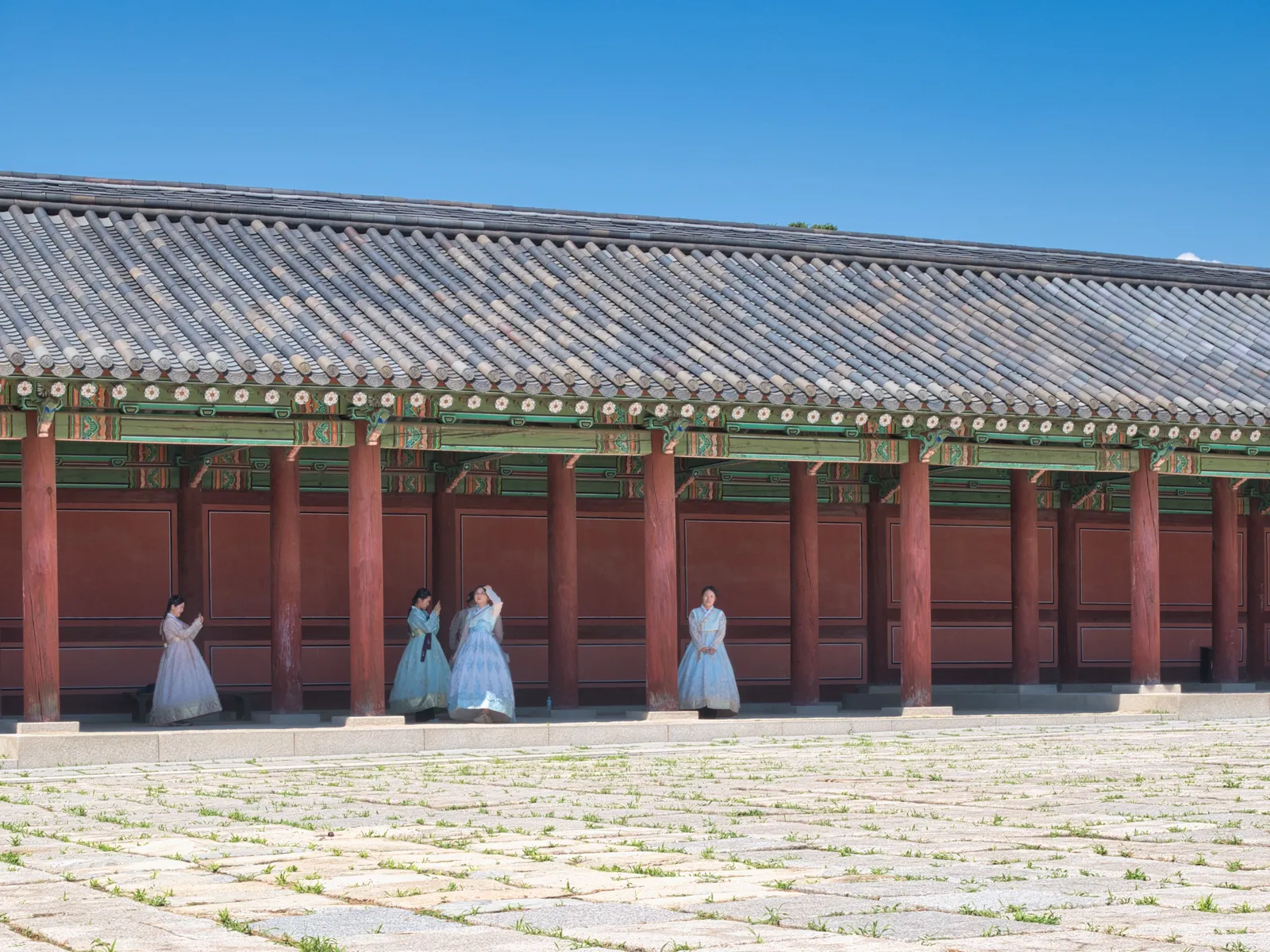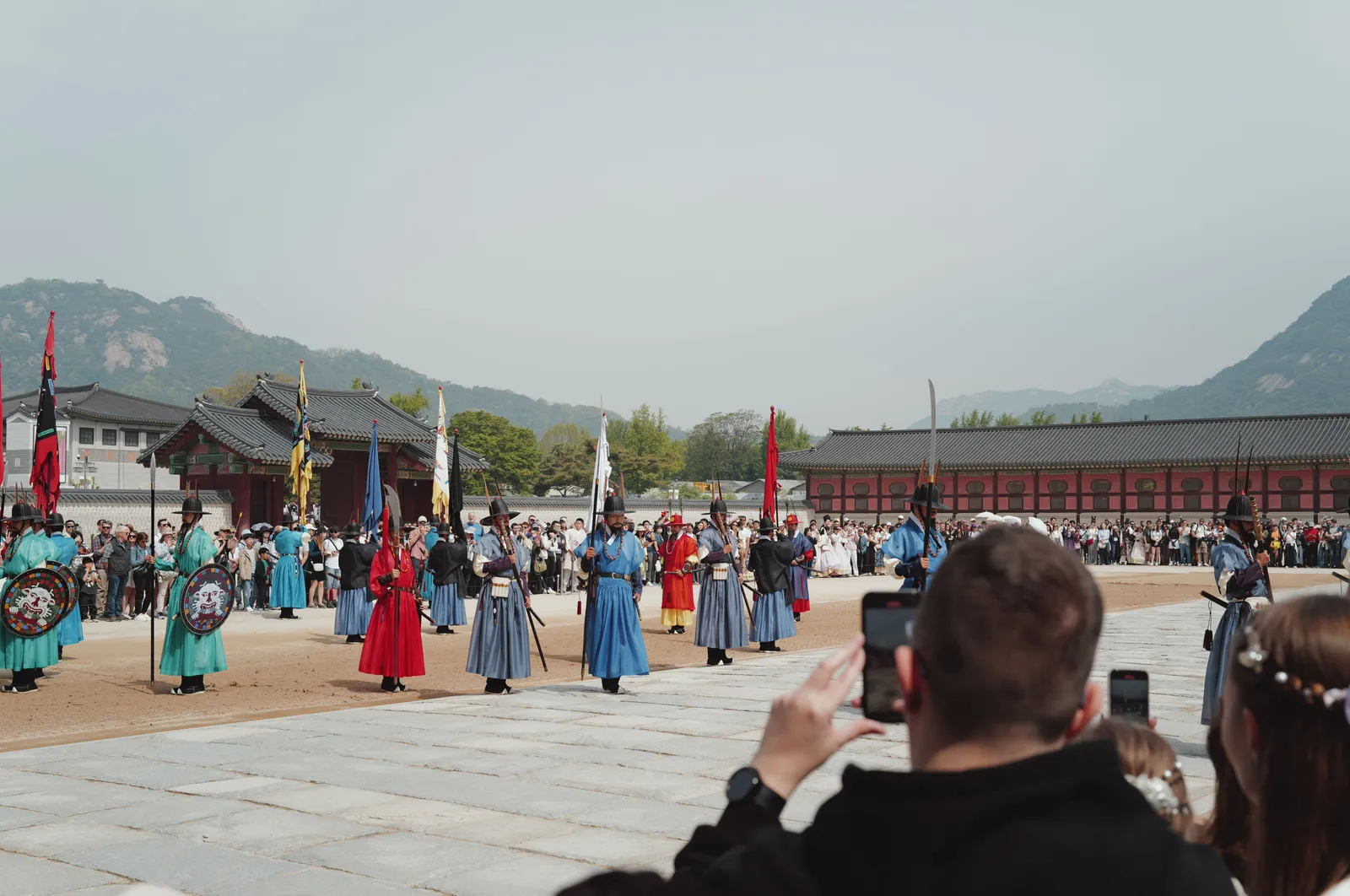
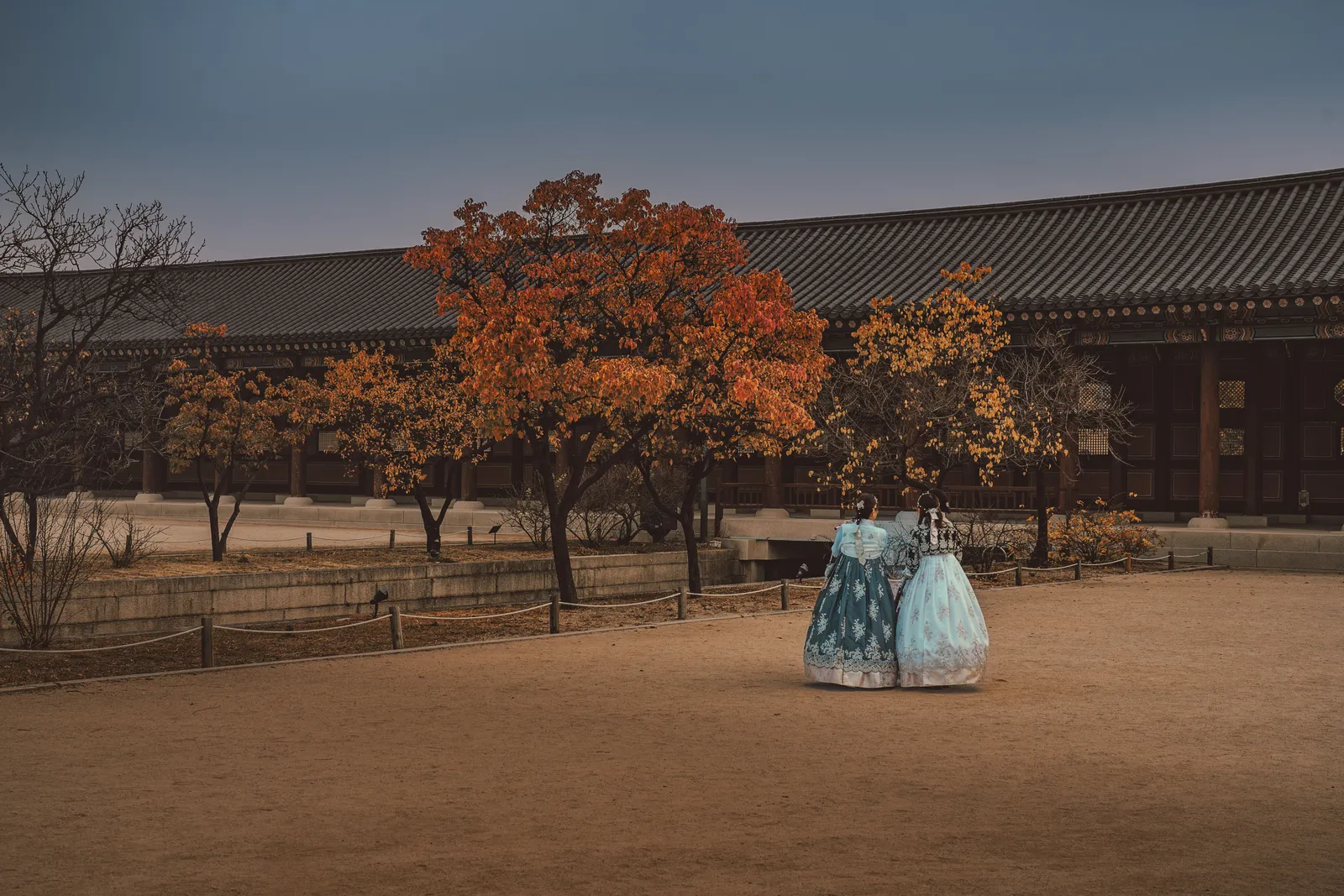
Seoul has five royal palaces and one policy that makes the whole thing more interesting than a ticket queue: anybody wearing hanbok, the Korean traditional dress, gets in free. The result is that the courtyards of Gyeongbokgung on any pleasant afternoon are full of people in silk in every colour, most of them Korean, many of them visitors, all of them photographing each other. It is a piece of cultural policy that worked, and it turns a palace visit into something you take part in.
The palace itself
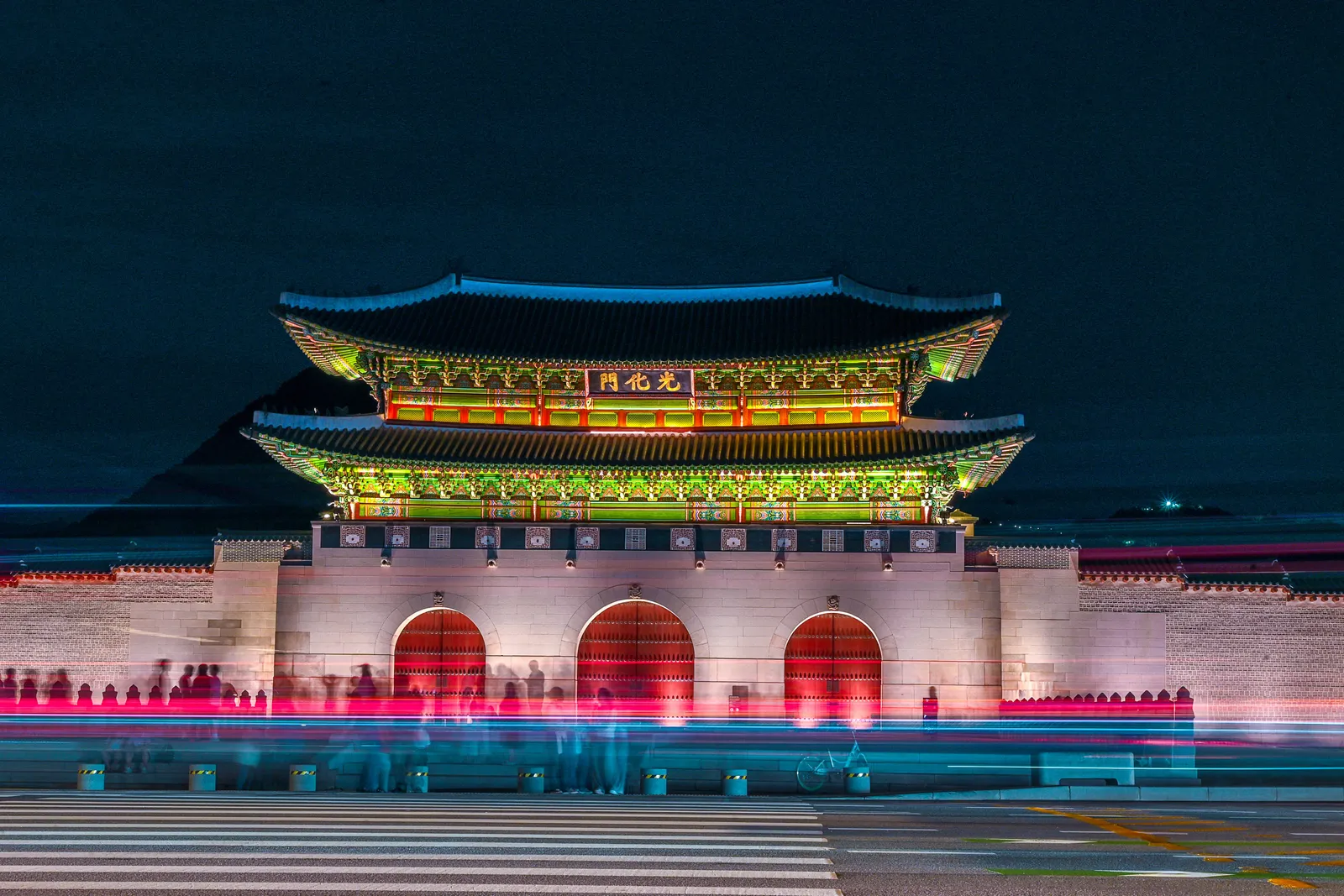
The throne hall, on its stone platform, which is the image of the complex.
Gyeonghoeru, the banqueting pavilion standing on pillars in a pond, which is the best thing in the grounds.
The rear quarters, quieter, where most of the crowd never reaches.
The National Folk Museum, inside the grounds, free and genuinely good.
The National Palace Museum, beside the complex, for the objects.
Bukaksan mountain behind it, which is why the palace faces the way it does.
The hanbok arrangement
Free entry at the main palaces for anybody wearing it.
Rental shops cluster around the palace and up in the Bukchon streets.
By the hour or the day, with hair styling and accessories extra.
Conditions apply on what counts as hanbok; the shops know them.
Men and children are catered for as fully as women.
Book ahead in blossom season and on autumn weekends.
The other palaces
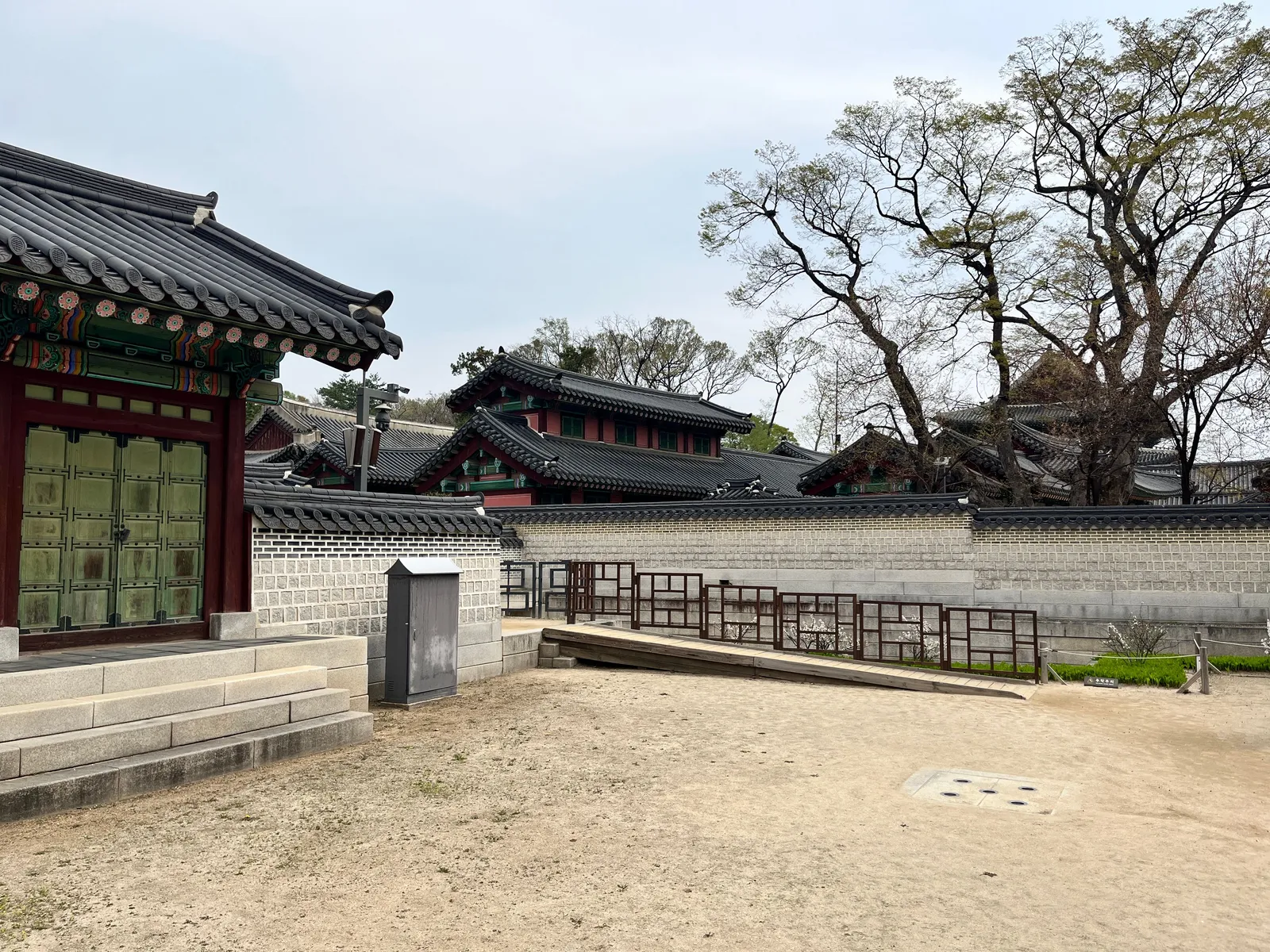
Changdeokgung, with the better garden and a separately ticketed rear garden.
Deoksugung, small, central, and where the crowds are not.
Changgyeonggung, adjoining Changdeokgung, quiet and connected on foot.
Gyeonghuigung, the smallest, free, and largely empty.
A combined ticket covering several, which pays for itself at two.
Different closing days, which is the trap; check each individually.
Practical notes
Opening hours change by season and the closing day differs between palaces.
The ceremony schedule varies and is cancelled in bad weather.
Almost all of it is outdoors, which decides whether July and January work.
Shoes come off to enter some interiors; wear socks.
Free English tours run at set times and are good.
A transport card gets you there; the palace is on the metro.
Where this fits in a Seoul trip
One morning, early, ideally the first full morning of the trip.
For the rest of the city and how it fits together, our guide to Seoul covers the ground.
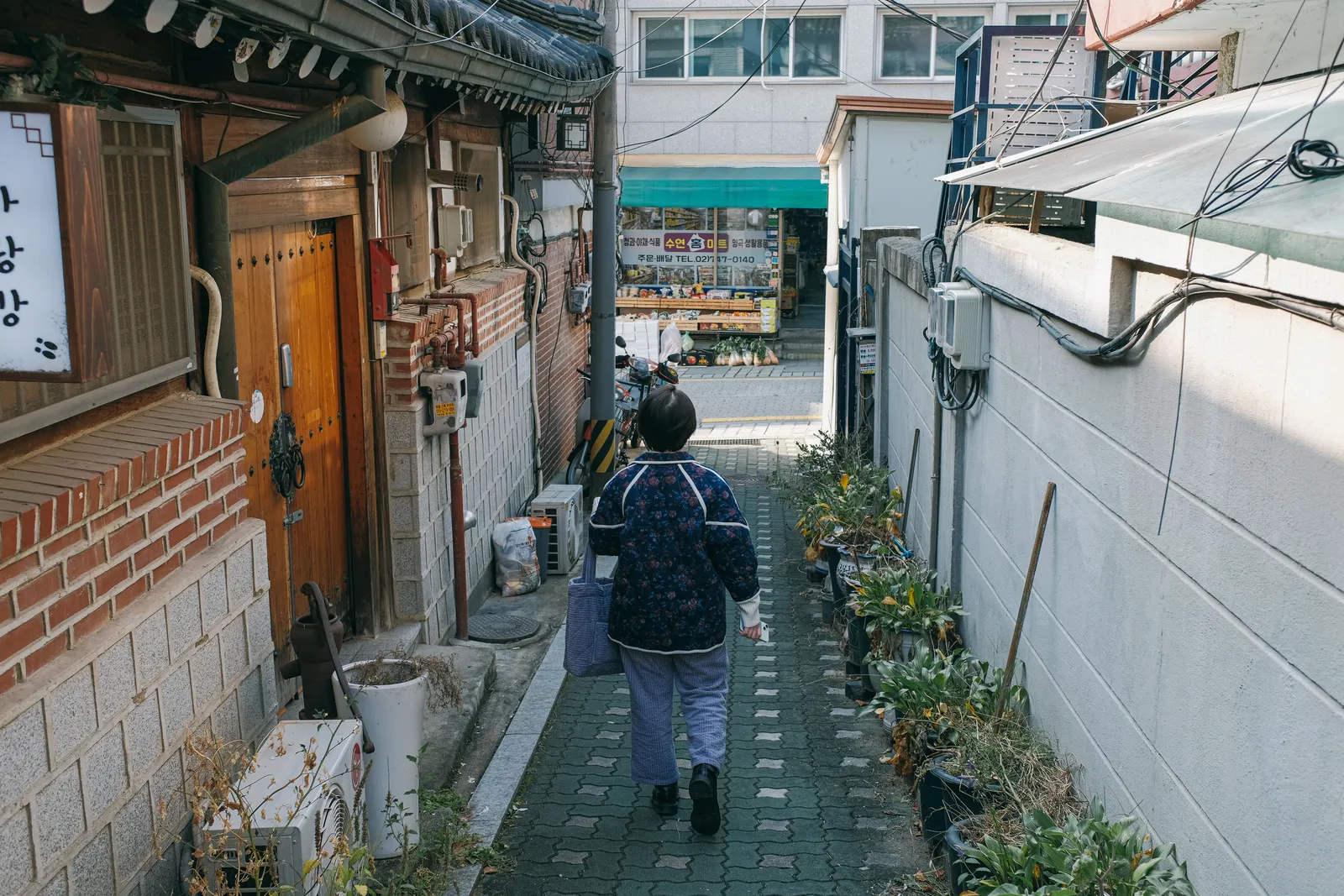
For the neighbourhood to walk into afterwards, still in the hanbok, our guide to the Bukchon alleys covers the lanes.
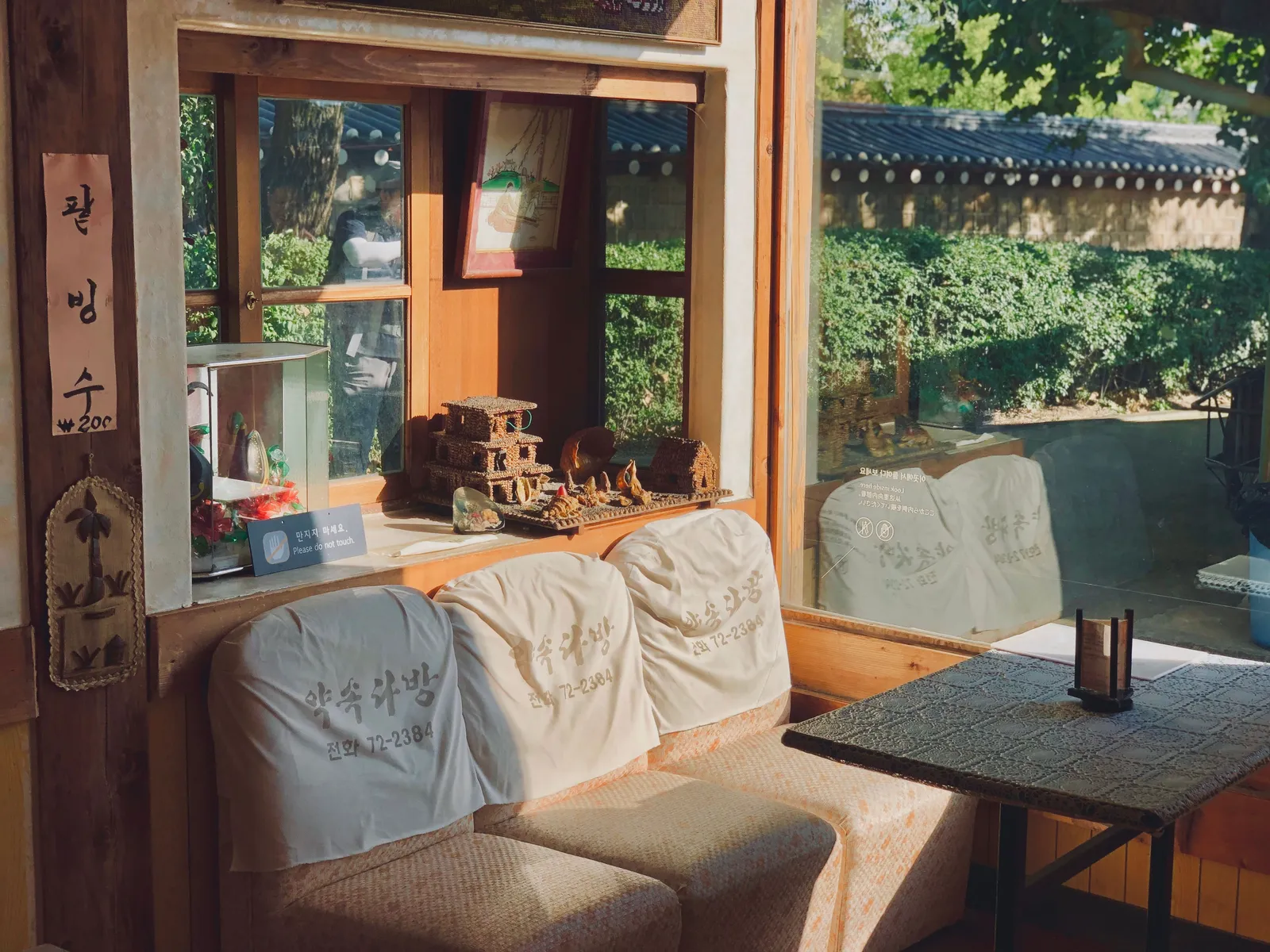
And for where to sit down when you have finished, our guide to Seoul cafes covers the courtyard tea houses.
The short version
Rent the hanbok in the Bukchon streets rather than at the palace gate, take the day rate, and be at the gates for opening. Walk the courtyards in the empty first half hour, then stay for the guard changing ceremony. Add the National Folk Museum inside the grounds, which is free and better than it sounds. Then walk uphill into the hanok lanes in the same clothes. Check the closing day for the specific palace, because they differ.